
🐘 Mythology
Stories of Ganesha: Wisdom, Beginnings, and Removing Obstacles
Ganesha's stories teach wisdom, humility, creative problem-solving, and the importance of beginning every task with clarity.
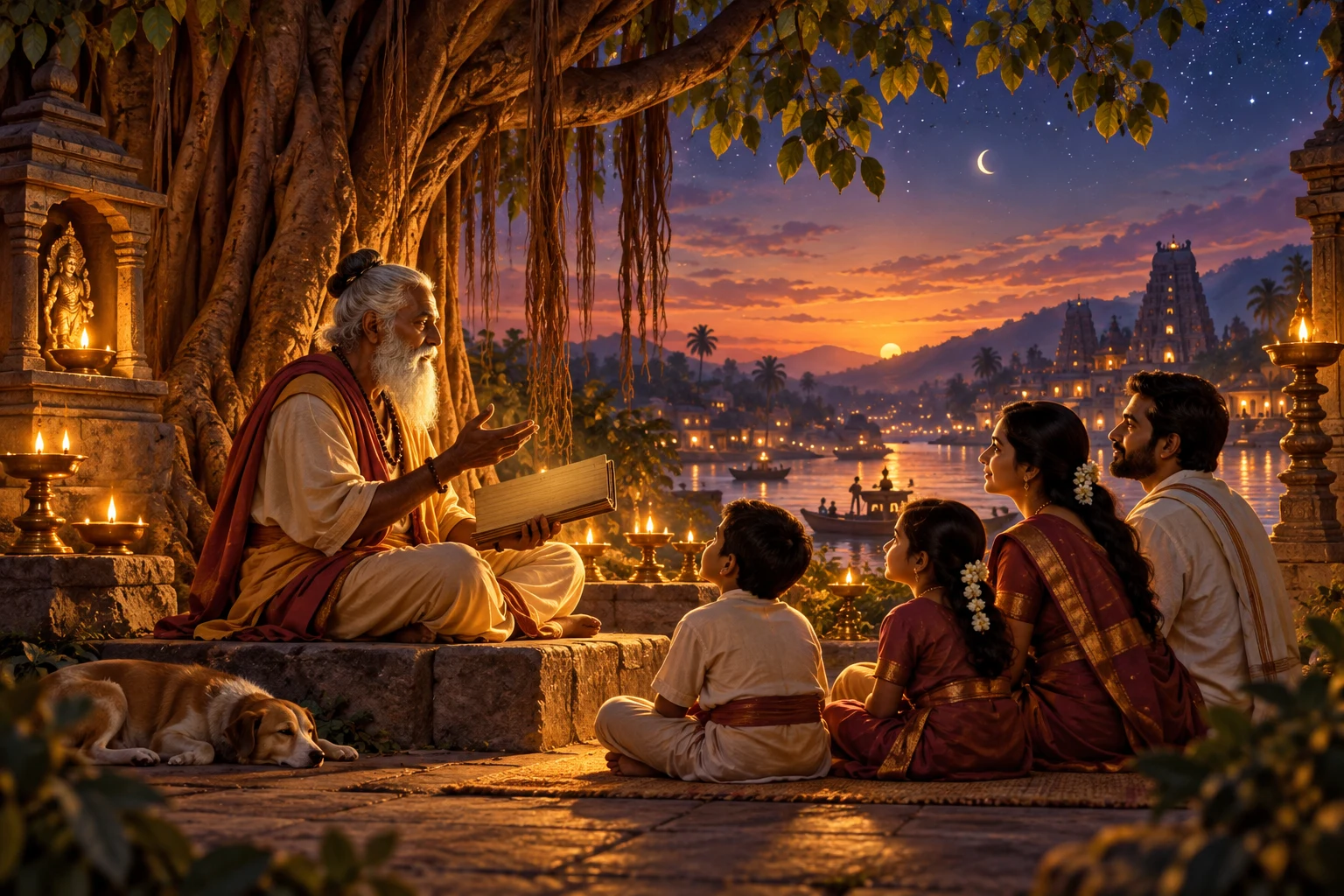
Lord Ganesha is honoured as the deity of wisdom, beginnings, discernment, and the removal of obstacles. His stories are told in many regional and Puranic traditions, with details that can vary. Across these versions, Ganesha’s intelligence is often shown through patience, loyalty, and the ability to see beyond appearances.
The birth of Ganesha
One well-known story describes Parvati creating Ganesha to guard her privacy while she bathed. When Shiva returns and Ganesha refuses him entry, a conflict follows. Shiva later recognises Ganesha and restores him with an elephant head, accepting him as his son and giving him a special place among divine beings.
The story is interpreted in different ways, but it often reflects themes of identity, family, recognition, and reconciliation. Ganesha’s elephant head becomes a sign of intelligence, memory, strength, and a wide perspective.
Ganesha and the race around the world
In another popular story, Ganesha and his brother Kartikeya are asked to race around the world. Kartikeya travels outward on his vehicle, while Ganesha walks around his parents, Shiva and Parvati, explaining that for him they are the whole world.
Ganesha wins through insight rather than speed. The story does not dismiss effort or adventure; it praises understanding the meaning of a task before choosing how to complete it.
The broken tusk and the Mahabharata
A famous tradition connects Ganesha’s broken tusk with the writing of the Mahabharata as Vyasa dictates it. Ganesha agrees to write without pause, while Vyasa composes verses difficult enough to give himself time to think. When the writing instrument breaks, Ganesha uses his tusk so the work can continue.
The story associates Ganesha with learning, sacrifice, concentration, and the preservation of knowledge. It is also one reason he is remembered at the beginning of study and creative work.
Ganesha’s symbols
The elephant head suggests wisdom and a broad view. Large ears suggest listening; the small eyes suggest concentration; the mouse can represent desire or restless movement brought under control. The broken tusk can symbolise sacrifice for knowledge and purpose.
Read the Ganesh Chaturthi story and significance and the Ganesha Beej Mantra for related practice.
Frequently asked questions
Why does Ganesha have an elephant head?
Hindu traditions tell several versions of the story. The elephant head is commonly understood as a symbol of wisdom, strength, memory, and expansive understanding.
What does Ganesha remove?
Ganesha is traditionally invoked before beginnings and is associated with removing obstacles. This can also mean developing the discernment to understand which obstacles require patience, preparation, or a change of direction.
When is Ganesha worshipped?
Ganesha is worshipped throughout the year and especially during Ganesh Chaturthi. Family and regional customs vary.