
🧘 Practice Guides
Vajrasana: Meaning, Steps, and Benefits
Vajrasana is unusual among yoga postures because it's the one traditionally recommended to practice right after a meal, not before. Here's how it's done.
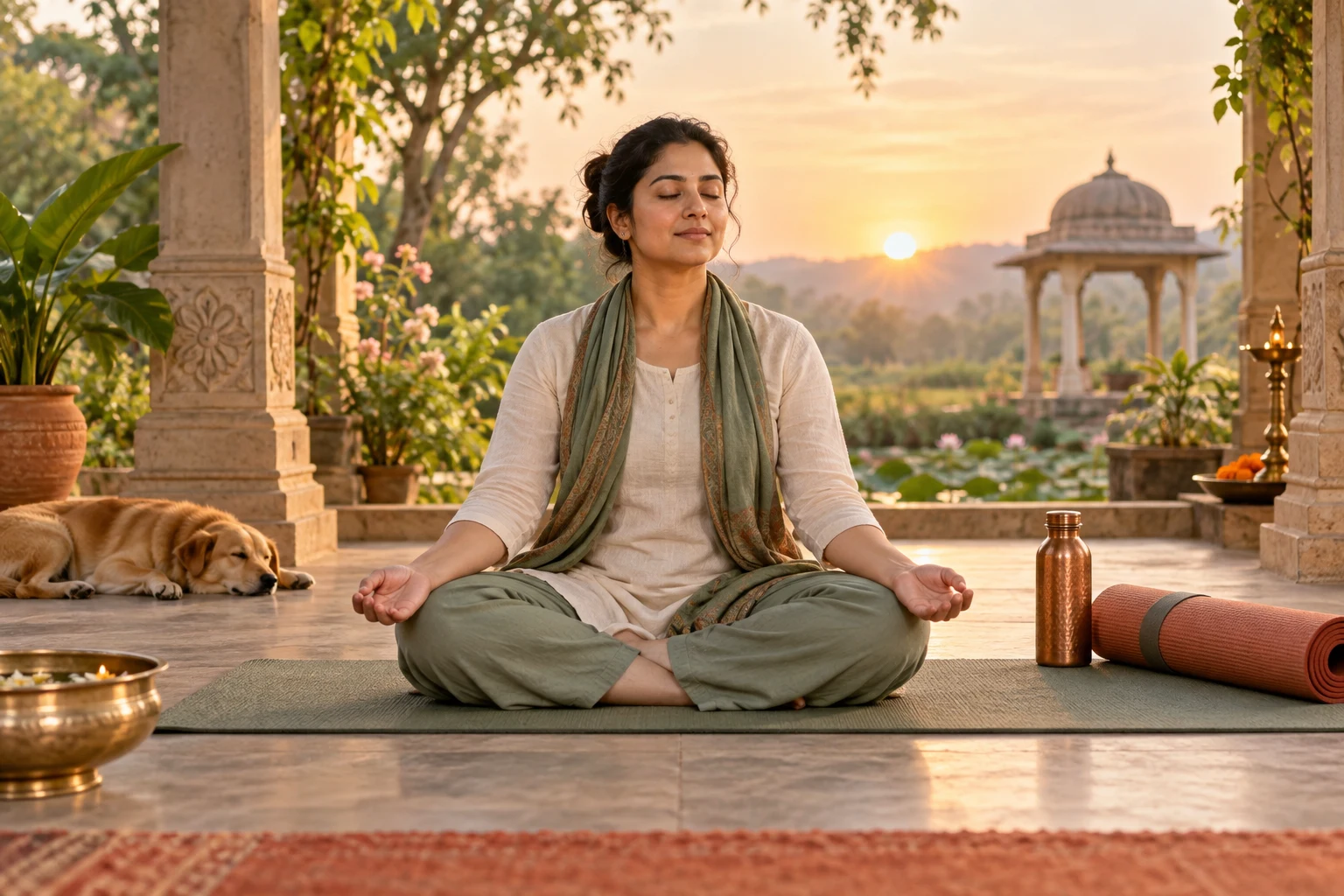
Vajrasana, the “thunderbolt pose,” is a simple kneeling posture with an unusual distinction among yoga asanas: it’s traditionally recommended to practice right after eating, when most other postures are avoided.
How it’s practiced
Kneel on the floor with the knees together, then sit back so the buttocks rest on the heels, with the tops of the feet flat against the floor. Keep the spine straight, rest the hands on the thighs or knees, and breathe naturally. The pose can be held anywhere from a minute to several minutes, depending on comfort and familiarity.
Why it’s practiced after meals
Vajrasana is traditionally believed to aid digestion by gently compressing the abdomen and improving blood flow to the digestive organs when seated in this position — the opposite of most yoga postures, which are generally practiced on an empty stomach. Sitting in Vajrasana for a few minutes after eating is a common household practice in many Indian families, independent of a broader yoga routine.
Traditional benefits
Beyond its association with digestion, Vajrasana is considered a stable, grounding seated posture suitable for breathing practices and short meditation, and is traditionally used to strengthen the thighs, ankles, and lower back over time with regular practice.
Precautions
Those with knee injuries, recent knee surgery, or significant knee pain should approach Vajrasana cautiously or avoid it, since it requires deep bending at the knee joint. A folded blanket under the ankles or between the calves and thighs can ease discomfort for beginners.
Common questions
What does “Vajrasana” mean?
“Thunderbolt pose” — vajra referring to a thunderbolt or diamond, traditionally associated with strength and stability.
Why is Vajrasana practiced after eating?
It’s traditionally believed to support digestion, unlike most yoga postures, which are generally practiced on an empty stomach.
How long should Vajrasana be held?
Anywhere from one to several minutes is common; duration can increase gradually with comfort and practice.
Is Vajrasana safe for people with knee problems?
Not always — the deep knee bend required can be uncomfortable or unsuitable for those with knee injuries or pain. A folded blanket for support can help, but those with significant knee issues should consult a teacher or avoid the pose.