
🧘 Practice Guides
Pavanamuktasana: Meaning, Steps, and Benefits of Wind-Relieving Pose
Last updated: September 26, 2026
Pavanamuktasana is exactly what its name suggests — a simple pose traditionally used to ease digestive discomfort. Here's how it's practiced.
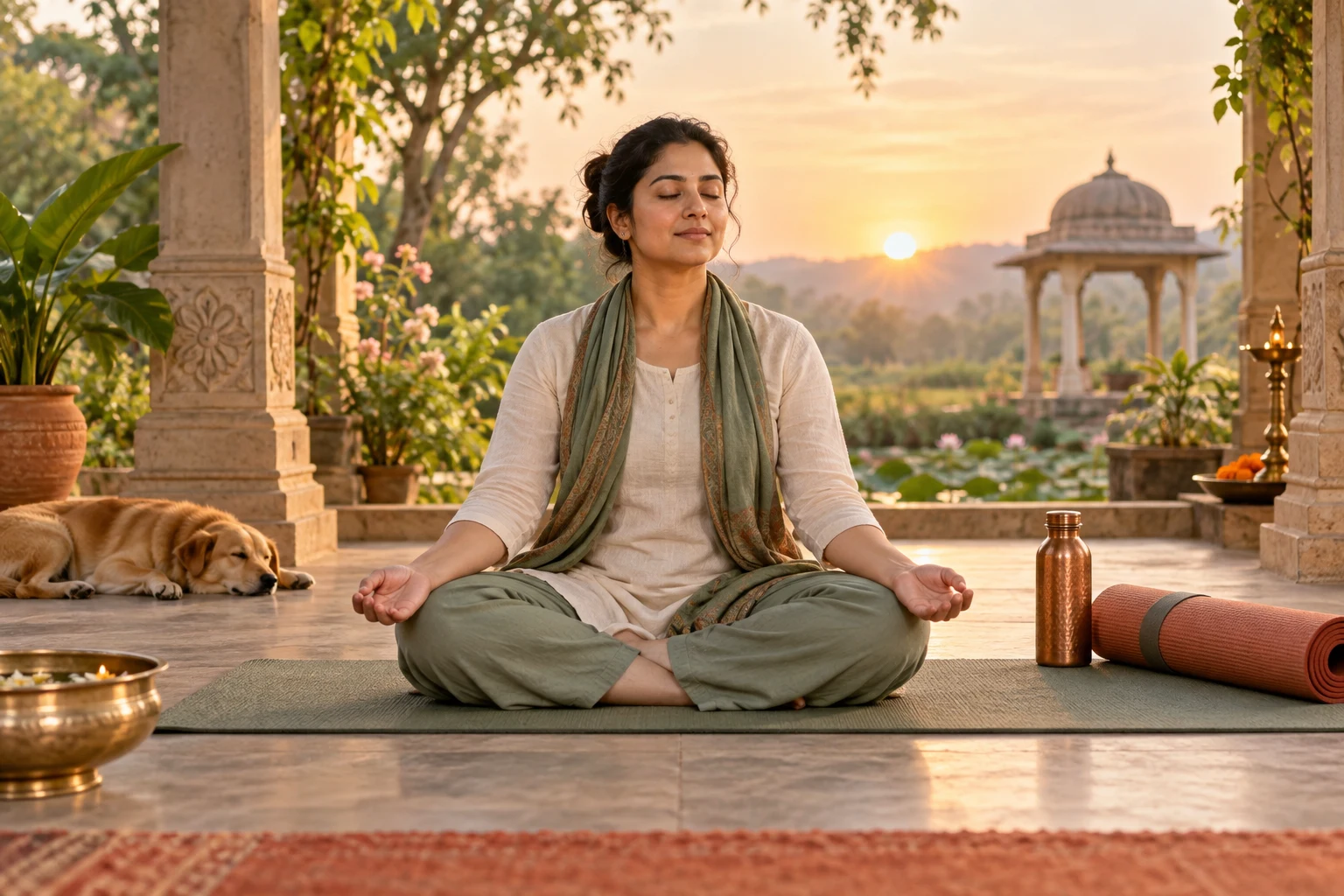
Pavanamuktasana is commonly translated as “wind-relieving pose”: pavana means wind or air, mukta means released, and asana means posture. It is a compact, floor-based shape in which one or both knees are drawn toward the torso. Yoga traditions often place it in gentle warm-ups or cool-downs because it encourages quiet breathing and a sense of release through the lower back.
The name describes a traditional association, not a promise to treat digestive symptoms. Persistent pain, severe bloating, vomiting, fever, unexplained weight loss, or blood in the stool needs medical assessment rather than a yoga remedy.
Safety comes before depth
Avoid or modify this pose after recent abdominal, spinal, hip, or knee surgery and whenever lying on the back or compressing the abdomen has been restricted by a clinician. During pregnancy, especially after the first trimester, do not compress the abdomen; ask a prenatal-yoga teacher or healthcare professional for an appropriate alternative. People with a hernia, acute back pain, osteoporosis, or a joint replacement should also seek individual guidance.
Move out of the pose if it causes sharp pain, numbness, tingling, breathlessness, nausea, or pressure that feels wrong. The knee never has to touch the chest, and the forehead never has to reach the knees. Yoga should not be used to delay professional care.
Step-by-step beginner method
- Lie on a firm, comfortable mat with both legs extended and the head supported neutrally.
- Bend the right knee and place both hands behind the thigh or over the shin, avoiding direct pressure on the kneecap.
- Exhale and gently guide the thigh toward the torso. Keep the left leg relaxed; bend it and place the foot down if the lower back arches or strains.
- Take three to five easy breaths. Keep the shoulders, jaw, and throat soft.
- Release slowly and repeat on the left side.
- If both sides feel comfortable, draw both knees in and hold behind the thighs or around the shins. Stay for three to five breaths, then lower the feet without dropping them.
Keep the head on the mat for the most accessible version. Lifting the head changes the effort and can strain the neck; it is optional, not a more “complete” pose. A folded blanket under the head or a strap behind the thighs can make the shape easier to hold without gripping.
What the pose may help you notice
The thigh-to-abdomen position creates gentle compression and changes how the lower back meets the floor. Some practitioners experience temporary comfort or easier movement afterward, but responses vary and research does not justify treating the pose as a cure. A useful goal is simpler: breathe comfortably, reduce unnecessary effort, and observe how each side feels.
The one-leg version can reveal left-right differences without demanding a deep range. The two-leg version feels more compact and may be restful for some people. Gentle rocking is optional; skip it if the spine, hips, or sacroiliac area feels sensitive.
How to place it in a practice
Use Pavanamuktasana after a few minutes of easy movement or near the end of a quiet sequence. It can pair with a comfortable rest, a mild supine twist, or simple natural breathing. Practising soon after a large meal may feel unpleasant, so allow adequate digestion time. For a broader foundation, read what yoga means and how to begin and close your practice with Shavasana, the classic resting pose.
Frequently asked questions
What does “Pavanamuktasana” mean?
It is usually translated as “wind-relieving pose”: pavana is wind or air, mukta is released, and asana is posture. The name reflects the pose’s traditional association with abdominal comfort.
Can Pavanamuktasana be practised one leg at a time?
Yes. The one-leg variation is often easier on the hips and lower back. Keep the other knee bent with the foot on the floor if extending that leg creates strain.
Is Pavanamuktasana safe for beginners?
It can be beginner-friendly when the range is comfortable and the breath stays easy. However, pregnancy, recent surgery, a hernia, acute pain, or certain spine and joint conditions require professional guidance or a different pose.
When is Pavanamuktasana usually practised?
It often appears in a warm-up or cool-down. Avoid practising immediately after a large meal, and do not rely on it for persistent or severe digestive symptoms.