
Ayurveda · Herb
Licorice (Mulethi) (यष्टिमधु)
Licorice, known as mulethi or yashtimadhu, is a sweet-rooted herb traditionally used in Ayurveda to soothe the throat and support the digestive lining.
Overview
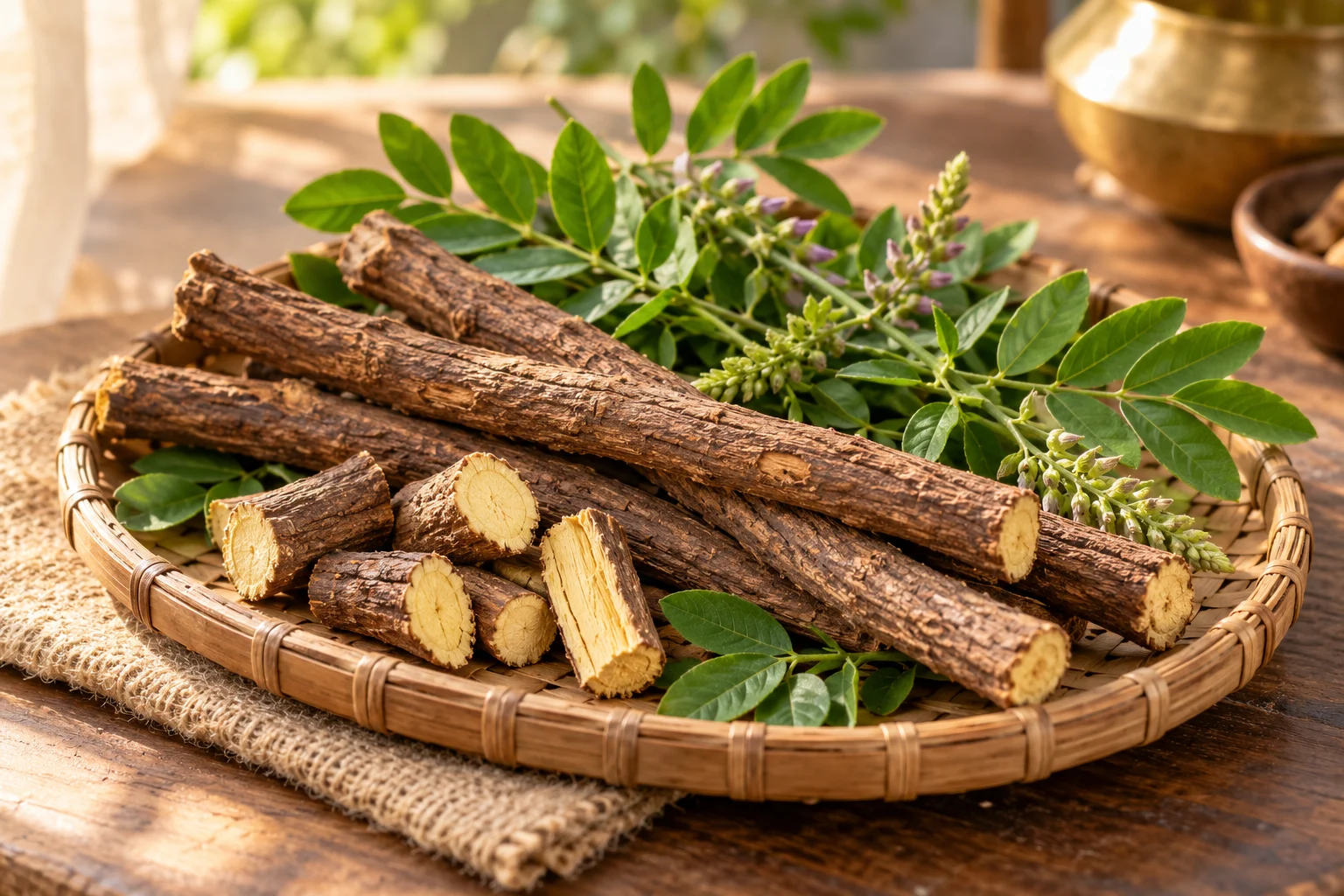
Licorice (Glycyrrhiza glabra), called mulethi in Hindi and yashtimadhu ("sweet stick") in Sanskrit, is a root herb valued in Ayurveda primarily for its soothing, demulcent qualities. Its Sanskrit name refers directly to its taste — one of the sweetest substances in the traditional materia medica — and sweetness in Ayurveda is associated with nourishing and calming qualities rather than just flavor. Yashtimadhu is classified as sweet in taste and cooling in effect, making it Vata- and Pitta-pacifying. It's traditionally used for a sore or irritated throat, dry cough, and as a soothing support for the stomach lining. It's also classically considered a mild rasayana with a particular reputation for supporting the voice, which is why classical texts sometimes recommend it for singers and public speakers.
मुलेठी (ग्लाइसिराइज़ा ग्लैब्रा), जिसे संस्कृत में यष्टिमधु ("मीठी छड़ी") कहा जाता है, एक जड़ी-बूटी है जिसे आयुर्वेद में मुख्यतः उसके सुखदायक, कोमल गुणों के लिए महत्व दिया जाता है। इसके संस्कृत नाम का सीधा संबंध इसके स्वाद से है — यह पारंपरिक औषधि-सूची में सबसे मीठे पदार्थों में से एक है — और आयुर्वेद में मिठास को केवल स्वाद नहीं बल्कि पोषक और शांतिदायक गुणों से जोड़ा जाता है। यष्टिमधु को मीठे रस और शीतल गुण वाली औषधि माना गया है, जो इसे वात और पित्त शामक बनाता है। इसे पारंपरिक रूप से गले की जलन, सूखी खाँसी, और पेट की परत को सुखदायक सहारा देने के लिए प्रयोग किया जाता है। इसे एक हल्का रसायन भी माना जाता है, जिसकी विशेष प्रतिष्ठा आवाज़ को सहायता देने के लिए है — इसीलिए शास्त्रों में इसे गायकों और वक्ताओं के लिए विशेष रूप से सुझाया गया है।
Benefits
- Traditionally used to soothe an irritated or sore throat.
- Long classical association with supporting a clear voice, especially for singers and speakers.
- Used to soothe the digestive lining, particularly for occasional acidity.
How to Use
Yashtimadhu is traditionally taken as a powder mixed into warm water or milk, as a decoction, or as small pieces of the dried root chewed directly for throat and voice support. It's also common as lozenges or in herbal tea blends.
A soothing counterpart to heating herbs
Licorice’s cooling, demulcent profile makes it a common counterbalance to more heating herbs in formulas for cough and throat irritation. See Tulsi and Ginger for the warming herbs it’s frequently combined with.
Note: Licorice can raise blood pressure and cause potassium loss with prolonged, high-dose use, so it should be used in moderation and avoided long-term by anyone with high blood pressure, kidney disease, or during pregnancy without practitioner guidance. Ayurvedic herbs and practices can interact with medication, pregnancy, and existing conditions — check with a qualified Ayurvedic practitioner or your doctor before starting something new.
Frequently Asked Questions
What is Licorice (Mulethi)?
Licorice (Glycyrrhiza glabra), called mulethi in Hindi and yashtimadhu ("sweet stick") in Sanskrit, is a root herb valued in Ayurveda primarily for its soothing, demulcent qualities. Its Sanskrit name refers directly to its taste — one of the sweetest substances in the traditional materia medica — and sweetness in Ayurveda is associated with nourishing and calming qualities rather than just flavor. Yashtimadhu is classified as sweet in taste and cooling in effect, making it Vata- and Pitta-pacifying. It's traditionally used for a sore or irritated throat, dry cough, and as a soothing support for the stomach lining. It's also classically considered a mild rasayana with a particular reputation for supporting the voice, which is why classical texts sometimes recommend it for singers and public speakers.
What are the benefits of Licorice (Mulethi)?
Traditionally used to soothe an irritated or sore throat. Long classical association with supporting a clear voice, especially for singers and speakers. Used to soothe the digestive lining, particularly for occasional acidity.
How to Use for Licorice (Mulethi)?
Yashtimadhu is traditionally taken as a powder mixed into warm water or milk, as a decoction, or as small pieces of the dried root chewed directly for throat and voice support. It's also common as lozenges or in herbal tea blends.