
Bhagavad Gita · Chapter 12
Bhakti Yoga — The Yoga of Devotion
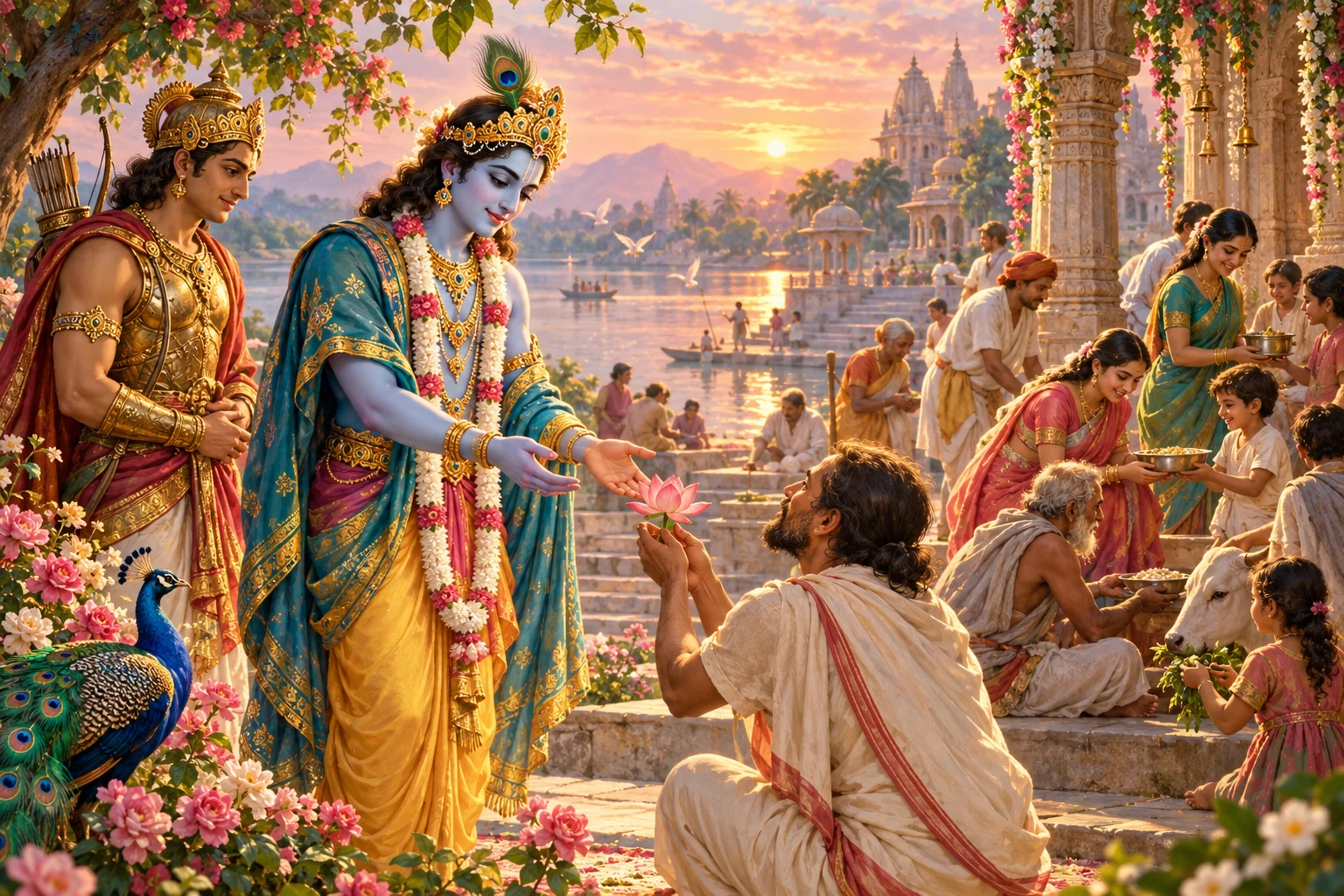
Chapter 12 of the Bhagavad Gita, Bhakti Yoga — The Yoga of Devotion, is part of Krishna's dialogue with Arjuna on the battlefield of Kurukshetra. Each shloka below includes the original Sanskrit verse, a transliteration, Hindi and English meaning, a clear explanation of the philosophy behind it, and the practical life lesson it offers — so you can read a single verse in depth or follow this chapter's complete argument verse by verse. See thefull chapter list to move between all 18 chapters.
How to study Chapter 12
Read the verses in sequence first, then return to the shlokas that speak most directly to your question. Notice the movement between Arjuna's concerns and Krishna's response: the Gita develops its teaching through dialogue, examples, discipline, and repeated clarification. Sanskrit preserves the sound of the original text, transliteration helps with pronunciation, and the meanings provide an accessible doorway for daily reflection.
A useful practice is to choose one verse for a week. Write its central idea in your own words, observe where attachment or fear appears in your day, and revisit the verse before making a difficult choice. This chapter is part of the larger 18-chapter Bhagavad Gita, so compare its theme with the chapters before and after it rather than reading any single line as an isolated slogan.
अर्जुन उवाच | एवं सततयुक्ता ये भक्तास्त्वां पर्युपासते | ये चाप्यक्षरमव्यक्तं तेषां के योगवित्तमाः
12.1 Arjuna said Those devotees who, ever steadfast, thus worship Thee and those also who worship the imperishable and the unmanifested which of them are better versed in Yoga?
12.2श्रीभगवानुवाच | मय्यावेश्य मनो ये मां नित्ययुक्ता उपासते | श्रद्धया परयोपेताः ते मे युक्ततमा मताः
12.2 The Blessed Lord said Those who, fixing their mind on Me, worship Me, ever steadfast and endowed with supreme faith, are the best in Yoga in My opinion.
12.3ये त्वक्षरमनिर्देश्यमव्यक्तं पर्युपासते | सर्वत्रगमचिन्त्यञ्च कूटस्थमचलन्ध्रुवम्
12.3 But those who worship the Imperishable, the indefinable, the unmanifest, the all-pervading, the unthinkable, the unchanging, the immovable and the eternal,
12.4सन्नियम्येन्द्रियग्रामं सर्वत्र समबुद्धयः | ते प्राप्नुवन्ति मामेव सर्वभूतहिते रताः
12.4 Having restrained all the senses, even-minded everywhere, intent on the welfare of all beings verily they also come unto Me.
12.5क्लेशोऽधिकतरस्तेषामव्यक्तासक्तचेतसाम् | अव्यक्ता हि गतिर्दुःखं देहवद्भिरवाप्यते
12.5 Greater is their trouble whose minds are set on the unmanifested; for the goal; the unmanifested, is very hard for the embodied to reach.
12.6ये तु सर्वाणि कर्माणि मयि संन्यस्य मत्परः | अनन्येनैव योगेन मां ध्यायन्त उपासते
12.6 But to those who worship Me, renouncing all actions in Me, regarding Me as the supreme gaol, meditating on Me with single-minded Yoga.
12.7तेषामहं समुद्धर्ता मृत्युसंसारसागरात् | भवामि नचिरात्पार्थ मय्यावेशितचेतसाम्
12.7 To those whose minds are set on Me, O Arjuna, verily I become ere long the saviour out of the ocean of Samsara.
12.8मय्येव मन आधत्स्व मयि बुद्धिं निवेशय | निवसिष्यसि मय्येव अत ऊर्ध्वं न संशयः
12.8 Fix thy mind in Me only, thy intellect in Me, (then) thou shalt no doubt live in Me alone hereafter.
12.9अथ चित्तं समाधातुं न शक्नोषि मयि स्थिरम् | अभ्यासयोगेन ततो मामिच्छाप्तुं धनञ्जय
12.9 If thou art unable to fix thy mind steadily on Me, then by the Yoga of constant practice do thou seek to reach Me, O Arjuna.
12.10अभ्यासेऽप्यसमर्थोऽसि मत्कर्मपरमो भव | मदर्थमपि कर्माणि कुर्वन्सिद्धिमवाप्स्यसि
12.10 If thou art unable to practise even this Abhyasa Yoga, be thou intent on doing actions for My sake; even by doing actions for My sake, thou shalt attain perfection.
12.11अथैतदप्यशक्तोऽसि कर्तुं मद्योगमाश्रितः | सर्वकर्मफलत्यागं ततः कुरु यतात्मवान्
12.11 If thou art unable to do even this, then, resorting to union with Me, renounce the fruits of all actions with the self controlled.
12.12श्रेयो हि ज्ञानमभ्यासाज्ज्ञानाद्ध्यानं विशिष्यते | ध्यानात्कर्मफलत्यागस्त्यागाच्छान्तिरनन्तरम्
12.12 Better indeed is knowledge than practice; than knowledge meditation is better; than meditation the renunciation of the fruits of actions: peace immediately follows renunciation.
12.13अद्वेष्टा सर्वभूतानां मैत्रः करुण एव च | निर्ममो निरहङ्कारः समदुःखसुखः क्षमी
12.13 He who hates no creature, who is friendly and compassionate to all, who is free from attachment and egoism, balanced in pleasure and pain, and forgiving.
12.13-14अद्वेष्टा सर्वभूतानां मैत्रः करुण एव च।
One who hates no being, who is friendly and compassionate, free from possessiveness and ego, equal in both pleasure and pain, forgiving; ever content, steady in practice, self-controlled, firm in conviction, with mind and intellect surrendered to Me — such a devotee is dear to Me.
12.14सन्तुष्टः सततं योगी यतात्मा दृढनिश्चयः | मय्यर्पितमनोबुद्धिर्यो मद्भक्तः स मे प्रियः
12.14 Ever content, steady in meditation, self-controlled, possessed of firm conviction, with the mind and intellect dedicated to Me, he, My devtoee, is dear to Me.
12.15यस्मान्नोद्विजते लोको लोकान्नोद्विजते च यः | हर्षामर्षभयोद्वेगैर्मुक्तो यः स च मे प्रियः
12.15 He by whom the world is not agitated and who cannot be agitated by the world, and who is freed from joy, anger, fear and anxiety he is dear to Me.
12.16अनपेक्षः शुचिर्दक्ष उदासीनो गतव्यथः | सर्वारम्भपरित्यागी यो मद्भक्तः स मे प्रियः
12.16 He who is free from wants, pure, expert, unconcerned, and free from pain, renouncing all undertakings or commencements he who is (thus) devoted to Me, is dear to Me.
12.17यो न हृष्यति न द्वेष्टि न शोचति न काङ्क्षति | शुभाशुभपरित्यागी भक्तिमान्यः स मे प्रियः
12.17 He who neither rejoices, nor hates, nor grieves, nor desires, renouncing good and evil, and who is full of devotion, is dear to Me.
12.18समः शत्रौ च मित्रे च तथा मानापमानयोः | शीतोष्णसुखदुःखेषु समः सङ्गविवर्जितः
12.18 He who is the same to foe and friend, and also in honour and dishonour, who is the same in cold and heat, in pleasure and pain, and who is free from attachment,
12.19तुल्यनिन्दास्तुतिर्मौनी सन्तुष्टो येन केनचित् | अनिकेतः स्थिरमतिर्भक्तिमान्मे प्रियो नरः
12.19 He to whom censure and praise are eal, who is silent, content with anything, homeless, of a steady mind, and full of devotion that man is dear to Me.
12.20ये तु धर्म्यामृतमिदं यथोक्तं पर्युपासते | श्रद्दधाना मत्परमा भक्तास्तेऽतीव मे प्रियाः
12.20 They verily who follow this immortal Dharma (law or doctrine) as described above, endowed with faith, regarding Me as their supreme goal, they, the devotees, are exceedingly dear to Me.
21 verses of Chapter 12 are covered so far, with more being added as each one is written, translated, and checked for accuracy rather than published all at once. If there's a specific shloka from this chapter you'd like to see next, let us know via the contact page.