
Bhagavad Gita · Chapter 17
Shraddhatraya Vibhaga Yoga — The Three Kinds of Faith
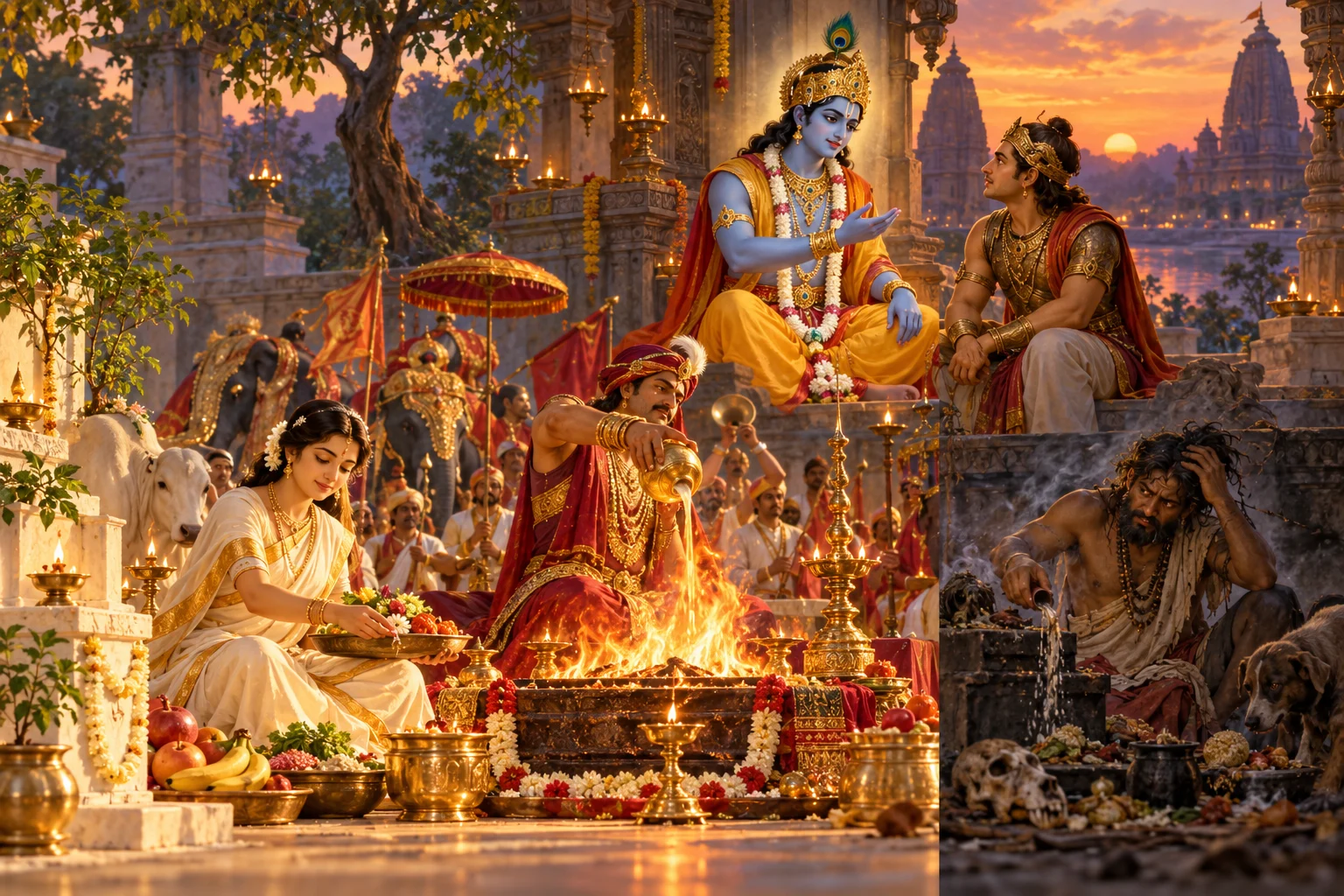
Chapter 17 of the Bhagavad Gita, Shraddhatraya Vibhaga Yoga — The Three Kinds of Faith, is part of Krishna's dialogue with Arjuna on the battlefield of Kurukshetra. Each shloka below includes the original Sanskrit verse, a transliteration, Hindi and English meaning, a clear explanation of the philosophy behind it, and the practical life lesson it offers — so you can read a single verse in depth or follow this chapter's complete argument verse by verse. See thefull chapter list to move between all 18 chapters.
How to study Chapter 17
Read the verses in sequence first, then return to the shlokas that speak most directly to your question. Notice the movement between Arjuna's concerns and Krishna's response: the Gita develops its teaching through dialogue, examples, discipline, and repeated clarification. Sanskrit preserves the sound of the original text, transliteration helps with pronunciation, and the meanings provide an accessible doorway for daily reflection.
A useful practice is to choose one verse for a week. Write its central idea in your own words, observe where attachment or fear appears in your day, and revisit the verse before making a difficult choice. This chapter is part of the larger 18-chapter Bhagavad Gita, so compare its theme with the chapters before and after it rather than reading any single line as an isolated slogan.
अर्जुन उवाच | ये शास्त्रविधिमुत्सृज्य यजन्ते श्रद्धयान्विताः | तेषां निष्ठा तु का कृष्ण सत्त्वमाहो रजस्तमः
17.1 Arjuna said Those who, setting aside the ordinances of the scriptures, perform sacrifice with faith, what is their condition, O Krishna? Is is Sattva, Rajas or Tamas?
17.2श्रीभगवानुवाच | त्रिविधा भवति श्रद्धा देहिनां सा स्वभावजा | सात्त्विकी राजसी चैव तामसी चेति तां शृणु
17.2 The Blessed Lord said Threefold is the faith of the embodied, which is inherent in their nature the Sattvic (pure), the Rajasic (passionate) and the Tamasic (dark). Do thou hear of it.
17.3सत्त्वानुरूपा सर्वस्य श्रद्धा भवति भारत।
O Bharata, everyone's faith conforms to their inner nature. A person is made of their faith — as one's faith is, so indeed is that person.
17.4यजन्ते सात्त्विका देवान्यक्षरक्षांसि राजसाः | प्रेतान्भूतगणांश्चान्ये यजन्ते तामसा जनाः
17.4 The Sattvic or the pure men worship the gods; the Rajasic or the passionate worship the Yakshas and the Rakshasas; the others (the Tamasic or the deluded people) worship the ghosts and the hosts of the nature-spirits.
17.5अशास्त्रविहितं घोरं तप्यन्ते ये तपो जनाः | दम्भाहंकारसंयुक्ताः कामरागबलान्विताः
17.5 Those men who practise terrific austerities not enjoined by the scriptures, given to hypocrisy and egoism, impelled by the force of lust and attachment.
17.6कर्षयन्तः शरीरस्थं भूतग्राममचेतसः | मां चैवान्तःशरीरस्थं तान्विद्ध्यासुरनिश्चयान्
17.6 Senseless, torturing all the elements in the body and Me also, Who dwell in the body, know thou these to be of demonical resolves.
17.7आहारस्त्वपि सर्वस्य त्रिविधो भवति प्रियः | यज्ञस्तपस्तथा दानं तेषां भेदमिमं शृणु
17.7 The food also which is dear to each is threefold, as also sacrifice, austerity and almsgiving. Hear thou the distinction of these.
17.8आयुःसत्त्वबलारोग्यसुखप्रीतिविवर्धनाः | रस्याः स्निग्धाः स्थिरा हृद्या आहाराः सात्त्विकप्रियाः
17.8 The foods which increase life, purity, strength, health, joy and cheerfulness (good appetite), which are savoury and oleaginous, substantial and agreeable, are dear to the Sattvic (pure) people.
17.9कट्वम्ललवणात्युष्णतीक्ष्णरूक्षविदाहिनः | आहारा राजसस्येष्टा दुःखशोकामयप्रदाः
17.9 The foods that are bitter, sour, saline, excessively hot, pungent, dry and burning, are liked by the Rajasic and are productive of pain, grief and disease.
17.10यातयामं गतरसं पूति पर्युषितं च यत् | उच्छिष्टमपि चामेध्यं भोजनं तामसप्रियम्
17.10 That which is state, tasteless, putrid, rotten, refuse and impure, is the food liked by the Tamasic.
17.11अफलाङ्क्षिभिर्यज्ञो विधिदृष्टो य इज्यते | यष्टव्यमेवेति मनः समाधाय स सात्त्विकः
17.11 That sacrifice which is offered by men without desire for reward as enjoined by the ordinance (scripture), with a firm faith that to do so is a duty, is Sattvic or pure.
17.12अभिसन्धाय तु फलं दम्भार्थमपि चैव यत् | इज्यते भरतश्रेष्ठ तं यज्ञं विद्धि राजसम्
17.12 The sacrifice which is offered, O Arjuna, seeking a reward and for ostentation, know thou that to be a Rajasic Yajna.
17.13विधिहीनमसृष्टान्नं मन्त्रहीनमदक्षिणम् | श्रद्धाविरहितं यज्ञं तामसं परिचक्षते
17.13 They declare that sacrifice to be Tamasic which is contrary to the ordinances of the scriptures, in which no food is distributed, which is devoid of Mantras, gifts and faith.
17.14देवद्विजगुरुप्राज्ञपूजनं शौचमार्जवम् | ब्रह्मचर्यमहिंसा च शारीरं तप उच्यते
17.14 Worship of the gods, the twice-born, the teachers and the wise, purity, straightforwardness, celibacy and non-injury are called the austerities of the body.
17.15अनुद्वेगकरं वाक्यं सत्यं प्रियहितं च यत् | स्वाध्यायाभ्यसनं चैव वाङ्मयं तप उच्यते
17.15 Speech which causes no excitement, truthful, pleasant and beneficial, the practice of the study of the Vedas, are called austerity of speech.
17.16मनः प्रसादः सौम्यत्वं मौनमात्मविनिग्रहः | भावसंशुद्धिरित्येतत्तपो मानसमुच्यते
17.16 Serenity of mind, good-heartedness, self-control, purity of nature this is called mental austerity.
17.17श्रद्धया परया तप्तं तपस्तत्त्रिविधं नरैः | अफलाकाङ्क्षिभिर्युक्तैः सात्त्विकं परिचक्षते
17.17 This threefold austerity, practised by steadfast men, with the utmost faith, desiring no reward, they call Sattvic.
17.18सत्कारमानपूजार्थं तपो दम्भेन चैव यत् | क्रियते तदिह प्रोक्तं राजसं चलमध्रुवम्
17.18 The austerity which is practised with the object of gaining good reception, honour and worship, and with hypocrisy, is here said to be Rajasic, unstable and transitory.
17.19मूढग्राहेणात्मनो यत्पीडया क्रियते तपः | परस्योत्सादनार्थं वा तत्तामसमुदाहृतम्
17.19 That austerity which is practised out of a foolish notion, with self-torture, or for the purpose of destroying another, is declared to be Tamasic.
17.20दातव्यमिति यद्दानं दीयतेऽनुपकारिणे | देशे काले च पात्रे च तद्दानं सात्त्विकं स्मृतम्
17.20 That gift which is given to one who does nothing in return, knowing it to be a duty to give in a fit place and time to a worthy person, that gift is held to be Sattvic.
17.21यत्तु प्रत्युपकारार्थं फलमुद्दिश्य वा पुनः | दीयते च परिक्लिष्टं तद्दानं राजसं स्मृतम्
17.21 And, that gift which is given with a view to receive something in return, or looking for a reward, or reluctantly, is held to be Rajasic.
17.22अदेशकाले यद्दानमपात्रेभ्यश्च दीयते | असत्कृतमवज्ञातं तत्तामसमुदाहृतम्
17.22 The gift that is given at a wrong place and time, to unworthy persons, without respect or with insult is declared to be Tamasic.
17.23ॐतत्सदिति निर्देशो ब्रह्मणस्त्रिविधः स्मृतः | ब्राह्मणास्तेन वेदाश्च यज्ञाश्च विहिताः पुरा
17.23 "Om Tat Sat": This has been declared to be the triple designation of Brahman. By that were created formerly, the Brahmanas, the Vedas and the sacrifices.
17.24तस्मादोमित्युदाहृत्य यज्ञदानतपःक्रियाः | प्रवर्तन्ते विधानोक्ताः सततं ब्रह्मवादिनाम्
17.24 Therefore, with the utterance of "Om" are the acts of sacrifice, gift and austerity as enjoined in the scriptures, always begun by the students of Brahman.
17.25तदित्यनभिसन्धाय फलं यज्ञतपःक्रियाः | दानक्रियाश्च विविधाः क्रियन्ते मोक्षकाङ्क्षिभिः
17.25 Uttering ï1Tatï1, without aiming at the fruits, are the acts of sacrifice and austerity and the various acts of gifts performed by the seekers of liberation.
17.26सद्भावे साधुभावे च सदित्येतत्प्रयुज्यते | प्रशस्ते कर्मणि तथा सच्छब्दः पार्थ युज्यते
17.26 The word ï1Satï1 is used in the sense of reality and of goodness; and so also, O Arjuna, the word ï1Satï1 is used in the sense of an auspicious act.
17.27यज्ञे तपसि दाने च स्थितिः सदिति चोच्यते | कर्म चैव तदर्थीयं सदित्येवाभिधीयते
17.27 Steadfastness in sacrifice, austerity and gift, is also called 'Sat' and also action in connection with these (or for the sake of the Supreme) is called 'Sat'.
17.28अश्रद्धया हुतं दत्तं तपस्तप्तं कृतं च यत् | असदित्युच्यते पार्थ न च तत्प्रेत्य नो इह
17.28 Whatever is sacrificed, given or performed, and whatever austerity is practised without faith, it is called 'Asat', O Arjuna; it is naught here or hereafter (after death).
28 verses of Chapter 17 are covered so far, with more being added as each one is written, translated, and checked for accuracy rather than published all at once. If there's a specific shloka from this chapter you'd like to see next, let us know via the contact page.