
Bhagavad Gita · Chapter 16
Daivasura Sampad Vibhaga Yoga — Divine and Demonic Qualities
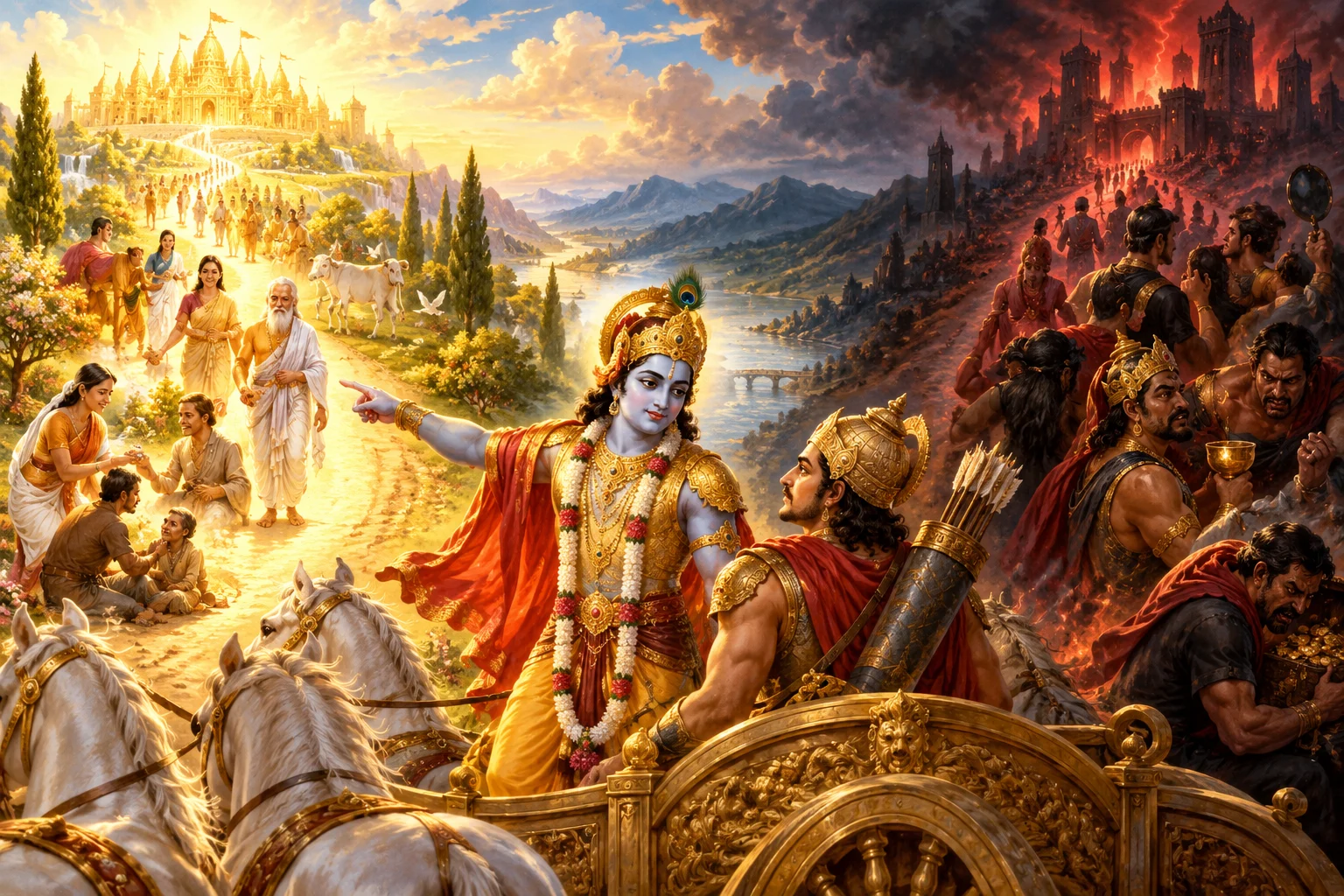
Chapter 16 of the Bhagavad Gita, Daivasura Sampad Vibhaga Yoga — Divine and Demonic Qualities, is part of Krishna's dialogue with Arjuna on the battlefield of Kurukshetra. Each shloka below includes the original Sanskrit verse, a transliteration, Hindi and English meaning, a clear explanation of the philosophy behind it, and the practical life lesson it offers — so you can read a single verse in depth or follow this chapter's complete argument verse by verse. See thefull chapter list to move between all 18 chapters.
How to study Chapter 16
Read the verses in sequence first, then return to the shlokas that speak most directly to your question. Notice the movement between Arjuna's concerns and Krishna's response: the Gita develops its teaching through dialogue, examples, discipline, and repeated clarification. Sanskrit preserves the sound of the original text, transliteration helps with pronunciation, and the meanings provide an accessible doorway for daily reflection.
A useful practice is to choose one verse for a week. Write its central idea in your own words, observe where attachment or fear appears in your day, and revisit the verse before making a difficult choice. This chapter is part of the larger 18-chapter Bhagavad Gita, so compare its theme with the chapters before and after it rather than reading any single line as an isolated slogan.
श्रीभगवानुवाच | अभयं सत्त्वसंशुद्धिर्ज्ञानयोगव्यवस्थितिः | दानं दमश्च यज्ञश्च स्वाध्यायस्तप आर्जवम्
16.1 The Blessed Lord said Fearlessness, purity of heart, steadfastness in knowledge and Yoga, almsgiving, control of the senses, sacrifice, study of scriptures, austerity and straightforwardness.
16.2अहिंसा सत्यमक्रोधस्त्यागः शान्तिरपैशुनम् | दया भूतेष्वलोलुप्त्वं मार्दवं ह्रीरचापलम्
16.2 Harmlessness, truth, absence of anger, renunciation, peacefulness, absence of crookedness, compassion towards beings, non-covetousness, gentleness, modesty, absence of fickleness.
16.3तेजः क्षमा धृतिः शौचमद्रोहो नातिमानिता | भवन्ति सम्पदं दैवीमभिजातस्य भारत
16.3 Vigour, forgiveness, fortitude, purity, absence of hatred, absence of pride these belong to the one born for a divine state, O Arjuna.
16.4दम्भो दर्पोऽभिमानश्च क्रोधः पारुष्यमेव च | अज्ञानं चाभिजातस्य पार्थ सम्पदमासुरीम्
16.4 Hypocrisy, arrogance and self-conceit, anger and also harshness and ignorance, belong to one who is born for a demoniacal state, O Partha (Arjuna).
16.5दैवी सम्पद्विमोक्षाय निबन्धायासुरी मता | मा शुचः सम्पदं दैवीमभिजातोऽसि पाण्डव
16.5 The divine nature is deemed conducive to liberation, and the demoniacal to bondage. Grieve not, O Arjuna, thou art born with divine endowments.
16.6द्वौ भूतसर्गौ लोकेऽस्मिन्दैव आसुर एव च | दैवो विस्तरशः प्रोक्त आसुरं पार्थ मे शृणु
16.6 There are two types of beings in this world, the divine and the demoniacal; the divine has been described at length; hear from Me, O Arjuna, of the demoniacal.
16.7प्रवृत्तिं च निवृत्तिं च जना न विदुरासुराः | न शौचं नापि चाचारो न सत्यं तेषु विद्यते
16.7 The demoniacal know not what to do and what to refrain from; neither purity, nor right conduct nor truth is found in them.
16.8असत्यमप्रतिष्ठं ते जगदाहुरनीश्वरम् | अपरस्परसम्भूतं किमन्यत्कामहैतुकम्
16.8 They say, "This universe is without truth, without (moral) basis, without a God, brought about by mutual union, with lust for its cause; what else?"
16.9एतां दृष्टिमवष्टभ्य नष्टात्मानोऽल्पबुद्धयः | प्रभवन्त्युग्रकर्माणः क्षयाय जगतोऽहिताः
16.9 Holding this view, these ruined souls of small intellect and fierce deeds, come forth as the enemies of the world for its destruction.
16.10काममाश्रित्य दुष्पूरं दम्भमानमदान्विताः | मोहाद्गृहीत्वासद्ग्राहान्प्रवर्तन्तेऽशुचिव्रताः
16.10 Filled with insatiable desires, full of hypocrisy, pride and arrogance, holding evil ideas through delusion, they work with impure resolves.
16.11चिन्तामपरिमेयां च प्रलयान्तामुपाश्रिताः | कामोपभोगपरमा एतावदिति निश्चिताः
16.11 Giving themselves over to immeasurable cares ending only with death, regarding gratification of lust as their highest aim, and feeling sure that that is all.
16.12आशापाशशतैर्बद्धाः कामक्रोधपरायणाः | ईहन्ते कामभोगार्थमन्यायेनार्थसञ्चयान्
16.12 Bound by a hundred ties of hope, given over to lust and anger, they strive to obtain by unlawful means hoards to wealth for sensual enjoyments.
16.13इदमद्य मया लब्धमिमं प्राप्स्ये मनोरथम् | इदमस्तीदमपि मे भविष्यति पुनर्धनम्
16.13 "This has been gained by me today; this desire of mine I shall fuffil; this is mine and this wealth also shall be mine in future."
16.14असौ मया हतः शत्रुर्हनिष्ये चापरानपि | ईश्वरोऽहमहं भोगी सिद्धोऽहं बलवान्सुखी
16.14 "That enemy has been slain by me; and others also I shall slay. I am the lord. I enjoy. I am perfect, powerful and happy."
16.15आढ्योऽभिजनवानस्मि कोऽन्योऽस्ति सदृशो मया | यक्ष्ये दास्यामि मोदिष्य इत्यज्ञानविमोहिताः
16.15 "I am rich and born in a noble family. Who else is equal to me? I shall perform sacrifices. I shall give (charity). I shall rejoice," thus deluded by ignorance.
16.16अनेकचित्तविभ्रान्ता मोहजालसमावृताः | प्रसक्ताः कामभोगेषु पतन्ति नरकेऽशुचौ
16.16 Bewildered by many a fancy, entangled in the snare of delusion, addicted to the gratification of lust, they fall into a foul hell.
16.17आत्मसम्भाविताः स्तब्धा धनमानमदान्विताः | यजन्ते नामयज्ञैस्ते दम्भेनाविधिपूर्वकम्
16.17 Self-conceited, stubborn, filled with the pride and intoxication of wealth, they perform sacrifices in name out of ostentation, contrary to scriptural ordinances.
16.18अहंकारं बलं दर्पं कामं क्रोधं च संश्रिताः | मामात्मपरदेहेषु प्रद्विषन्तोऽभ्यसूयकाः
16.18 Given over to egoism, power, haughtiness, lust and anger, these malicious people hate Me in their own bodies and in those of others.
16.19तानहं द्विषतः क्रुरान्संसारेषु नराधमान् | क्षिपाम्यजस्रमशुभानासुरीष्वेव योनिषु
16.19 Those cruel haters, worst among men in the world, I hurl those evil-doers into the wombs of demons only.
16.20आसुरीं योनिमापन्ना मूढा जन्मनि जन्मनि | मामप्राप्यैव कौन्तेय ततो यान्त्यधमां गतिम्
16.20 Entering into demoniacal wombs and deluded, birth after birth, not attaining Me, they thus fall, O Arjuna, into a condition still lower than that.
16.21त्रिविधं नरकस्येदं द्वारं नाशनमात्मनः।
Lust, anger, and greed — these are the three gates leading to hell, destructive to the self. Therefore, one should abandon all three.
16.22एतैर्विमुक्तः कौन्तेय तमोद्वारैस्त्रिभिर्नरः | आचरत्यात्मनः श्रेयस्ततो याति परां गतिम्
16.22 A man who is liberated from these three gates to darkness, O Arjuna, practises what is good for him and thus goes to the Supreme Goal.
16.23यः शास्त्रविधिमुत्सृज्य वर्तते कामकारतः | न स सिद्धिमवाप्नोति न सुखं न परां गतिम्
16.23 He who, having cast aside the ordinances of the scriptures, acts under the impulse of desire, attains not perfection, nor happiness nor the Supreme Goal.
16.24तस्माच्छास्त्रं प्रमाणं ते कार्याकार्यव्यवस्थितौ | ज्ञात्वा शास्त्रविधानोक्तं कर्म कर्तुमिहार्हसि
16.24 Therefore, let the scripture be thy authority in determining what ought to be done and what ought not to be done. Having known what is said in the ordinance of the scriptures, thou shouldst act here in this world.
24 verses of Chapter 16 are covered so far, with more being added as each one is written, translated, and checked for accuracy rather than published all at once. If there's a specific shloka from this chapter you'd like to see next, let us know via the contact page.