
🧘 Practice Guides
Ardha Chandrasana: Meaning, Steps, and Benefits of Half Moon Pose
Last updated: October 9, 2026
Ardha Chandrasana, half moon pose, combines balance, strength, and openness in one demanding shape. Here's how it's built, one piece at a time.
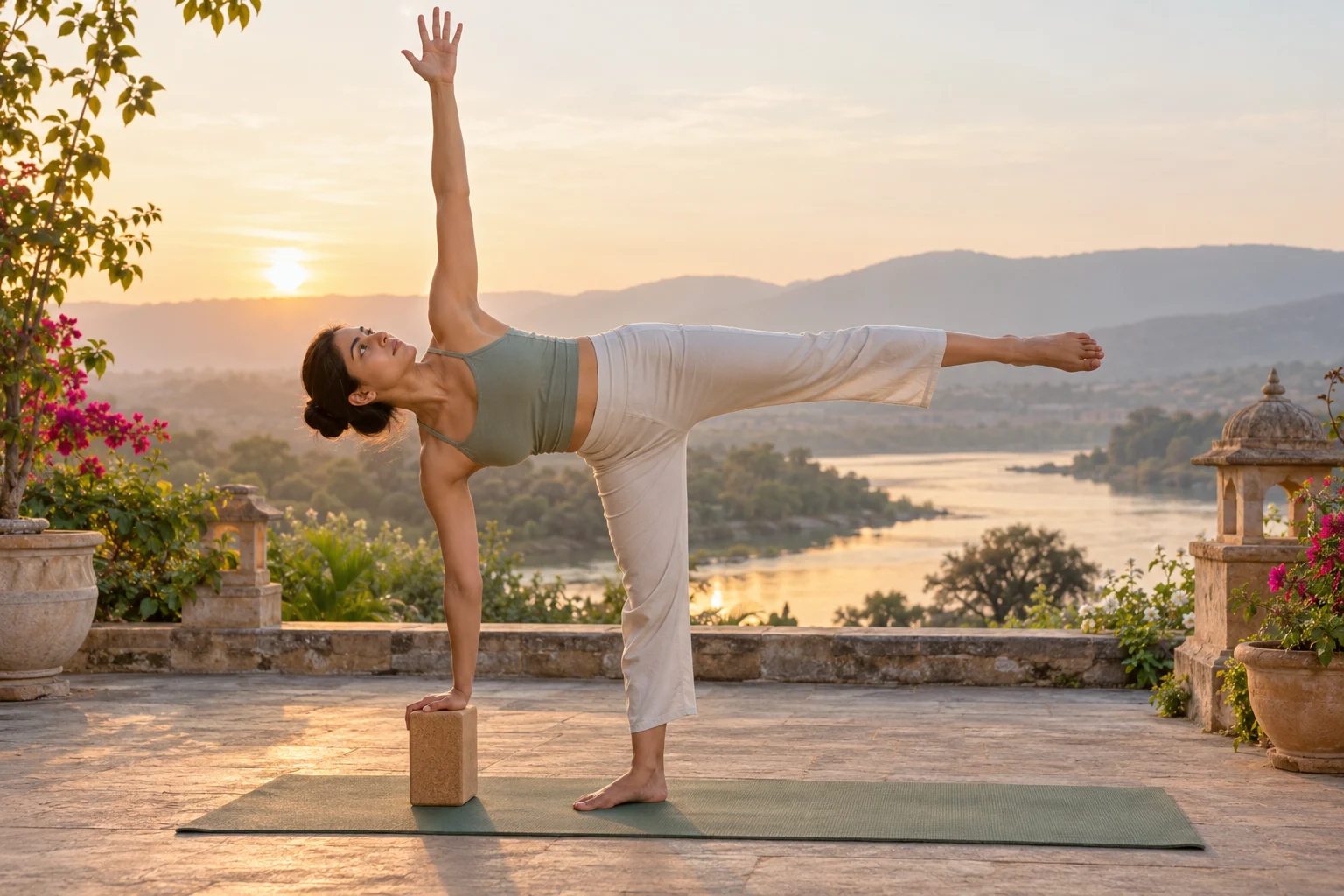
Ardha Chandrasana, or half moon pose, combines a standing balance with an open hip and a lifted leg. The shape can look effortless in a photograph, but it asks the standing foot, leg, pelvis, spine, shoulders, gaze, and breath to coordinate. Treat it as a gradual balance practice rather than a test of flexibility. A block and a wall are useful teaching tools, not signs that the pose is incomplete.
What Ardha Chandrasana means
In Sanskrit, ardha means “half,” chandra means “moon,” and asana means “seat” or posture. The English name refers to the expansive, moon-like shape of the body. Different yoga lineages may cue the entry and final alignment differently, so follow the method taught by a qualified instructor when it differs from a general written guide.
The posture is commonly explored after stable standing poses such as Trikonasana. Before trying it, warm the ankles and hips with comfortable movement and practise transferring weight between the feet. Keep the practice area clear and use a non-slip surface.
Step-by-step practice with a block
- Begin in Trikonasana with the right foot forward. Bring the left hand to the left hip and look toward the floor.
- Bend the right knee and place a block under the right hand, around 20–30 centimetres in front of and slightly outside the right foot. The exact distance depends on your proportions.
- Shift weight gradually into the right foot and hand. Step the left foot closer, then lift it only as high as you can without twisting or gripping.
- Straighten the standing leg without locking or forcing the knee. Press through the lifted heel and keep the toes pointing generally toward the long side of the mat.
- Rotate the chest gently to the left. Keep the left hand on the hip or reach it upward if the shoulder feels comfortable.
- Look at the floor, straight ahead, or upward. The floor gaze is usually the steadiest. Take two or three natural breaths, then bend the standing knee and step back with control.
- Pause before repeating on the other side. Work for steadiness, not identical shapes on both sides.
Useful modifications and alignment cues
Place the block at its highest setting if reaching downward rounds the torso or makes breathing difficult. For more support, practise with your back or lifted foot lightly touching a wall. Another option is to keep the lifted leg lower and the top hand on the hip. These variations let you learn the weight shift while reducing the demand on balance.
Spread the toes of the standing foot and notice pressure at the heel and forefoot. Keep a small bend in the standing knee if it tends to lock. Lengthen the crown of the head away from the lifted heel; avoid chasing height by collapsing the waist or turning the standing knee inward. If balance becomes uncertain, come out early rather than hopping repeatedly on one foot.
Ardha Chandrasana benefits
The benefits of Ardha Chandrasana come from holding a one-legged balance while the hips and chest open to the side. Teachers usually highlight these:
- Balance and stability — standing on one leg trains the small muscles of the foot and ankle and the body’s sense of position (proprioception).
- Leg and hip strength — the standing leg’s thigh, glutes, and outer hip work to hold the pelvis level, while the lifted leg engages the back of the body.
- Core control — the trunk must stay long and steady sideways, which recruits the obliques and deep abdominal muscles.
- Hip and hamstring opening — the standing-leg hamstring lengthens and the hips open, preparing for other side-facing standing poses.
- Chest and shoulder opening — the extended top arm and turned chest counter the rounded posture of long hours at a desk.
- Concentration — a steady gaze (drishti) and even breath are needed to stay up, which makes the pose a practical lesson in focus.
| At a glance | |
|---|---|
| English name | Half moon pose |
| Pose type | Standing balance, side-facing |
| Level | Intermediate; beginners use a block or wall |
| Usual entry | From Trikonasana (triangle pose) |
| Hold | 3–5 breaths per side to start |
Benefits, limits, and safety
Practitioners often use Ardha Chandrasana to train balance, concentration, leg endurance, and awareness of hip position. These are practice aims, not promises of treatment. Research about yoga usually examines complete programmes rather than one pose, so a single asana should not be described as curing pain or a medical condition. The US National Center for Complementary and Integrative Health recommends learning yoga safely and adapting practice to individual needs.
Skip the pose or seek personalised guidance if you have an acute ankle, knee, hip, wrist, shoulder, or back injury; significant dizziness; or a condition that makes falling especially risky. People who are pregnant, recovering from surgery, or managing glaucoma or blood-pressure concerns should ask an appropriate clinician and an experienced teacher about suitable modifications. Stop if you feel sharp pain, numbness, faintness, visual disturbance, or unusual shortness of breath.
A simple way to progress
Practise the supported version for a few breaths on each side, two or three times a week, after a warm-up. First make the entry and exit quiet. Then reduce pressure on the block, and only later move away from the wall. Pairing the pose with a simpler standing sequence or Tadasana can make progress easier to notice. Consistency and control matter more than holding the posture for a long time.
Common questions
What does “Ardha Chandrasana” mean?
“Half moon pose” — ardha meaning half, chandra meaning moon, referring to the crescent shape formed by the body.
Is it okay to use a block in Ardha Chandrasana?
Yes — placing a block under the lower hand is a common, valid modification that improves stability without reducing the pose’s benefit.
What pose usually leads into Ardha Chandrasana?
Trikonasana (triangle pose) is the most common entry point into this posture.
Is Ardha Chandrasana suitable for beginners?
It can be introduced to beginners with a high block and wall support after basic standing balance is comfortable. Anyone with an injury or high fall risk should seek individual guidance first.