
🧘 Practice Guides
Vrikshasana: Meaning, Steps, and Benefits of Tree Pose
Last updated: September 26, 2026
Vrikshasana, tree pose, is often one of the first balancing postures taught in yoga — and one of the clearest ways to notice how the mind affects balance.
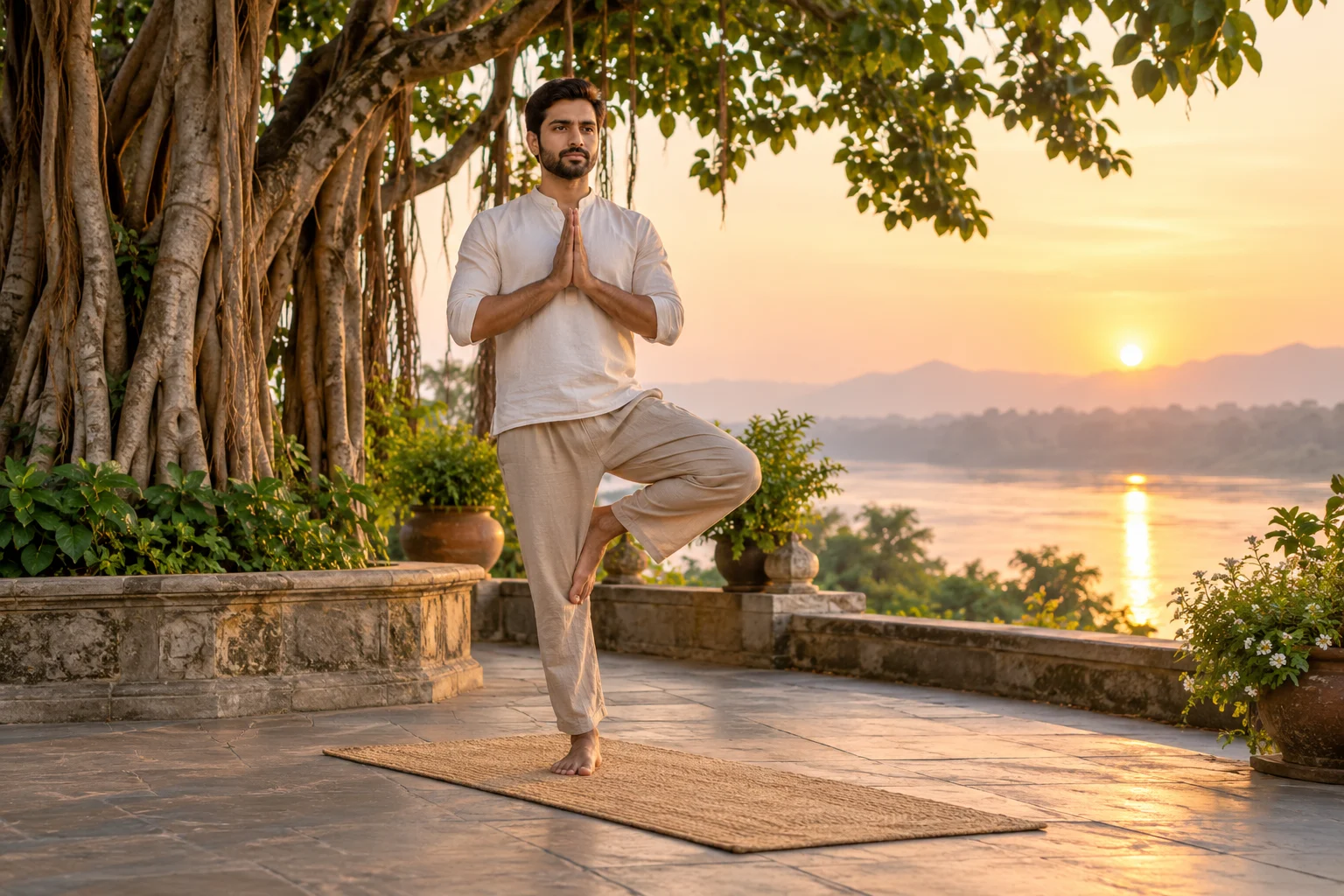
Vrikshasana, or tree pose, is a standing balance named for the image of a tree: a stable base, an upright trunk, and branches reaching outward or upward. It is often introduced early in yoga, but “beginner” does not mean easy. Balance changes from day to day with fatigue, vision, stress, injury, medication, and the surface underfoot. The purpose is attentive practice, not remaining perfectly still.
Set up a safe practice space
Use a firm, non-slip surface with a clear area around you. Stand beside a wall or sturdy chair if a fall is possible; using support is a sound training choice. Avoid a thick cushion, which can make the ankle less predictable. Begin in Tadasana and feel the heel, base of the big toe, and base of the little toe of each foot.
How it’s practiced
- Shift weight gradually into the left foot while keeping the standing knee softly extended rather than locked backward.
- Turn the right knee outward only as far as the pelvis can remain facing generally forward. Place the right toes on the floor with the heel at the ankle, or place the sole against the inner calf or inner thigh.
- Do not press the foot directly into the side of the knee joint. Press the standing leg and lifted foot gently toward each other.
- Bring the hands together at the chest or keep one hand on support. If steady, reach the arms up without lifting the shoulders.
- Choose a still point at eye level and breathe for three to five comfortable cycles. Step down with control, pause in Tadasana, and repeat on the other side.
Practise both sides, but do not expect them to feel identical. A wall variation may be preferable when one leg is recovering or when balance is affected by age or a neurological condition.
Why the gaze matters
A steady visual point, often called drishti, gives the nervous system consistent information about orientation. Keep the eyes soft rather than staring aggressively. Closing the eyes makes balance much harder and is not a necessary progression. If vision is limited, use touch from a wall, chair, or teacher and prioritise fall prevention.
Wobbling is normal: the foot and ankle make continual small corrections. Instead of treating movement as failure, notice it and return attention to the ground, breath, and chosen visual point. If the raised foot slips, lower it and reset rather than gripping the standing leg.
Useful modifications
Keep the lifted toes on the floor in a “kickstand” version. Another option is to stand with the back near a wall or hold a chair with one hand. If external rotation at the hip is restricted, place the foot lower rather than pushing the knee sideways. The pose should not create twisting pain in the standing knee or pressure in the lifted knee.
For a mild progression, vary the arm position or hold a little longer while maintaining a quiet breath. Do not progress by placing the foot higher at the expense of pelvic control. Advanced variations on unstable surfaces are unnecessary for most yoga practice. Once tree pose feels steady, Garudasana (eagle pose) is a natural next standing balance.
Traditional benefits
Tree pose challenges balance, standing-leg endurance, ankle control, and attention. Repeated practice may help a practitioner become more skilful at this specific balance task, but it does not guarantee fall prevention or cure a balance disorder. Broader strength, vision, hearing, medication, and health factors also matter.
Precautions
Use close support if you are prone to falls, dizzy, recovering from lower-limb injury, or affected by a vestibular or neurological condition. Stop if you feel faint, numb, or unstable. People with acute ankle, knee, or hip pain should seek an appropriate alternative. If unexplained balance changes are new, sudden, or persistent, obtain medical assessment rather than trying to correct them through yoga alone.
Balance practice is safest when you can step out freely. Do not practise near stairs, sharp furniture, or an open flame. A qualified teacher can adapt the stance, but medical conditions should be assessed by a relevant healthcare professional.
Common questions
What does “Vrikshasana” mean?
“Tree pose” — vriksha meaning tree, reflecting the pose’s rooted, branching shape.
Why do I wobble in Vrikshasana?
Small corrections are normal. Fatigue, vision, attention, surface, and many health factors can all affect steadiness; a fixed gaze and wall support often help.
Where should the raised foot rest?
Against the inner calf or inner thigh — never directly on the side of the knee joint, which isn’t a stable or safe placement.
Is Vrikshasana good for beginners?
Yes. Start with toes on the floor and a hand on a wall or chair. Support is an appropriate version, not a failure.