
🧘 Practice Guides
Tadasana: Meaning, Steps, and Benefits of Mountain Pose
Last updated: September 26, 2026
Tadasana looks like standing still, but mindful foot pressure, breathing, and alignment make it a useful foundation for standing yoga poses.
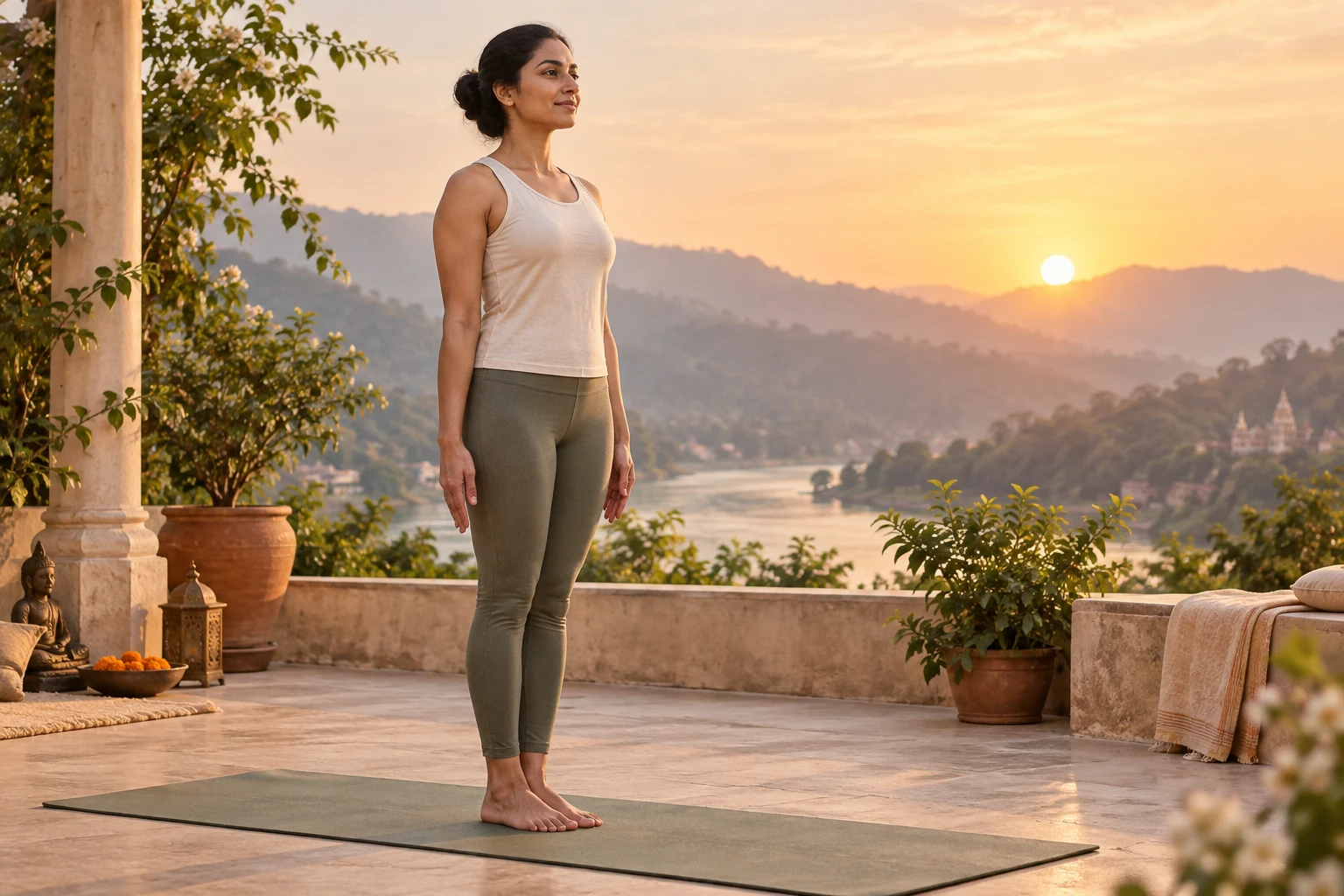
Tadasana, commonly called Mountain Pose, is a foundational standing posture in yoga. Although it resembles ordinary standing, the practice asks you to notice how the feet meet the floor, how the body stacks over them, and whether the breath can remain easy.
The Sanskrit tada is commonly translated as mountain, suggesting stable and upright presence. Some teaching systems distinguish Tadasana from Samasthiti, while others use the names closely; follow the vocabulary of your teacher without assuming every lineage uses identical alignment.
Tadasana steps for beginners
- Stand with the feet together or hip-width apart. Choose the width that makes balance steady.
- Spread the toes comfortably and feel the heel, base of the big toe, and base of the little toe.
- Distribute weight across both feet without forcing every point to feel mathematically equal.
- Keep the knees facing forward and avoid locking them backward.
- Let the pelvis rest in a neutral, comfortable position rather than strongly tucking the tailbone.
- Lengthen upward through the spine while keeping the lower ribs relaxed.
- Allow the arms to rest beside the body, palms inward or slightly forward.
- Soften the shoulders and look toward a still point at eye level.
- Take five natural breaths, then step out and relax.
The Government of India’s Ministry of Ayush also includes Tadasana in its Common Yoga Protocol. A written guide is useful for orientation, but it cannot see your balance, pain history, or individual proportions.
What should Mountain Pose feel like?
Aim for alertness without rigidity. The legs are active enough to support you, the jaw and breath stay relaxed, and the crown of the head reaches upward without lifting the chin. You may notice small movements at the ankles; balancing is an active process, not complete stillness.
There should be no sharp pain, numbness, dizziness, or breath strain. “Perfect alignment” is not a single external shape. Foot structure, joint range, disability, injury history, and pregnancy can all change an appropriate stance.
Beginner modifications
- For balance: stand an arm’s length from a wall or keep fingertips on a stable chair.
- For foot or knee comfort: widen the feet and soften the knees.
- For fatigue: practise the upper-body cues while seated upright in a chair.
- For visual or vestibular sensitivity: keep the gaze steady and avoid closing the eyes.
- For shoulder discomfort: let the arms rest naturally without rotating them outward.
These adjustments are not lesser versions. They preserve the aim of attentive, stable standing while respecting the body you have today.
Benefits of Tadasana
Tadasana can improve awareness of habitual standing patterns and serve as a reference point for other poses. It gently engages the feet and legs, invites an upright posture, and gives practitioners a simple place to observe breathing and balance.
Claims that Mountain Pose permanently corrects every postural problem, increases height, or treats back pain go beyond what a general guide can promise. Persistent pain or balance problems deserve assessment by a qualified clinician. Yoga may complement appropriate care, but should not replace it.
Why it is a foundational pose
The relationship among feet, knees, pelvis, ribs, shoulders, and head reappears across standing asanas. From Tadasana, you can notice what changes when you widen the legs for Trikonasana or shift weight onto one foot for Vrikshasana. Returning to Mountain Pose between movements helps you observe those changes rather than moving automatically.
It can also begin a broader practice. Read what yoga means beyond poses before reducing yoga to physical alignment alone.
Common Tadasana mistakes
Common errors include gripping the toes, collapsing into one hip, locking the knees, pushing the chest forward, lifting the shoulders, and holding the breath. Correct by using less effort, widening the stance, and returning attention to a comfortable exhalation.
If standing still increases pain, dizziness, or instability, stop and sit down safely. Practise near support and seek individual advice when necessary. The mountain image should encourage steadiness, not pressure to endure discomfort.
Used this way, Tadasana becomes more than a waiting position: it is a brief practice of grounding, organisation, and honest attention that can carry into the rest of a yoga session.
Frequently Asked Questions
How do you practise Tadasana correctly?
Stand with feet together or hip-width apart, distribute weight comfortably across both feet, keep the knees soft, lengthen through the spine, relax the shoulders, and breathe without forcing the posture.
Is Tadasana suitable for beginners?
Yes. Beginners can practise near a wall or chair and keep the feet apart for stability. Anyone with significant balance, foot, knee, or spinal concerns should seek appropriate individual guidance.
What are the benefits of Tadasana?
Tadasana can build awareness of standing alignment, balance, foot pressure, and breathing. It is not a cure for postural or musculoskeletal conditions, and benefits depend on the person and regular practice.
How long should I hold Mountain Pose?
Start with five slow, comfortable breaths and repeat once or twice. Quality and steadiness matter more than a long hold, especially when balance or fatigue is a concern.