
🧘 Practice Guides
Ardha Matsyendrasana: Meaning, Steps, and Benefits
Last updated: September 26, 2026
Ardha Matsyendrasana, the half spinal twist, is named after a legendary sage said to have first learned yoga while inside a fish. Here's how the pose is practiced.
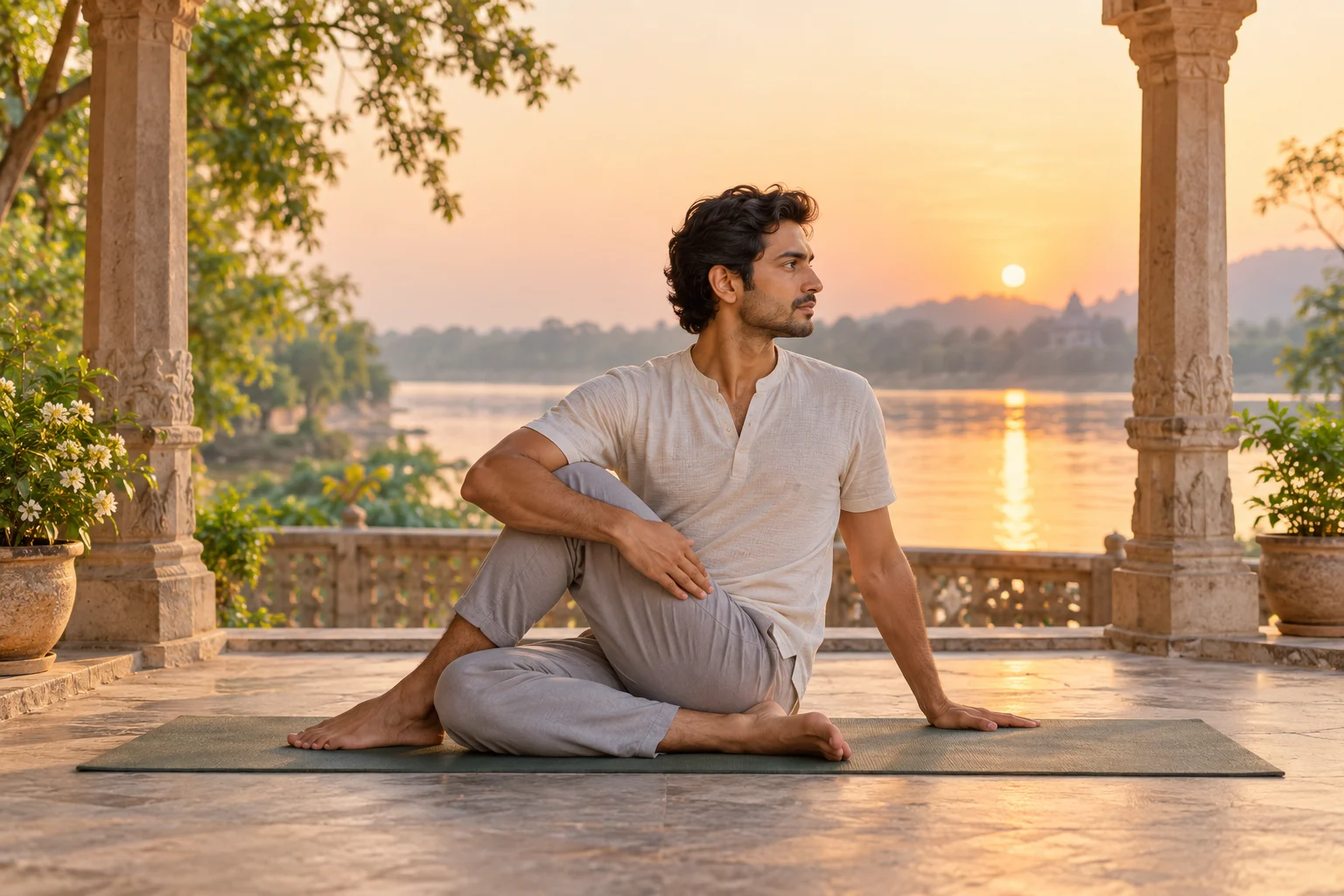
Ardha Matsyendrasana is commonly translated as half lord-of-the-fishes pose or half spinal twist. It is named for Matsyendranath, an important figure in hatha yoga traditions who is surrounded by several legends. Those stories belong to a sacred teaching heritage; they need not be treated as a literal anatomical explanation of the posture.
The pose combines a seated leg arrangement with an upright rotation. Its value comes from organised, comfortable movement—not from trying to look as far behind as possible. Spinal rotation naturally differs along the back, so forcing the shoulders can transfer strain to the neck, knees, or lower back.
Prepare the seat first
Sit on one or two folded blankets if the pelvis rolls backward or the lower back rounds. Extend both legs and notice whether you can sit upright without gripping. A simple straight-leg twist may be the best version. Warm up with gentle seated side bends or Tadasana before using the more compact leg position.
How it’s practiced
- Begin with both legs forward. Bend the right knee and place the right foot outside the left thigh. Keep the left leg straight, or bend it only if both knees and hips remain comfortable.
- Root both sitting bones as evenly as possible. Place the right hand behind the pelvis as a light support rather than leaning heavily into it.
- Inhale and lengthen through the crown. On an exhalation, rotate gently to the right, bringing the left hand or forearm to the outside of the right thigh.
- Turn the ribs, chest, and finally the head within an easy range. The gaze can stay forward if the neck is sensitive.
- Take three to five unforced breaths. With an exhalation, unwind slowly from top to bottom, extend the legs, and pause before repeating on the other side.
Do not use the arm as a lever to wrench the torso farther. Each inhalation can create length; each exhalation may invite a small rotation, but increased depth is not required.
Modifications that protect the knees and back
Keep the bottom leg extended to reduce hip and knee demand. If the top foot does not rest securely, place a block beneath it. Hug the upright knee rather than hooking the opposite elbow, or practise the twist seated sideways on a chair with both feet grounded. A blanket under the pelvis often makes more difference than pulling harder with the arms.
If the lower back rounds, choose a smaller rotation. If the outer hip of the crossed leg lifts dramatically, simplify the legs. Knee pain is not a stretch sensation and is a reason to exit.
Traditional benefits
The pose explores active spinal rotation, upright sitting, and mobility around the shoulders and hips. Traditional yoga descriptions sometimes say twists “massage” or “detoxify” internal organs, but these phrases should not be taken as established medical effects. A twist may feel refreshing or help a person notice tension, yet it is not a treatment for digestive disease or back pain.
Twists are often used after forward bends or backbends, but a counterpose is not an automatic remedy for strain. A neutral pause between shapes is sensible. The yoga for beginners guide offers more context for building a balanced sequence.
Precautions
Avoid deep closed twists during pregnancy; a qualified prenatal teacher may offer an open chair twist if appropriate. Seek individual medical or therapeutic guidance after abdominal surgery, with a current spinal disc problem, acute back or neck pain, osteoporosis, hernia, or hip or knee injury. Stop for sharp pain, numbness, tingling, dizziness, or difficulty breathing. Do not ask someone to push you deeper.
People with a diagnosed condition should follow their clinician’s restrictions. Yoga instruction can support technique, but it does not replace diagnosis or rehabilitation.
Common questions
What does “Ardha Matsyendrasana” mean?
“Half spinal twist,” named after the sage Matsyendranath, associated in tradition with an early transmission of hatha yoga.
Why is the pose called “half” spinal twist?
Because it’s a simplified version of the full Matsyendrasana, which involves a more complex leg position; the half version is more commonly taught and practiced.
What should I focus on while twisting?
Create an upright seat and easy breath first, then rotate gradually through the trunk. Do not use the arms or head to force extra range.
Is this pose safe during pregnancy?
Deep closed twists are generally avoided. Ask a qualified prenatal teacher or clinician whether a gentle open twist is appropriate for your circumstances.