
🧘 Practice Guides
What Is Yoga? Meaning, Origins, and the Eight Limbs
Yoga is often reduced to physical postures in modern practice, but the tradition it comes from describes something considerably broader. Here's the fuller picture.
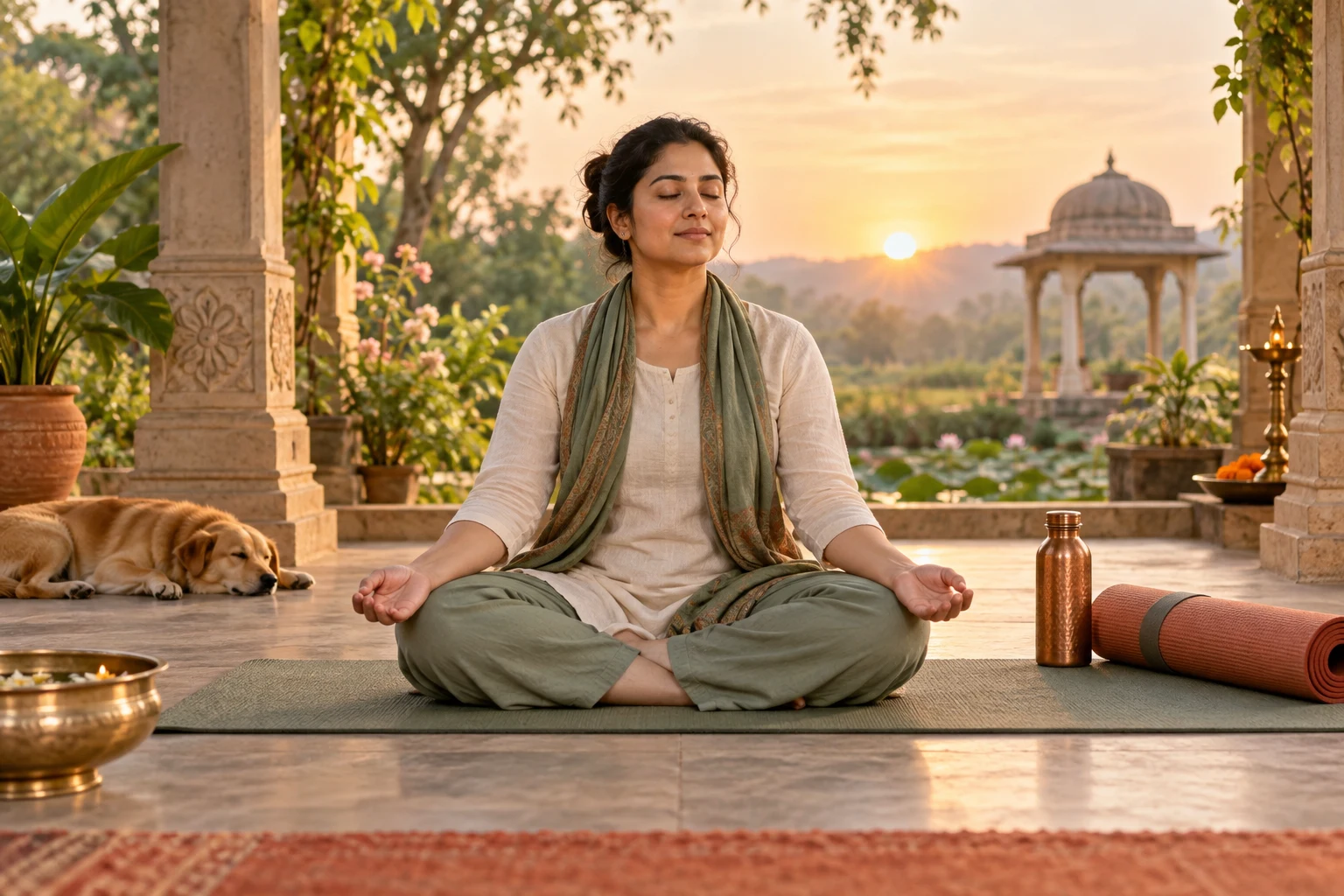
Yoga, from the Sanskrit root yuj (“to yoke” or “to unite”), is widely practiced today as a physical exercise system, but the tradition it comes from describes something considerably broader: a disciplined path toward union — traditionally between the individual self and a greater consciousness — of which physical postures are only one part.
Where the tradition comes from
Yoga’s philosophical foundations are old, referenced across the Vedas, Upanishads, and the Bhagavad Gita, which describes several distinct paths (margas) including karma yoga (the yoga of action), bhakti yoga (the yoga of devotion), and jnana yoga (the yoga of knowledge) — see Bhakti, Karma, and Jnana Yoga for more on these. The more structured, step-by-step system most associated with the word “yoga” today comes from a later text, the Yoga Sutras of Patanjali, which organizes practice into eight limbs (ashtanga).
Patanjali’s eight limbs
- Yama — ethical restraints (such as non-violence and truthfulness) governing how one relates to others.
- Niyama — personal observances (such as contentment and self-discipline) governing one’s relationship to oneself.
- Asana — physical posture, traditionally meant to prepare the body for extended, steady sitting rather than as exercise for its own sake.
- Pranayama — breath control; see What Is Pranayama? for a full explanation.
- Pratyahara — withdrawal of the senses from external distraction.
- Dharana — concentration, fixing the mind on a single point.
- Dhyana — sustained meditation.
- Samadhi — a state of absorption or union, the traditional culmination of the path.
Why modern practice often looks different
What’s commonly taught in yoga studios today draws heavily on the third limb, asana, often combined with breathing (the fourth limb) — a reasonable and valuable practice in its own right, but only a slice of the fuller eight-limbed system. Understanding this wider context doesn’t make a posture-focused practice less legitimate; it simply explains why yoga’s traditional literature discusses ethics, concentration, and meditation as extensively as it discusses physical postures.
Common questions
What does the word “yoga” mean?
“To yoke” or “to unite,” from the Sanskrit root yuj — traditionally referring to union between the individual self and a greater consciousness.
Is yoga just physical exercise?
Not in its traditional formulation — physical postures (asana) are one of eight limbs described in Patanjali’s Yoga Sutras, alongside ethical practice, breath control, concentration, and meditation.
What are the eight limbs of yoga?
Yama, niyama, asana, pranayama, pratyahara, dharana, dhyana, and samadhi — see the list above for what each involves.
How is yoga connected to the Bhagavad Gita?
The Gita describes several yogic paths — karma yoga, bhakti yoga, and jnana yoga among them — offered as different routes toward the same underlying goal. See Bhakti, Karma, and Jnana Yoga for more.