
🧘 Practice Guides
Balasana: Meaning, Steps, and Benefits of Child's Pose
Last updated: September 26, 2026
Balasana, child's pose, is the one posture in yoga you're always allowed to return to. Here's why it's considered a rest, not a step backward.
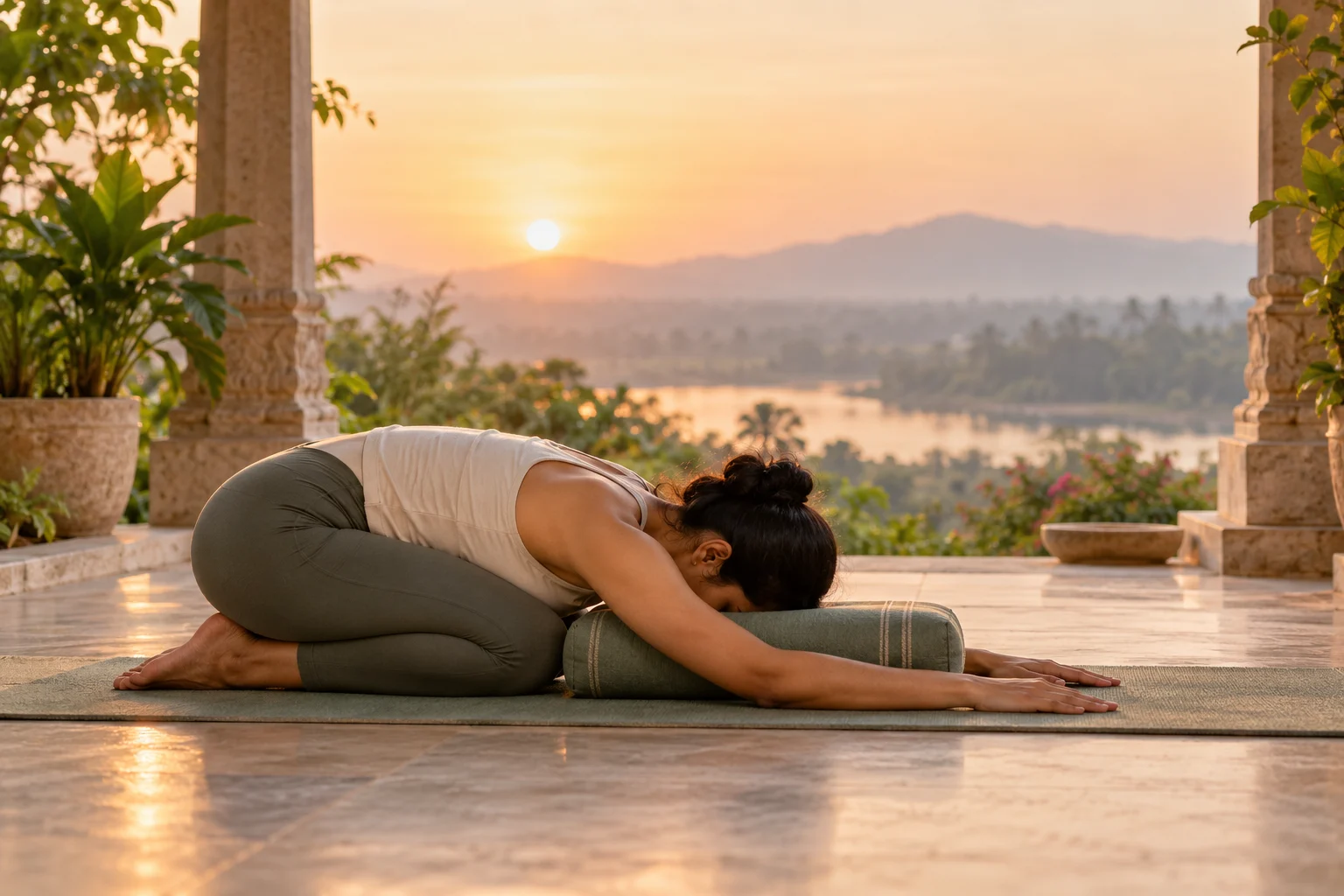
Balasana, commonly called child’s pose, is a kneeling forward fold used as a pause in many yoga sequences. Its name comes from the Sanskrit bala, meaning child, and asana, meaning posture. The curled shape can feel quiet and supported, but it is not automatically comfortable or appropriate for every body.
Treat this guide as general movement information, not individualized medical advice. If you have a knee, hip, ankle, back, or eye condition; are pregnant; have had recent surgery; or feel unsure about the position, ask a qualified clinician or experienced yoga teacher for suitable modifications.
How it’s practiced
- Begin on hands and knees on a padded, nonslip surface. Bring the hips back toward the heels only as far as is comfortable.
- Keep the knees together for a compact version, or separate them enough to make room for the torso. The big toes may touch, but they do not have to.
- Fold forward without forcing the hips downward. Rest the forehead on the mat, a folded blanket, bolster, or blocks so the neck can relax.
- Extend the arms forward for a more active shoulder position, or place them alongside the body with palms facing up for less effort.
- Breathe naturally. Stay for a few breaths, then press into the hands and return slowly to hands and knees or sit upright.
There is no required depth or duration. If the forehead does not reach a support, raise the support rather than hanging the head. Stop if you feel sharp pain, pinching, numbness, dizziness, breathlessness, or pressure that feels wrong.
Useful modifications
For sensitive knees, place a folded blanket beneath them and avoid deep flexion. A bolster lengthwise under the chest can reduce the amount of weight and folding required. If the ankles are uncomfortable, support the fronts of the ankles with a thin fold of blanket or choose a different rest position.
During pregnancy or whenever the abdomen feels compressed, take the knees wider and support the chest in a more upright fold; some practitioners may be better served by side-lying rest or a supported seated pose. For wrist discomfort, bring the arms alongside the body rather than extending them. Props should create ease, not push the body farther. For a supine restorative alternative, try Supta Baddha Konasana.
Why it’s treated as a resting pose, not a weak one
Balasana is deliberately built into many sequences as an option to pause when effort becomes too intense, breathing loses ease, or attention becomes scattered. Choosing it is not failure. Responding to the body’s signals is part of responsible practice.
However, instructors should not present child’s pose as a universally accessible resting position. For someone with painful knees, restricted hips, ankle sensitivity, pregnancy-related discomfort, or difficulty breathing in a forward fold, it may require substantial support or feel worse than sitting or lying down. A truly inclusive class offers more than one resting option.
Traditional benefits
Depending on proportions and setup, Balasana may create a gentle sensation through the back, hips, thighs, shoulders, or ankles. The supported position and slower pace can feel calming, but experiences vary. Avoid claims that the pose cures anxiety, digestive problems, or back pain; those conditions have many causes and may need professional assessment.
The pose is often used after backbends such as Bhujangasana or Dhanurasana, but no single counterpose is mandatory. Move into it only if the transition and shape feel appropriate. You can also explore Tadasana for an upright foundational posture or a comfortable seated rest.
Common mistakes to avoid
Do not pull the hips toward the heels with the hands, press the head into the floor, or tolerate knee pain because the posture is labeled “resting.” Avoid holding the breath. If a teacher offers a hands-on adjustment, consent should be explicit and can be withdrawn at any time.
Come out gradually, especially after a longer hold. If dizziness occurs, remain seated or lying down until it passes; seek medical help if symptoms are severe, recurrent, or accompanied by concerning signs.
Frequently asked questions
What does “Balasana” mean?
“Child’s pose” — bala meaning child, reflecting the pose’s curled, restful, protected shape.
Is it okay to skip other poses and just rest in Balasana?
Yes — it’s specifically intended as a pose to return to whenever rest is needed during a practice, without needing to justify pausing.
When is Balasana typically used?
Throughout a practice as a resting pause, and often specifically as a counterpose after backbends.
Can Balasana be practiced on its own?
Yes — it’s a gentle, standalone way to relax the back and calm the mind, independent of a longer practice.