
🌬️ Practice Guides
Bhastrika Pranayama: Meaning, Steps, and Precautions
Last updated: September 26, 2026
Bhastrika, the 'bellows breath,' is one of the more forceful pranayama techniques, generating heat and energy quickly. Here's how it's practiced safely.
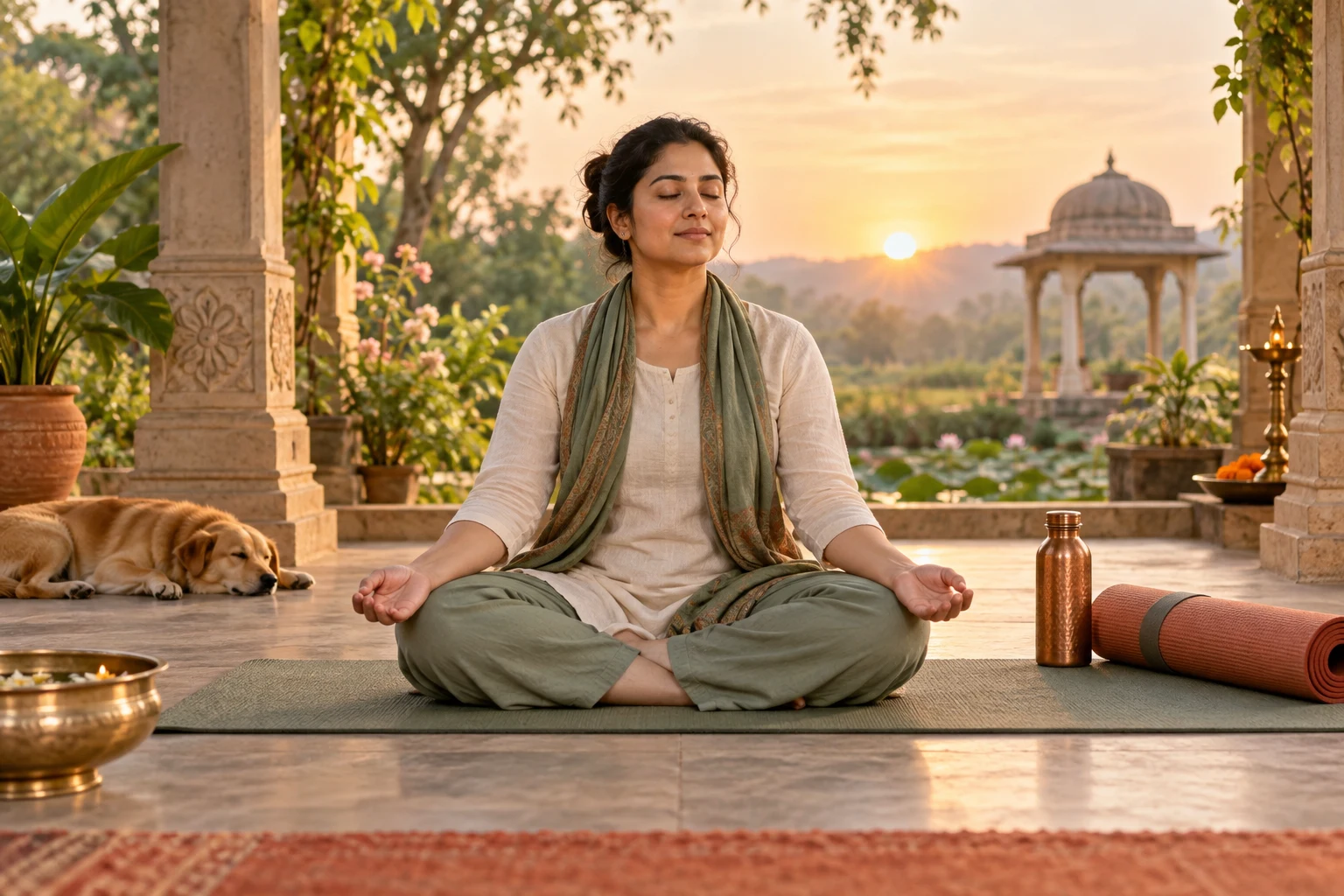
Bhastrika, meaning “bellows” in Sanskrit, is a vigorous pranayama technique named for the active movement of air in and out, like a blacksmith’s bellows. Both inhalation and exhalation are deliberate and audible. It belongs to a very different category from relaxed diaphragmatic breathing and should not be treated as a breathing challenge.
Traditional texts and modern schools vary in speed, breath count, pauses, and the use of locks or retention. This guide offers only a conservative introduction. Learn the full technique from a qualified teacher who can see your breathing and adapt it to you. Read What Is Pranayama? for the broader context.
Important safety guidance
Do not practise Bhastrika during pregnancy or if you have uncontrolled high blood pressure, heart or vascular disease, epilepsy or seizures, glaucoma, retinal problems, a hernia, significant vertigo, or recent abdominal, chest, or brain surgery. Seek clinical advice if you have a respiratory condition or any uncertainty about forceful breathing.
Never practise while driving, standing, bathing, or in water. Stop immediately for dizziness, tingling, headache, nausea, chest discomfort, visual change, panic, or unusual shortness of breath. Return to normal breathing and sit or lie somewhere safe. Breath retention and muscular locks are not included here because they require individual teaching. Pranayama is not a treatment for a medical condition and should not replace healthcare.
How it’s practiced
Choose an empty stomach or wait until a meal has been comfortably digested. Sit in a stable chair or cross-legged position, with the spine tall without stiffness. First observe several ordinary breaths. If the nose is blocked, you feel unwell, or the breath already feels strained, stop there.
For a cautious introductory round:
- Inhale and exhale through the nose with equal, moderate effort.
- Let the abdomen move naturally; do not violently pump or brace it.
- Make five slow bellows-like cycles rather than aiming for speed.
- Return to completely normal breathing for at least 30–60 seconds.
- End after one round if there is any discomfort. A teacher may later guide a suitable progression.
The face, jaw, shoulders, and hands should remain relaxed. Loudness is not a measure of quality. Do not compete with a recording or another practitioner, and never extend the round merely to achieve a number.
Traditional benefits
Bhastrika is traditionally described as heating and energising, and practitioners may feel more alert after a short round. Such experiences are subjective; they do not establish that the practice “detoxifies,” cures respiratory disease, or permanently changes metabolism. A safer intention is to develop attentive coordination of breath and movement without distress.
Because the technique can feel stimulating, many traditions place it earlier in the day and before quiet meditation. It may be followed by several minutes of effortless nasal breathing. Beginners can also start with Bhramari pranayama or ordinary breath awareness if a forceful method is unsuitable.
Bhastrika and Kapalabhati are not identical
In a common teaching distinction, Bhastrika makes both inhale and exhale active, whereas Kapalabhati emphasises a sharp exhale followed by a passive inhale. Terminology and technique can differ across lineages, which is another reason to follow one competent teacher rather than mixing online methods.
Common questions
What does “Bhastrika” mean?
It means “bellows,” referring to the active flow of inhalation and exhalation. The image explains the rhythm; it is not an instruction to use maximum force.
Is Bhastrika safe for beginners?
Beginners should learn it in person from a qualified teacher. Many people need a gentler breathing practice instead, especially when any contraindication or unexplained symptom is present.
When is Bhastrika best practiced?
Many practitioners choose the morning before food because it can feel stimulating. Do not practise when ill, overheated, sleep-deprived, immediately after eating, or in any situation where dizziness would be dangerous.
How is Bhastrika different from Kapalbhati?
In a widely taught distinction, Bhastrika uses active inhalation and exhalation, while Kapalabhati uses an active exhalation and passive inhalation (see the Kapalbhati pranayama guide). Lineages vary, so learn the method and terminology used by your teacher.