
🌬️ Practice Guides
Ujjayi Pranayama: Meaning, Steps, and How It's Used in Yoga
Last updated: September 26, 2026
Ujjayi, the 'ocean breath,' is unusual among pranayama techniques because it's often practiced continuously during yoga postures, not just while seated.
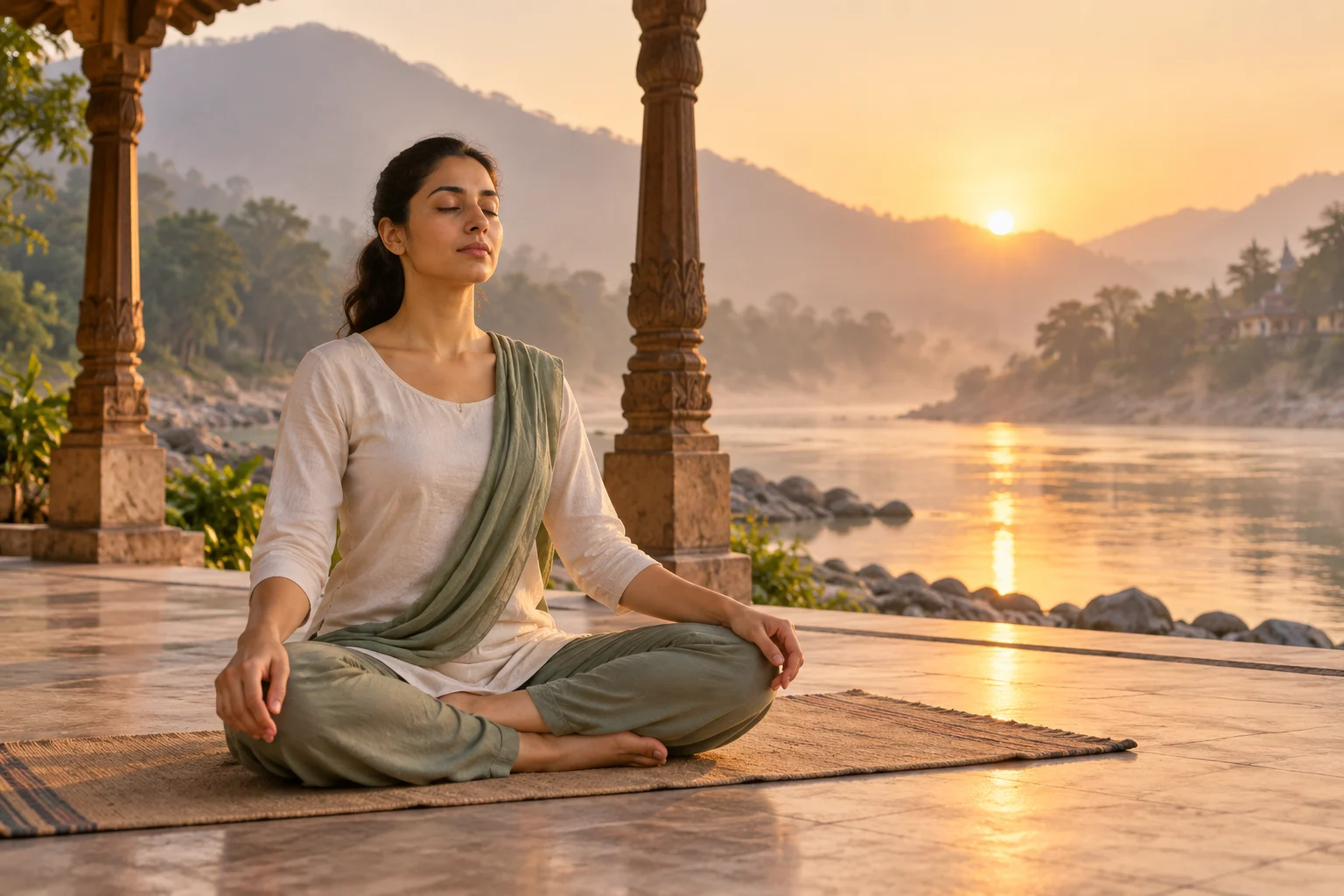
Ujjayi is a gently audible form of yogic breathing. Its name is often translated as “victorious” or “expansive” breath, while teachers sometimes call it ocean breath because of its soft, continuous sound. The sound comes from a light narrowing around the glottis at the back of the throat—not from snoring, forcing air, or tightening the neck.
Unlike techniques centred on breath retention, beginner Ujjayi can use an ordinary, comfortable inhale and exhale. It may be practised while seated or used to pace movement in some styles of asana. Read What Is Pranayama? for its place within broader breath practice.
Learn the sound without strain
Sit upright in a chair or on a cushion. Relax the jaw, face, shoulders, and belly. First breathe out through an open mouth as though gently misting a mirror: “haa.” Notice the subtle sensation at the back of the throat. Repeat quietly once or twice, without scraping or squeezing.
Next close the mouth and let the breath pass through the nose while retaining only a hint of that throat sensation. The result should be a soft whisper that you can hear but someone across the room may not. Keep the inhale and exhale smooth. If the sound becomes harsh, the throat feels dry, or the breath becomes laboured, release the technique and return to normal breathing.
A beginner Ujjayi practice
- Choose a comfortable upright position and breathe normally for several cycles.
- Add the light Ujjayi sound only to the exhale for three or four breaths.
- If that remains easy, add it to the inhale as well. Do not try to make both phases artificially long or perfectly equal.
- Continue for about one minute, maintaining an easy face and throat.
- Stop the sound and observe a few natural breaths before standing.
Beginners do not need breath retention, rapid breathing, or muscular locks. Those methods require separate instruction. One short, comfortable round is more useful than several minutes of effort.
Using Ujjayi during movement
In Ashtanga and many Vinyasa classes, an audible nasal breath helps coordinate one movement with one breath. For example, a teacher may cue an inhale while raising the arms and an exhale while folding. The sound offers feedback: if it becomes ragged or you must gasp, the pace or intensity may be too high. Slow down, rest, or return to ordinary breathing.
Ujjayi is not compulsory for every style of yoga, and it should not override the body’s need for air. During demanding postures, prioritize an unrestricted breath over maintaining a particular sound. In quieter practice, it can serve as an attention anchor much like counting natural breaths.
Traditional aims and realistic expectations
Traditional teaching associates Ujjayi with steadiness, attention, and internal warmth. Modern practitioners may find that its sound makes breathing patterns easier to notice. These are practice aims rather than guaranteed health effects. Evidence about breathing practices often concerns a multi-technique programme, not Ujjayi alone, so it is better not to claim that this method treats anxiety, blood pressure, thyroid disease, insomnia, or any other condition.
The Government of India’s Ministry of AYUSH includes general breathing guidance in its Common Yoga Protocol, while the US NCCIH yoga safety overview advises adapting yoga to health needs and learning from a qualified instructor.
Safety and contraindications
Never strain, hold the breath, or deliberately create air hunger. Stop immediately if you become dizzy, faint, panicky, unusually breathless, or feel chest pain. Seek urgent medical care for severe or persistent symptoms. If you have a respiratory or cardiovascular condition, uncontrolled blood pressure, are pregnant, or are recovering from surgery or an acute illness, ask a clinician whether breath practices are appropriate. A teacher experienced in adaptive yoga can help you begin gently.
Avoid Ujjayi when your throat is painful or irritated. Nasal congestion may make it uncomfortable; resting and breathing normally is a valid choice. Children should practise only in an age-appropriate setting with supervision. Ujjayi is a contemplative skill, not a replacement for medical treatment.
Common questions
What does “Ujjayi” mean?
“Victorious” — referring to the sense of steady control and mastery the breath is meant to cultivate.
Why does Ujjayi make a sound?
The gentle constriction at the back of the throat creates an audible, ocean-like sound with each breath, which also helps regulate the pace and depth of breathing.
Is Ujjayi practiced while sitting or moving?
Both — it can be practiced seated like other pranayama techniques, but is distinctive for being commonly used continuously during a moving yoga practice as well.
Is Ujjayi safe for beginners?
The gentle, no-retention version may suit many beginners, but it should never feel forced. People with health concerns should obtain individual advice, and everyone should stop if symptoms occur.