
🧘 Practice Guides
Matsyasana: Meaning, Steps, and Benefits of Fish Pose
Last updated: September 26, 2026
Matsyasana, fish pose, is traditionally taught as a counterpose to Sarvangasana, opening the chest and throat after an inversion. Here's how it's practiced.
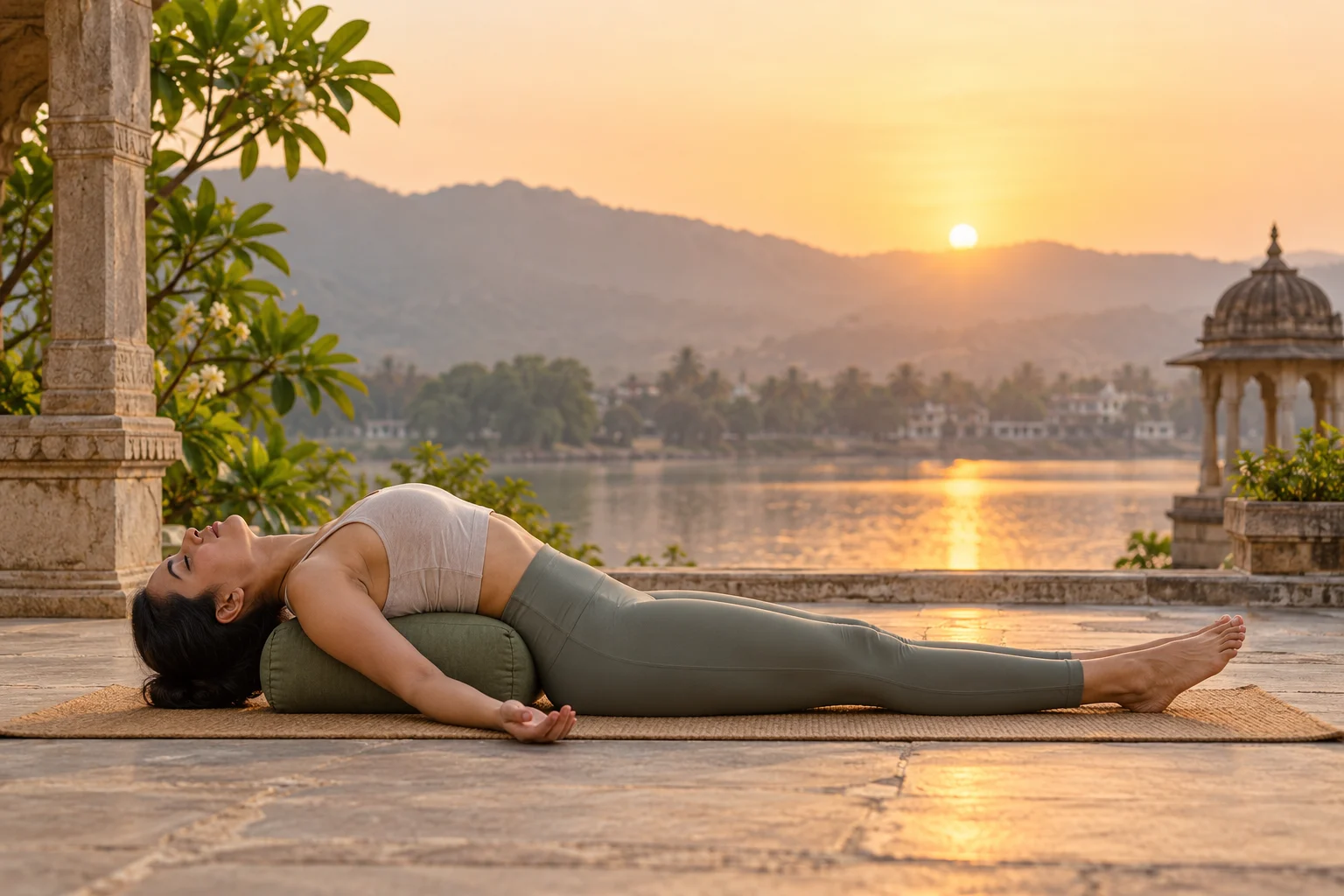
Matsyasana, or fish pose, is a supine backbend that lifts the breastbone and opens the front of the chest. Some yoga lineages teach it after Sarvangasana, but it can also be practised independently in a balanced sequence. Despite the familiar image of the crown touching the mat, the head should not bear substantial weight. Support comes mainly from the pelvis, forearms, elbows, and active back muscles.
Prepare for fish pose
Warm the shoulders and upper back with gentle arm movements and a small supported chest opener. Practise on a non-slip mat and remove anything that obstructs the neck. The traditional legs-extended shape is not automatically the best starting point; bent knees or a supported variation may give a clearer, safer experience.
How it’s practiced
- Lie on the back with the legs long or the knees bent and feet on the mat. Place the arms close to the sides, palms down.
- Roll slightly from side to side to tuck the forearms and hands beneath the torso. Draw the elbows toward one another without forcing the shoulders.
- Press down through the elbows and forearms. On an inhalation, lift the chest and lengthen the front body.
- If the neck is comfortable, allow the head to move back until it is lightly supported. Depending on anatomy and mobility, the crown may touch the mat or remain slightly lifted. Do not jam it down.
- Keep breathing evenly for two or three breaths at first. To leave, press the forearms down, lift the head, tuck the chin slightly, and lower the spine with control before releasing the arms.
Never turn the head while it is tipped back. Exit first, then look to the side. Stop if there is neck pain, tingling, dizziness, visual disturbance, headache, or breathlessness.
A supported alternative
Place a bolster or a firmly folded blanket lengthwise beneath the upper back, with enough separate support under the head to keep the neck neutral. Let the arms rest comfortably and keep the knees bent if the lower back feels strained. This restorative chest opener is not the same muscular pose, but it can offer a gentler way to explore the shape. Arrange props before lying down and come out by rolling carefully to one side.
Alignment cues that matter
Think of the sternum moving up rather than the head moving back. Keep the throat spacious and jaw relaxed. If the elbows slide wide or the lower back pinches, lower the chest and reorganise. Leg positions such as lotus appear in advanced versions, but they add knee and hip demands and are not necessary for receiving the basic practice.
Traditional benefits
The posture explores thoracic extension, chest and shoulder opening, and active support from the upper back. With straight legs it may also engage the hip flexors. Traditional teachers often describe it as energising or expansive. Such language expresses a practice experience, not a medical promise, and fish pose should not be prescribed as a treatment for thyroid, respiratory, or postural conditions.
Precautions
Avoid or seek professional guidance with a current neck, back, shoulder, or head injury; cervical instability; glaucoma; uncontrolled blood pressure; frequent vertigo or migraine; or recent surgery. During pregnancy, use only a pregnancy-appropriate supported chest opener recommended by a qualified teacher or clinician. If you have osteoporosis or another condition affected by spinal extension, ask your healthcare professional about suitable range and support.
Sequencing with care
Matsyasana is often called a counterpose to shoulder stand, yet that does not mean every inversion must be followed by it or that one extreme cancels another. Move gradually toward neutral between positions. Beginners can pair a small supported fish with gentle rest and simple breathing. The beginner yoga guide can help place individual postures in a rounded practice rather than treating them as isolated fixes.
Common questions
What does “Matsyasana” mean?
“Fish pose” — matsya meaning fish, though the exact reasoning behind the name varies across traditional explanations.
Why is Matsyasana often practiced after Sarvangasana?
It serves as a counterpose, opening the chest and throat in the opposite direction after the compression involved in Sarvangasana (shoulder stand).
Should weight rest on my head in Matsyasana?
No — the head should rest lightly on the floor with most of the support coming from the forearms and elbows, not from pressing weight into the crown of the head.
Is there a gentler version of Matsyasana?
Yes. A bolster or folded blankets beneath the upper back, plus separate head support, can create a gentler chest opener with less muscular effort.