
🏠 Practice Guides
Griha Pravesh Puja: Meaning, Muhurat, Vidhi and Rules for a New Home
Griha Pravesh is the Hindu ceremony for entering a new home. Here is what it means, when to do it, what you need and how the puja is performed step by step.
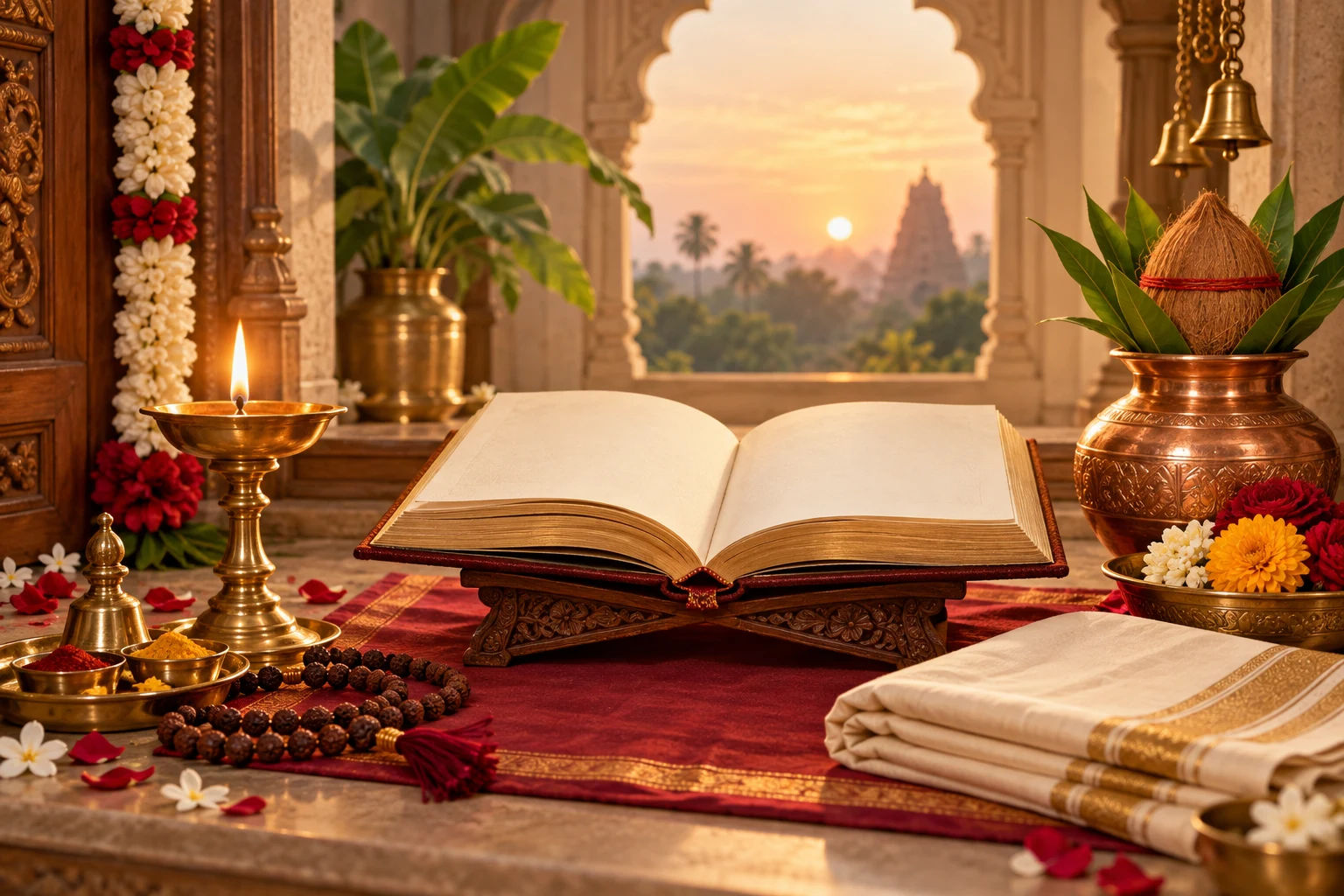
Griha Pravesh puja is the Hindu housewarming ceremony performed before first living in a new or renovated home. On an auspicious muhurat, the family worships Ganesha, sets up a kalash, performs Vastu Shanti and a havan, enters with the right foot first, and boils milk until it overflows — inviting peace, health and prosperity into the house.
Griha means “home” and pravesh means “entry.” The ritual marks the moment a building becomes a household, sanctified for daily life and worship.
Griha Pravesh at a glance
| Meaning | Ceremonial first entry into a home |
| Main deities | Ganesha, Vastu Purusha, Lakshmi, Navagraha |
| Key rituals | Kalash sthapana, Ganesh puja, Vastu Shanti, havan, milk boiling |
| Timing | Auspicious muhurat from the panchang |
| Duration | 2–4 hours for a full puja; under an hour for a simple version |
| Performed by | Family priest, or the family itself for a simple puja |
The three types of Griha Pravesh
- Apurva — entry into a brand-new house built or bought for the first time. This is the version with the strictest muhurat rules.
- Sapurva — re-entry into an existing home after a long absence, such as travel or living elsewhere.
- Dvandvah — entry after major renovation, reconstruction, or repairs following a fire, flood or other damage.
Choosing a muhurat
A priest or astrologer chooses the date and time using the panchang, considering tithi, nakshatra, weekday and lagna. Common traditional guidelines:
- Favoured months: Magha, Phalguna, Vaishakha and Jyeshtha. Days such as Akshaya Tritiya and Vasant Panchami are widely considered auspicious.
- Commonly avoided periods: Chaturmas, the four months between Devshayani Ekadashi and Dev Uthani Ekadashi; Pitru Paksha; Adhik Maas; and the Kharmas period when the sun is in Dhanu and Meena.
- Days: Tuesdays are often avoided; many families also avoid Saturdays and Sundays for an Apurva entry.
These are general customs; regional and family traditions differ, so treat your priest’s advice as the deciding word.
Samagri (items needed)
- Copper or brass kalash, mango leaves, a coconut, red cloth and sacred thread (mauli)
- Ganesh idol or image, and an image of Lakshmi or the family deity
- Haldi, kumkum, rice (akshat), flowers, garlands, durva grass
- Ghee diya, incense, camphor
- Havan kund, wood, ghee and havan samagri (if a havan is done)
- Fresh milk and a new vessel for boiling it
- Fruits, sweets, panchamrit and items for prasad
- A toran of mango leaves and marigolds for the main door, and rangoli at the entrance
Griha Pravesh puja vidhi: step by step
- Prepare the house. Complete construction work, clean every room thoroughly and, traditionally, sprinkle Ganga jal or salt water. Hang a toran over the main door and draw rangoli at the threshold.
- Dwar puja (door worship). Before entering, the family worships the main door with haldi, kumkum, rice and flowers. A swastika and shubh-labh are often drawn on either side.
- Kalash sthapana. The lady of the house traditionally carries a kalash filled with water, a coin and rice, topped with mango leaves and a coconut, into the home. In many families the couple enter together.
- Enter with the right foot first. Entry with the right foot is considered auspicious. Some families also tip a small vessel of rice at the threshold with the right foot.
- Ganesh puja. Worship begins with Ganesha, remover of obstacles, with a mantra such as Om Gam Ganapataye Namah — see Ganesh beej mantra and powerful Ganesh mantras.
- Vastu Shanti / Vastu puja. The priest worships Vastu Purusha, the deity of the dwelling, and the directions, asking forgiveness for any disturbance caused during construction and invoking harmony.
- Navagraha puja. Worship of the nine planetary deities is often included for overall well-being.
- Havan. Offerings of ghee and samagri into the sacred fire purify the space; mantras are chanted for health, peace and prosperity.
- Milk boiling. In the new kitchen, milk is boiled on the stove until it overflows — a symbol of abundance. It is then used for kheer or another sweet.
- Lakshmi puja and aarti. Worship of Lakshmi, followed by aarti for the whole family, completes the main rites.
- Prasad and feeding. Prasad is distributed, and the family traditionally feeds the priest, guests, and if possible those in need.
A simple Griha Pravesh at home
If a full ceremony is not possible, a short home puja still carries the spirit of the ritual:
- Clean the house and place a lamp at the main door.
- Enter with the right foot, carrying a kalash of water and a coconut.
- Set up a small altar facing east or north-east; worship Ganesha and Lakshmi with flowers, rice and incense.
- Chant Om Gam Ganapataye Namah 11 or 108 times and a simple Lakshmi mantra.
- Boil milk in the kitchen and make a sweet offering.
- Perform aarti, share prasad and keep a lamp lit in the evening.
Dos and don’ts commonly followed
Do
- Finish construction, painting and fittings before the puja.
- Keep the main door decorated and the house well lit.
- Stay in the house on the first night and avoid leaving it locked and empty for the first few days.
Don’t (by custom)
- Hold the ceremony during a period of family mourning (sutak).
- Enter with the left foot or with empty hands.
- Move in heavy furniture before the puja in some traditions — though many families now move in first and do the puja later.
The meaning behind the ritual
Beyond rules, Griha Pravesh expresses a simple idea found throughout Hindu worship: that daily life is sacred. A house becomes a home when it is offered first to the divine — as a place of dharma, hospitality and care for one another.
Frequently Asked Questions
What is Griha Pravesh?
Griha Pravesh (गृह प्रवेश) means entering the home. It is the Hindu ceremony performed before first living in a new or renovated house, with Ganesh puja, Vastu worship, a kalash, a havan and the ritual boiling of milk to invite blessings, peace and prosperity.
Can we do Griha Pravesh without a muhurat?
Tradition strongly prefers an auspicious muhurat chosen from the Hindu calendar, especially for a brand-new house. If circumstances force a move, many families move in simply and perform the full puja on the next suitable date. Ask a family priest or astrologer for guidance.
Which months are good for Griha Pravesh?
Magha, Phalguna, Vaishakha and Jyeshtha are traditionally favoured. Many families avoid Chaturmas (from Devshayani Ekadashi to Dev Uthani Ekadashi), Pitru Paksha, Adhik Maas and the Kharmas period. Regional customs vary.
Can Griha Pravesh be done without a priest?
Yes, a simple home version is possible: Ganesh puja, a kalash, lighting a lamp, chanting a few mantras, boiling milk and offering prasad. A priest is usually invited for the Vastu Shanti and havan, which follow specific Vedic procedures.
Why is milk boiled during Griha Pravesh?
Boiling milk until it overflows in the new kitchen symbolises abundance, nourishment and prosperity spilling over in the household. The milk is then used to make kheer or another sweet that is offered to the deity and shared.
Should we stay in the house on the night of Griha Pravesh?
Many traditions say the family should sleep in the house on the night of the ceremony and not leave it empty for the first few days, so that the home is lived in and the lamp of worship is kept up. Follow your family's custom.
What are the three types of Griha Pravesh?
Apurva Griha Pravesh is the first entry into a newly built home; Sapurva is re-entry into an existing home after a long absence; and Dvandvah is entry after major renovation or after a home has been rebuilt following damage.