
🍚 Practice Guides
Annapurna Stotram (Annapurnashtakam): Sanskrit Lyrics, Meaning and How to Recite
The Annapurna Stotram, also known as the Annapurnashtakam, is a twelve-verse Sanskrit hymn traditionally attributed to Adi Shankaracharya. Here is the widely recited Sanskrit, a clear transliteration and an original English meaning of each verse.
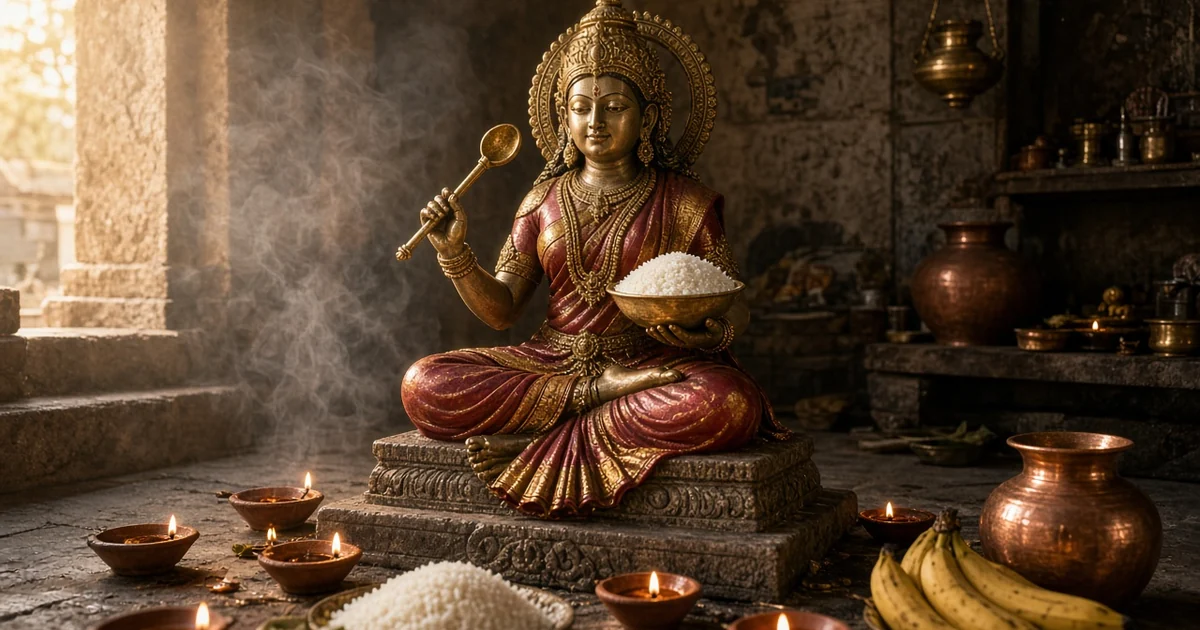
The Annapurna Stotram, also called the Annapurnashtakam, is a Sanskrit hymn to Annapurna, the goddess of food and nourishment and a form of Parvati especially associated with Kashi. It is traditionally attributed to Adi Shankaracharya. The most widely recited version has twelve verses: ten with a shared refrain, then two closing verses that many households already know by heart.
A short portrait of the goddess, her story with Shiva, and the temple in Varanasi is on our Annapurna Devi page. In 2026, Annapurna Jayanti falls on Wednesday, 23 December, the same Margashirsha Purnima as Datta Jayanti.
How the hymn is shaped
Verses 1–10 are in a long lyric metre and end with the same prayer:
भिक्षां देहि कृपावलम्बनकरी माताऽन्नपूर्णेश्वरी
bhikṣāṃ dehi kṛpāvalambanakarī mātā’nnapūrṇeśvarī
“Give me alms, O Mother Annapurneshvari, you whose hand is the support of grace.”
Each of those ten verses also names her as the sovereign of Kashi (kāśīpurādhīśvarī). Verse 11 asks, in a simpler metre, for the alms of knowledge and dispassion. Verse 12 is a statement of belonging: Parvati is my mother, Maheshvara is my father, Shiva’s devotees are my family, and the three worlds are my country.
Some printed editions add three verses from the Annada Kalpa Tantra (patala 16) after verse 10. They are not included here. The Sanskrit follows the more common twelve-verse recension in the Complete Works, as proofread on Sanskrit Documents.
The English meanings on this page are original to VedicVani. They aim to say plainly what the Sanskrit names, not to replace a word-for-word scholarly commentary.
How to recite
- Sit facing the kitchen shrine, a lamp, or an image of Annapurna. A clean cloth and a small offering of rice or cooked food are enough.
- Recite the twelve verses at a pace you can hear. If you are learning them, stay with one printed edition so small variants do not unsettle the memory.
- The hymn is especially fitting before a meal, on Annapurna Jayanti, and when food is being cooked or given away. Anna-daan, the gift of food, is the practice the stotra points toward.
- Children, guests and anyone who does not read Devanagari can follow the transliteration. Recitation is a spiritual practice, not a charm for the larder, and it is not a substitute for feeding someone or for medical or practical care.
The 12 verses
Verse 1
नित्यानन्दकरी वराभयकरी सौन्दर्यरत्नाकरी निर्धूताखिलघोरपावनकरी प्रत्यक्षमाहेश्वरी । प्रालेयाचलवंशपावनकरी काशीपुराधीश्वरी भिक्षां देहि कृपावलम्बनकरी माताऽन्नपूर्णेश्वरी ॥1॥
Transliteration: nityānandakarī varābhayakarī saundaryaratnākarī nirdhūtākhilaghorapāvanakarī pratyakṣamāheśvarī | prāleyācalavaṃśapāvanakarī kāśīpurādhīśvarī bhikṣāṃ dehi kṛpāvalambanakarī mātā’nnapūrṇeśvarī ||1||
Meaning: She who always gives bliss, who grants boons and freedom from fear, who is a mine of beauty; who has shaken off and purifies all that is terrible; who is Maheshvari standing before our eyes; who purifies the lineage of the snow mountain; who is the sovereign of the city of Kashi. Give me alms, O Mother Annapurneshvari, you whose hand is the support of grace.
Verse 2
नानारत्नविचित्रभूषणकरी हेमाम्बराडम्बरी मुक्ताहारविलम्बमानविलसद्वक्षोजकुम्भान्तरी । काश्मीरागरुवासिता रुचिकरी काशीपुराधीश्वरी भिक्षां देहि कृपावलम्बनकरी माताऽन्नपूर्णेश्वरी ॥2॥
Transliteration: nānāratnavicitrabhūṣaṇakarī hemāmbarāḍambarī muktāhāravilambamānavilasadvakṣojakumbhāntarī | kāśmīrāgaruvāsitā rucikarī kāśīpurādhīśvarī bhikṣāṃ dehi kṛpāvalambanakarī mātā’nnapūrṇeśvarī ||2||
Meaning: She who wears wondrous ornaments of many jewels and is magnificently dressed in gold; whose bosom is lit by a hanging, gleaming pearl necklace; who is fragrant with Kashmiri saffron and agaru, and who bestows delight; sovereign of the city of Kashi. Give me alms, O Mother Annapurneshvari, you whose hand is the support of grace.
Verse 3
योगानन्दकरी रिपुक्षयकरी धर्मार्थनिष्ठाकरी चन्द्रार्कानलभासमानलहरी त्रैलोक्यरक्षाकरी । सर्वैश्वर्यसमस्तवाञ्छितकरी काशीपुराधीश्वरी भिक्षां देहि कृपावलम्बनकरी माताऽन्नपूर्णेश्वरी ॥3॥
Transliteration: yogānandakarī ripukṣayakarī dharmārthaniṣṭhākarī candrārkānalabhāsamānalaharī trailokyarakṣākarī | sarvaiśvaryasamastavāñchitakarī kāśīpurādhīśvarī bhikṣāṃ dehi kṛpāvalambanakarī mātā’nnapūrṇeśvarī ||3||
Meaning: She who gives the bliss of yoga, who destroys enemies, who establishes one in dharma and artha; whose waves shine like the moon, the sun and fire; who protects the three worlds; who grants all prosperity and every wished-for thing; sovereign of the city of Kashi. Give me alms, O Mother Annapurneshvari, you whose hand is the support of grace.
Verse 4
कैलासाचलकन्दरालयकरी गौरी उमा शङ्करी कौमारी निगमार्थगोचरकरी ओङ्कारबीजाक्षरी । मोक्षद्वारकपाटपाटनकरी काशीपुराधीश्वरी भिक्षां देहि कृपावलम्बनकरी माताऽन्नपूर्णेश्वरी ॥4॥
Transliteration: kailāsācalakandarālayakarī gaurī umā śaṅkarī kaumārī nigamārthagocarakarī oṅkārabījākṣarī | mokṣadvārakapāṭapāṭanakarī kāśīpurādhīśvarī bhikṣāṃ dehi kṛpāvalambanakarī mātā’nnapūrṇeśvarī ||4||
Meaning: She whose dwelling is a cave on Mount Kailasa — Gauri, Uma, Shankari; Kumari, who makes the meaning of the Vedas perceptible, whose seed-syllable is Om; who throws open the door-panel of the gate of liberation; sovereign of the city of Kashi. Give me alms, O Mother Annapurneshvari, you whose hand is the support of grace.
Verse 5
दृश्यादृश्यविभूतिवाहनकरी ब्रह्माण्डभाण्डोदरी लीलानाटकसूत्रभेदनकरी विज्ञानदीपाङ्कुरी । श्रीविश्वेशमनःप्रसादनकरी काशीपुराधीश्वरी भिक्षां देहि कृपावलम्बनकरी माताऽन्नपूर्णेश्वरी ॥5॥
Transliteration: dṛśyādṛśyavibhūtivāhanakarī brahmāṇḍabhāṇḍodarī līlānāṭakasūtrabhedanakarī vijñānadīpāṅkurī | śrīviśveśamanaḥprasādanakarī kāśīpurādhīśvarī bhikṣāṃ dehi kṛpāvalambanakarī mātā’nnapūrṇeśvarī ||5||
Meaning: She who bears the visible and the invisible glories, who holds the cosmic egg in her belly; who cuts the thread of the play of the world, who is the sprout of the lamp of wisdom; who delights the mind of Vishvesha, Shiva of Kashi; sovereign of the city of Kashi. Give me alms, O Mother Annapurneshvari, you whose hand is the support of grace.
Verse 6
उर्वी सर्वजनेश्वरी भगवती माताऽन्नपूर्णेश्वरी वेणीनीलसमानकुन्तलधरी नित्यान्नदानेश्वरी । सर्वानन्दकरी सदाशुभकरी काशीपुराधीश्वरी भिक्षां देहि कृपावलम्बनकरी माताऽन्नपूर्णेश्वरी ॥6॥
Transliteration: urvī sarvajaneśvarī bhagavatī mātā’nnapūrṇeśvarī veṇīnīlasamānakuntaladharī nityānnadāneśvarī | sarvānandakarī sadāśubhakarī kāśīpurādhīśvarī bhikṣāṃ dehi kṛpāvalambanakarī mātā’nnapūrṇeśvarī ||6||
Meaning: She is the earth itself, the lady of all people, Bhagavati, Mother Annapurneshvari; she wears hair dark like a swarm of bees, and she is the perpetual lady of the gift of food; she gives all bliss and always does what is auspicious; sovereign of the city of Kashi. Give me alms, O Mother Annapurneshvari, you whose hand is the support of grace.
Verse 7
आदिक्षान्तसमस्तवर्णनकरी शम्भोस्त्रिभावाकरी काश्मीरा त्रिजलेश्वरी त्रिलहरी नित्याङ्कुरा शर्वरी । कामाकाङ्क्षकरी जनोदयकरी काशीपुराधीश्वरी भिक्षां देहि कृपावलम्बनकरी माताऽन्नपूर्णेश्वरी ॥7॥
Transliteration: ādikṣāntasamastavarṇanakarī śambhostribhāvākarī kāśmīrā trijaleśvarī trilaharī nityāṅkurā śarvarī | kāmākāṅkṣakarī janodayakarī kāśīpurādhīśvarī bhikṣāṃ dehi kṛpāvalambanakarī mātā’nnapūrṇeśvarī ||7||
Meaning: She who sounds all the letters from a to ksha; who is the maker of Shambhu’s three aspects; the lady of Kashmir, of the three waters and the three waves; the eternal sprout, Sharvari; who grants desire and who uplifts people; sovereign of the city of Kashi. Give me alms, O Mother Annapurneshvari, you whose hand is the support of grace.
Verse 8
देवी सर्वविचित्ररत्नरचिता दाक्षायणी सुन्दरी वामे स्वादुपयोधरा प्रियकरी सौभाग्यमाहेश्वरी । भक्ताभीष्टकरी सदाशुभकरी काशीपुराधीश्वरी भिक्षां देहि कृपावलम्बनकरी माताऽन्नपूर्णेश्वरी ॥8॥
Transliteration: devī sarvavicitraratnaracitā dākṣāyaṇī sundarī vāme svādupayodharā priyakarī saubhāgyamāheśvarī | bhaktābhīṣṭakarī sadāśubhakarī kāśīpurādhīśvarī bhikṣāṃ dehi kṛpāvalambanakarī mātā’nnapūrṇeśvarī ||8||
Meaning: The goddess adorned with every kind of wondrous gem, Dakshayani the beautiful; who, on her left, is the source of sweet nourishment; who gives what is dear, the Maheshvari of good fortune; who grants the devotee’s wish and always does what is auspicious; sovereign of the city of Kashi. Give me alms, O Mother Annapurneshvari, you whose hand is the support of grace.
Verse 9
चन्द्रार्कानलकोटिकोटिसदृशा चन्द्रांशुबिम्बाधरी चन्द्रार्काग्निसमानकुण्डलधरी चन्द्रार्कवर्णेश्वरी । मालापुस्तकपाशसाङ्कुशधरी काशीपुराधीश्वरी भिक्षां देहि कृपावलम्बनकरी माताऽन्नपूर्णेश्वरी ॥9॥
Transliteration: candrārkānalakoṭikoṭisadṛśā candrāṃśubimbādharī candrārkāgnisamānakuṇḍaladharī candrārkavarṇeśvarī | mālāpustakapāśasāṅkuśadharī kāśīpurādhīśvarī bhikṣāṃ dehi kṛpāvalambanakarī mātā’nnapūrṇeśvarī ||9||
Meaning: She who resembles tens of millions of moons, suns and fires; whose lower lip is like a ray of the moon; who wears earrings like the moon, the sun and fire, and who is the lady of sun-and-moon complexion; who holds a garland, a book, a noose and a goad; sovereign of the city of Kashi. Give me alms, O Mother Annapurneshvari, you whose hand is the support of grace.
Verse 10
क्षत्रत्राणकरी महाभयकरी माता कृपासागरी साक्षान्मोक्षकरी सदा शिवकरी विश्वेश्वरी श्रीधरी । दक्षाक्रन्दकरी निरामयकरी काशीपुराधीश्वरी भिक्षां देहि कृपावलम्बनकरी माताऽन्नपूर्णेश्वरी ॥10॥
Transliteration: kṣatratrāṇakarī mahābhayakarī mātā kṛpāsāgarī sākṣānmokṣakarī sadā śivakarī viśveśvarī śrīdharī | dakṣākrandakarī nirāmayakarī kāśīpurādhīśvarī bhikṣāṃ dehi kṛpāvalambanakarī mātā’nnapūrṇeśvarī ||10||
Meaning: She who protects those who defend, who puts an end to great fear; the Mother, an ocean of grace; who grants liberation directly, who always does what is auspicious, Vishveshvari, bearer of Shri; who made Daksha lament, who makes one free of disease; sovereign of the city of Kashi. Give me alms, O Mother Annapurneshvari, you whose hand is the support of grace.
Verse 11
अन्नपूर्णे सदापूर्णे शङ्करप्राणवल्लभे । ज्ञानवैराग्यसिद्ध्यर्थं भिक्षां देहि च पार्वति ॥11॥
Transliteration: annapūrṇe sadāpūrṇe śaṅkaraprāṇavallabhe | jñānavairāgyasiddhyarthaṃ bhikṣāṃ dehi ca pārvati ||11||
Meaning: O Annapurna, ever complete, beloved of Shankara’s very life: for the attainment of knowledge and dispassion, give me alms, O Parvati.
Verse 12
माता मे पार्वती देवी पिता देवो महेश्वरः । बान्धवाः शिवभक्ताश्च स्वदेशो भुवनत्रयम् ॥12॥
Transliteration: mātā me pārvatī devī pitā devo maheśvaraḥ | bāndhavāḥ śivabhaktāśca svadeśo bhuvanatrayam ||12||
Meaning: My mother is the goddess Parvati; my father is the god Maheshvara. The devotees of Shiva are my kinsfolk, and my own country is the three worlds.
Text notes
The Sanskrit above follows the more common twelve-verse recension traditionally attributed to Adi Shankaracharya, checked against the proofread Sanskrit Documents edition (encoded and proofread by Sunder Hattangadi; the edition cites the Complete Works as its source). That page itself records many small variants. The main text here uses the primary reading of that “more common version,” not the parenthetical alternatives. Points worth knowing:
- Verse 1: some prints read ghorapāpanikarī (“who destroys terrible sins”) in place of ghorapāvanakarī (“who purifies all that is terrible”).
- Verse 12: many popular booklets have mātā ca pārvatī devī (“and my mother is the goddess Parvati”) rather than the Complete Works reading used here, mātā me pārvatī devī (“my mother is the goddess Parvati”). The sense is the same.
- After verse 10, some editions insert three additional verses drawn from the Annada Kalpa Tantra. They are omitted here so the page stays with the core twelve.
- The name “Ashtakam” (a hymn of eight) is traditional even for this twelve-verse text. Do not expect exactly eight stanzas.
If you are learning the hymn by heart, stay with one printed edition or a teacher so the small differences do not unsettle the recitation.
The English meanings on this page are original to VedicVani.
Related reading
For the goddess herself, see Annapurna Devi. The Jayanti in 2026 falls on the same day as Datta Jayanti, Wednesday, 23 December; every date is in our list of Hindu festivals in December 2026. For a companion Shankara hymn, see Bhaja Govindam and the Dakshinamurthy Stotram. A wider set of practice pages includes what is prasad and the beginner’s guide to Hindu mantras.
Frequently Asked Questions
Is the Annapurna Stotram the same as the Annapurnashtakam?
Yes. Both names refer to the same hymn beginning Nityanandakari varabhayakari. It is often called an ashtakam even though the most common recension has twelve verses, not eight: ten verses with a shared refrain, then two closing verses, including Annapurne sadapurne.
Who wrote the Annapurna Stotram?
The hymn is traditionally attributed to Adi Shankaracharya. The Sanskrit on this page follows the recension printed in the Complete Works and proofread on Sanskrit Documents. As with many stotras in Shankara's name, the attribution is traditional rather than a modern historical proof.
How many verses are in the Annapurna Stotram?
The more common version, used here, has twelve verses. Verses 1–10 share the refrain bhiksham dehi kripavalambanakari mata Annapurneshwari. Verses 11 and 12 are the well-known closings Annapurne sadapurne and Mata me Parvati Devi. Some editions insert three further verses from the Annada Kalpa Tantra after verse 10; they are not part of this core recension.
When is Annapurna Jayanti in 2026?
Annapurna Jayanti is kept on Margashirsha Purnima, which in 2026 falls on Wednesday, 23 December — the same day as Datta Jayanti. In New Delhi, Purnima tithi runs from about 10:47 am on 23 December to about 6:57 am on 24 December. Confirm the local tithi with a panchang.
What does bhiksham dehi mean in this hymn?
Literally, 'give me alms.' In this stotra the request is not only for cooked food. The refrain asks Mother Annapurna, 'you whose hand is the support of grace,' for the alms that sustain a life: food, and also knowledge and dispassion, as verse 11 says plainly.
How should I recite the Annapurna Stotram?
Sit cleanly before a lamp or a kitchen shrine, or before an image of Annapurna. Recite the twelve verses slowly, in Sanskrit if you can, or with the transliteration. The hymn is especially apt before a meal, on Annapurna Jayanti, and whenever food is cooked or offered as charity. Recitation is a spiritual practice, not a substitute for feeding someone or for ordinary care.