
🛕 Practice Guides
What Is a Puja? A Beginner's Guide
If you've been handed a puja thali and told to 'just follow along,' this is the explanation that usually comes too late. Here's what's actually happening, step by step.
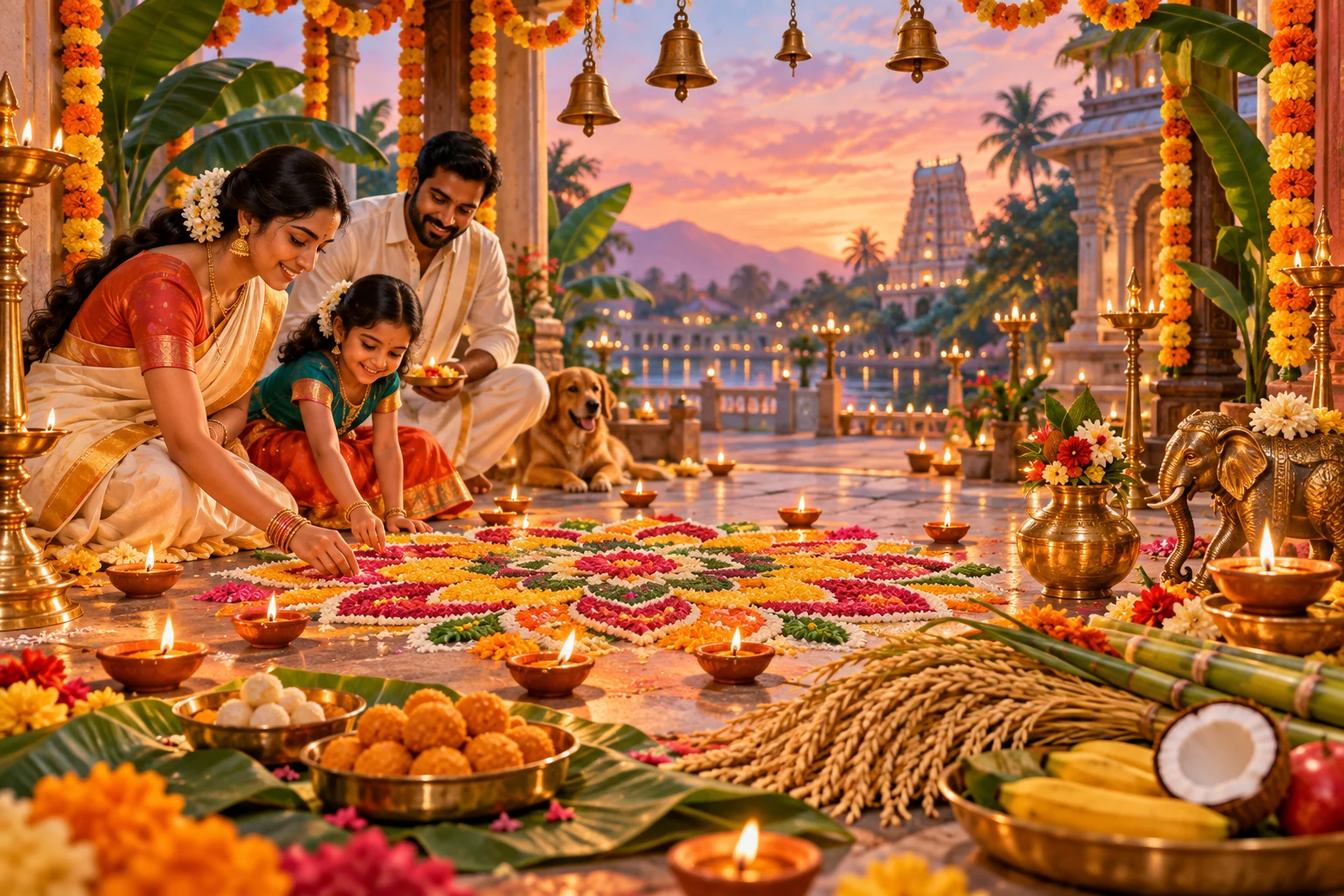
Puja is the general term for Hindu ritual worship — anything from a two-minute morning routine in front of a home shrine to an elaborate, hours-long temple ceremony. The scale varies enormously, but most pujas share a common structure, and understanding that structure makes even an unfamiliar ceremony easy to follow.
The basic idea
A puja is built around the idea of hosting the divine as an honored guest. Nearly every step in a traditional puja mirrors how you would welcome and care for someone important arriving at your home: offering a seat, water to wash, a lamp for light, food, and finally, a respectful farewell. This framing is why puja items and steps that seem arbitrary at first — a specific sequence of offerings, a bell, a particular hand gesture — usually make more sense once you see them as parts of hosting, not just ritual for its own sake.
A typical sequence
Pujas vary by tradition, deity, and occasion, but a common simplified structure looks like this:
- Preparation (Sankalpa) — a statement of intention, often naming the date, purpose, and person performing the puja, said quietly at the start.
- Invocation (Avahana) — inviting the deity’s presence into the idol or image being worshipped.
- Offerings (Upachara) — a sequence that can include water for washing, clothing, sandalwood paste, flowers, incense, and a lamp, offered one at a time.
- Mantra or chalisa recitation — chanting relevant to the deity being worshipped, which can range from a short beej mantra to a full chalisa.
- Aarti — the lit lamp is circled in front of the deity, usually the most visually recognizable part of any puja, and the point where all of this site’s aarti pages come in.
- Prasad — food that has been offered to the deity is distributed and shared among those present, treated as blessed.
- Farewell (Visarjana) — a closing acknowledgment, thanking the deity and, in the case of temporary idols (such as during festivals), formally bidding farewell.
Not every puja includes all of these steps, and home pujas are almost always a shortened version — often just a lamp, a short mantra, and an aarti.
You don’t need to get every step right
One of the most common sources of anxiety for people new to puja is worrying about doing something “wrong” — the wrong order, the wrong words, forgetting a step. In practice, sincerity and attention matter far more than mechanical precision, and most traditions treat puja as a flexible framework rather than a rigid procedure that fails if one step is out of order. A short, genuinely attentive puja is generally considered more meaningful than a long, distracted one performed only out of obligation.
Where to start
If you’re building a simple daily puja from scratch, the easiest entry point is picking one mantra that resonates with you — see our guide to starting a daily mantra practice — and pairing it with a short aarti, like Om Jai Shiv Omkara or Om Jai Jagdish Hare, to close the practice. Everything else can be added gradually as it starts to feel natural rather than obligatory.