
🕉️ Practice Guides
Lalita Sahasranamam: Meaning, Origin, and Significance
Last updated: August 31, 2026
The Lalita Sahasranamam is one of the most significant Devi texts, especially within the Sri Vidya tradition. Here's where it comes from and what it represents.
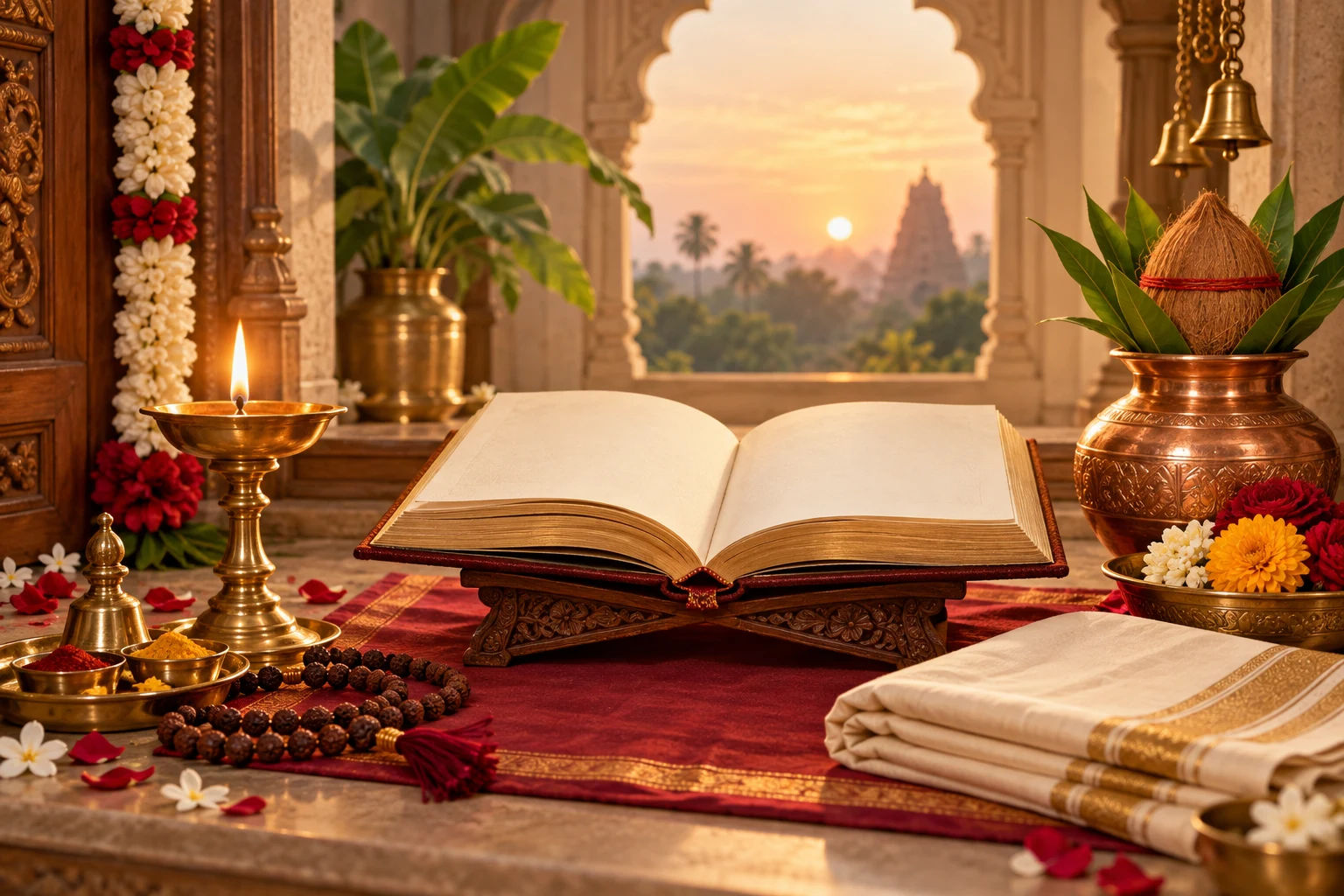
The Lalita Sahasranamam — “the thousand names of Lalita” — is one of the most significant devotional texts to the Goddess in her form as Lalita Tripurasundari, held in especially high regard within the Sri Vidya tradition of Devi worship. This guide covers its origin and significance, without reproducing the full list of names — for the complete verbatim text, look for an edition from a trusted publisher or temple source, since accuracy in a text this specific matters.
Where it comes from
The Lalita Sahasranamam appears within the Brahmanda Purana, framed as a teaching given by Hayagriva (an aspect of Vishnu associated with knowledge) to the sage Agastya, in response to his request to know how to worship the Goddess who had helped humanity overcome the demon Bhandasura. Like the Vishnu Sahasranamam, it belongs to the broader sahasranama genre of Sanskrit literature — texts built entirely from names and epithets of a deity.
What it represents within Sri Vidya
The Lalita Sahasranamam holds particular significance within Sri Vidya, a tradition of Devi worship centered on the Goddess as Tripurasundari, closely associated with the Sri Chakra (a geometric representation used in her worship). The text’s thousand names are understood not just as praise but as a map of the Goddess’s attributes and cosmic functions, studied alongside detailed commentaries in this tradition.
How it’s traditionally recited
The Lalita Sahasranamam is recited daily by devotees within this tradition, and more broadly during Navratri and on Fridays, a day widely associated with Devi worship. Because of its length and the precision expected in Sanskrit recitation, some devotees learn it gradually or recite it alongside a teacher or guided audio before attempting it independently.
For shorter Devi practices, see the Durga Beej Mantra, the Kali Mantra, and the Durga Chalisa.
Frequently asked questions
How many names does the Lalita Sahasranamam contain?
Roughly a thousand, as the title states, in keeping with the broader sahasranama genre of Sanskrit devotional literature.
What is Sri Vidya?
A tradition of Devi worship centered on the Goddess as Lalita Tripurasundari, associated with the Sri Chakra, within which the Lalita Sahasranamam holds particular significance. See the Sri Yantra meaning guide for the structure and symbolism of the Sri Chakra.
Is the Lalita Sahasranamam similar to the Vishnu Sahasranamam?
They share the same sahasranama structure — a thousand names of a deity — though addressed to different figures. See Vishnu Sahasranamam: Meaning, Origin, and How It’s Traditionally Recited for the Vishnu-focused counterpart.
Where can I find the complete text?
Look for an edition from a trusted publisher or temple source, since accuracy in a text this specific matters — this guide focuses on meaning and context rather than reproducing the full list of names.