
Mantra · Durga
Durga Beej Mantra (Om Dum Durgayei Namah)
Last updated: October 10, 2026
Edited by Anurag Goel
The Durga beej mantra is Om Dum Durgayai Namah. Learn its Sanskrit text, the meaning of Dum, benefits for protection and courage, and how to chant it.
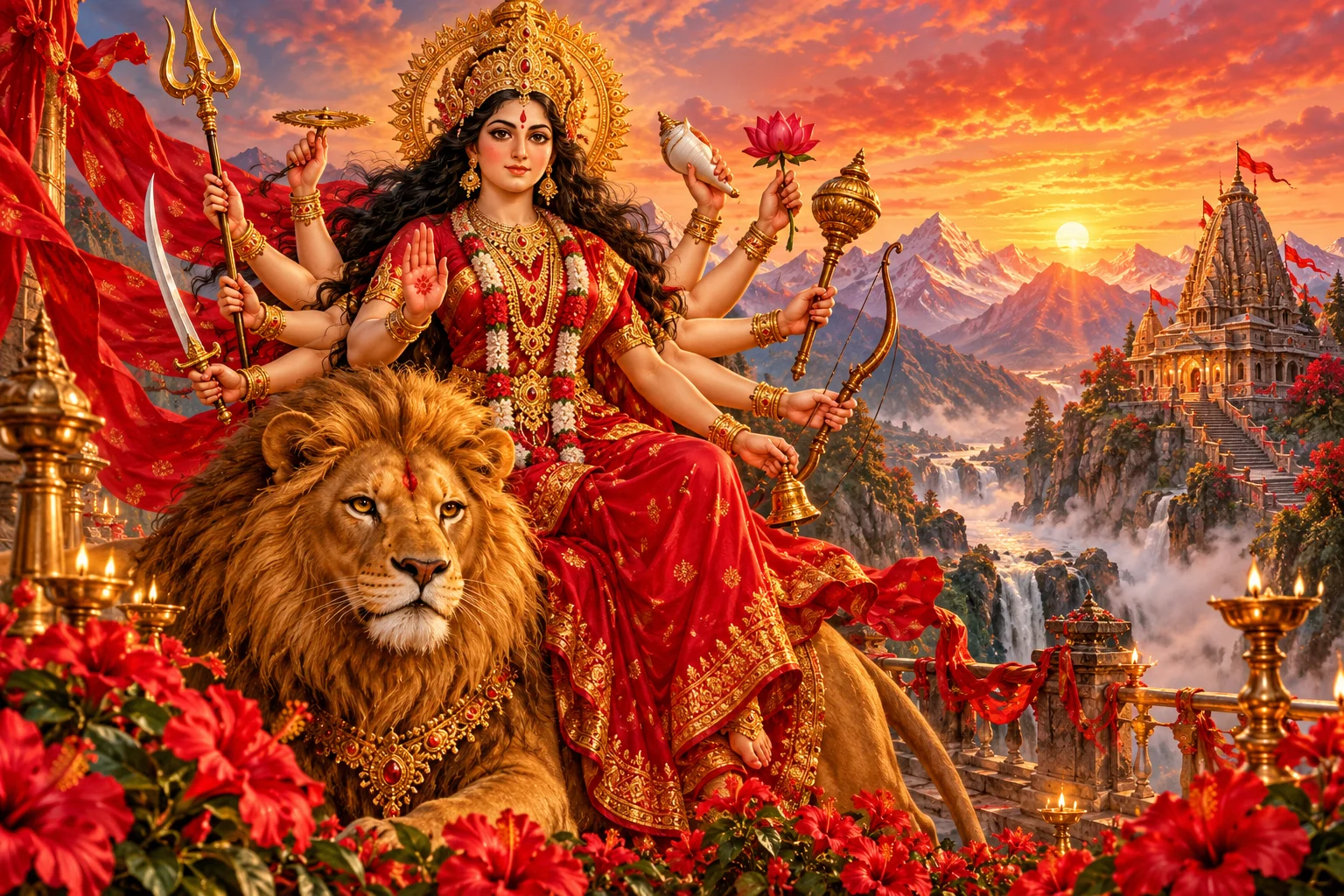
ॐ दुं दुर्गायै नमः
Om Dum Durgayei Namah
Meaning
"I bow to Goddess Durga." This is the beej (seed) mantra of Durga, built around the syllable "Dum," believed to carry her fierce, protective energy. It is chanted to invoke strength, courage, and protection from negative influences, obstacles, and danger.
मैं दुर्गा माता को नमन करता हूँ। "दुं" बीज अक्षर देवी दुर्गा की शक्ति, साहस और सुरक्षा का प्रतीक है। यह मंत्र भय, नकारात्मक शक्तियों और बाधाओं से रक्षा पाने के लिए जपा जाता है।
Benefits
- Chanted for protection, courage, and inner strength, especially during difficult times.
- Believed to remove obstacles and negative energy when recited with sincere devotion.
- A short, accessible mantra suitable for daily practice or during Navratri.
- Often used as a grounding mantra before facing a challenge or difficult situation.
How to Chant
Om Dum Durgayei Namah can be chanted at any time, though mornings and Navratri (the nine-night festival dedicated to Durga) are considered especially powerful. It can be repeated 108 times using a mala, or recited a few times with focus whenever courage or protection is needed.
Recommended count: 108 times (1 mala), or daily during Navratri
The Durga beej mantra is Om Dum Durgayai Namah (ॐ दुं दुर्गायै नमः), often written “Om Dum Durgayei Namah”. It means “Om, salutations to Durga”. Dum is the seed syllable of the Divine Mother in her protective form. Devotees chant it 108 times, especially during Navratri and on Tuesdays and Fridays, for courage, protection and the removal of obstacles.
Origin
“Dum” is the beej syllable associated with Durga, the warrior goddess who represents the power (shakti) that protects dharma and destroys negativity. Beej mantras like this one are considered a condensed, potent form of a deity’s energy, used across Shakta traditions that worship the Divine Mother. Her name, Durga, is traditionally explained as “the one who is hard to approach or overcome”, and also as the one who carries devotees across difficulty (durgati).
Word-by-word meaning
| Sanskrit | Meaning |
|---|---|
| Om (ॐ) | The primordial sound |
| Dum (दुं) | Beej syllable representing Durga’s protective energy |
| Durgayai (दुर्गायै) | To Durga |
| Namah (नमः) | Salutations, I bow to |
Put together: “Om, I bow to Durga, whose seed sound is Dum.”
Related Durga mantras
| Mantra | Meaning |
|---|---|
| Om Aim Hreem Kleem Chamundayai Vichche (Navarna mantra) | The nine-syllable mantra recited with the Durga Saptashati. Aim, Hreem and Kleem are commonly linked to Mahasaraswati, Mahalakshmi and Mahakali. |
| Sarva Mangala Mangalye Shive Sarvartha Sadhike, Sharanye Tryambake Gauri Narayani Namostute | From the Devi Mahatmya: “O auspicious one, source of all good, who fulfils every aim, refuge of all, three-eyed Gauri, Narayani, salutations to you.” |
| Ya Devi Sarva Bhuteshu Shakti Rupena Samsthita, Namastasyai Namastasyai Namastasyai Namo Namah | From the Devi Mahatmya: “To the Goddess who dwells in all beings as power, salutations to her again and again.” |
See the powerful Durga mantras and the Durga mantra meaning and benefits guides for fuller text, and the Durga Saptashati for the scripture behind them.
When it is chanted
This mantra is widely chanted during Navratri, on Tuesdays and Fridays (days associated with the Divine Mother in different regional traditions), and whenever a devotee seeks courage or protection from difficulty. Sharad Navratri 2026 runs from 11 to 20 October; see the Navratri 2026 dates, colours and puja vidhi.
How to chant the Durga beej mantra
- Bathe or wash, and sit facing east or north in a clean, quiet place.
- Light a lamp before an image of Durga if you have one, and offer a red flower.
- Chant Om Dum Durgayai Namah 108 times on a mala, or a few focused repetitions before a challenge.
- Let Dum resonate gently through the closing m; keep the pace steady rather than rushed.
- Close with the Durga Chalisa or a moment of silent gratitude.
Devotees often follow the Navratri puja guide for beginners during the festival. For the fierce, transformative form of the Mother, see the Kali Mantra; to understand seed syllables, read what is a beej mantra. The stories of Goddess Durga tell who she is and why she is invoked for protection.
Frequently Asked Questions
What does Durga Beej Mantra (Om Dum Durgayei Namah) mean?
"I bow to Goddess Durga." This is the beej (seed) mantra of Durga, built around the syllable "Dum," believed to carry her fierce, protective energy. It is chanted to invoke strength, courage, and protection from negative influences, obstacles, and danger.
How many times should Durga Beej Mantra (Om Dum Durgayei Namah) be chanted?
The traditional recommendation is 108 times (1 mala), or daily during Navratri.
What are the benefits of chanting Durga Beej Mantra (Om Dum Durgayei Namah)?
Chanted for protection, courage, and inner strength, especially during difficult times. Believed to remove obstacles and negative energy when recited with sincere devotion.
What is the Durga beej mantra?
The Durga beej mantra is Om Dum Durgayai Namah (ॐ दुं दुर्गायै नमः), often spelled Om Dum Durgayei Namah. 'Dum' is the seed syllable of Goddess Durga, and the mantra means 'Om, salutations to Durga'. It is chanted for protection, courage and the removal of obstacles.
What does 'Dum' mean in the Durga mantra?
Dum (दुं) is a bija or seed syllable, so it is not translated like an ordinary word. In Shakta practice it is treated as the sound-form of Durga, the protective Mother whose name itself means 'the one who is difficult to reach or overcome'.
Is it Durgayei or Durgayai?
The correct Sanskrit form is Durgayai (दुर्गायै), the dative 'to Durga'. 'Durgayei' is a common English spelling of the same pronunciation, and both refer to the same mantra.
When should the Durga beej mantra be chanted?
Any time works. Navratri, Tuesdays and Fridays are the traditional occasions, and mornings are a common daily choice. In 2026 Sharad Navratri runs from 11 to 20 October.