
🌾 Festivals
Pongal Story and Significance: Tamil Harvest Festival
Last updated: September 26, 2026
Pongal is a four-day Tamil harvest festival honoring the Sun, the land, cattle, family, and the renewal that follows the harvest.
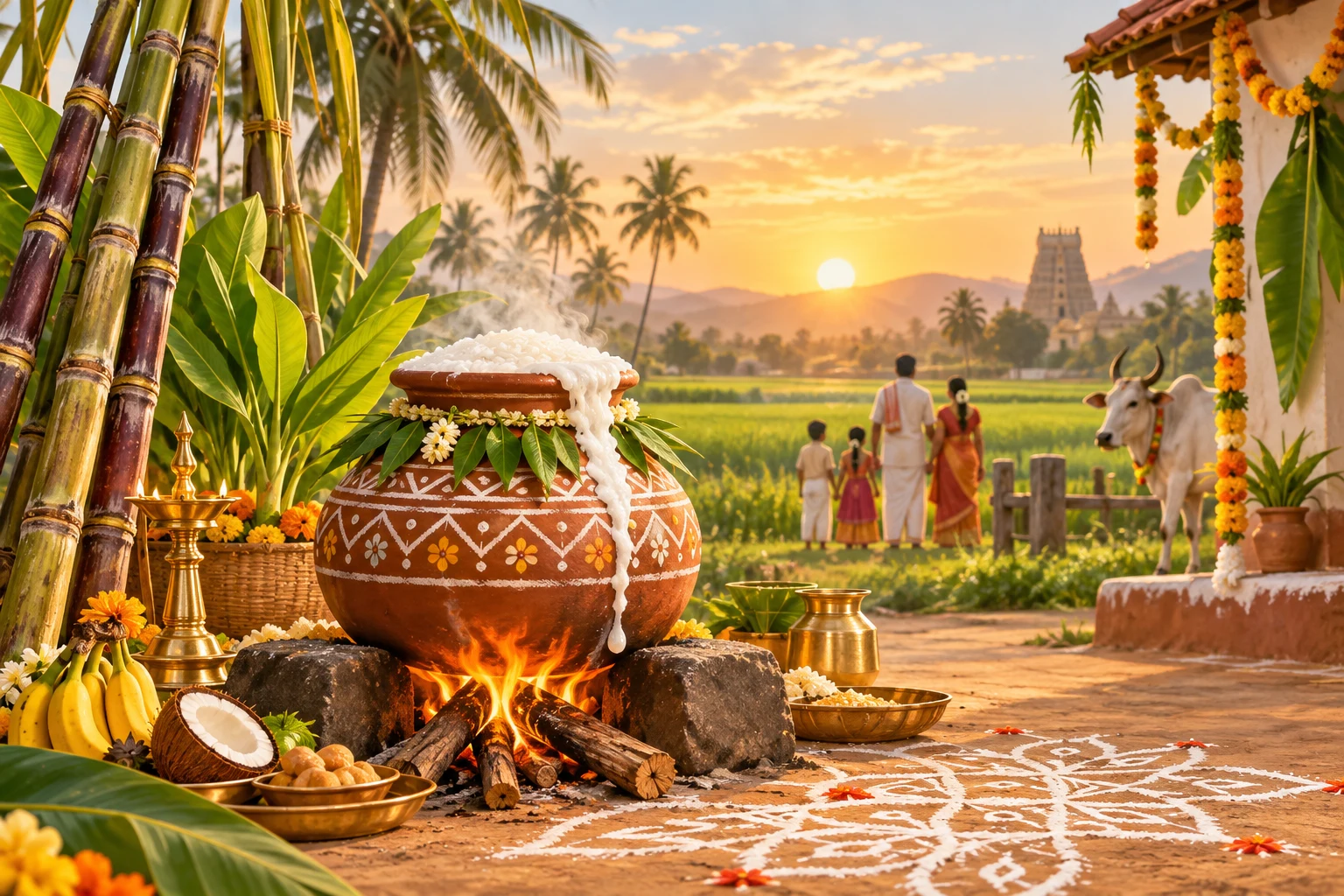
Pongal is Tamil Nadu’s great harvest festival, celebrated over four days around the beginning of the Tamil month of Thai. Its name refers both to boiling over and to the rice dish prepared with the new harvest. When milk and rice rise above the rim of the pot, families welcome the moment with joy: the overflowing vessel represents abundance sufficient to nourish and share.
Pongal is often discussed alongside Makar Sankranti because both occur in the same seasonal period and honour the Sun’s role in agriculture. They should not be treated as identical. Pongal has a distinct Tamil language, food, agrarian setting, and four-day pattern, with regional and family variations within Tamil communities themselves.
Day one: Bhogi
Bhogi centres renewal. Homes and courtyards are cleaned, and colourful kolam designs may be drawn at the entrance. Older descriptions sometimes emphasise burning unwanted possessions, but open burning creates smoke and can release toxic pollution when plastics or treated materials are included.
A better contemporary practice is to repair, donate, recycle, or dispose of belongings through the proper local system. The inner meaning remains intact: examine habits that no longer serve the household and make space for wiser ones.
Day two: Thai Pongal or Surya Pongal
The principal day honours Surya, the Sun. Families cook the Pongal dish, often outdoors or in a decorated kitchen area, using newly harvested rice, milk, and jaggery for a sweet version. As the pot boils over, people may call “Pongalo Pongal!” and offer the first portion in gratitude.
The Sun is not honoured in isolation. The ritual makes visible an agricultural web of sunlight, rain, soil, seed, farming knowledge, and labour. A meal reaches the table because many human and non-human conditions have worked together.
Day three: Mattu Pongal
Mattu means cattle. On this day, cattle may be washed, decorated, fed special food, and thanked for their contribution to ploughing, transport, dairy work, and rural livelihoods. Devotional stories connecting Shiva and his bull are told in some communities, but the agricultural meaning is immediate: working animals have helped households cultivate food.
Gratitude should include humane treatment. Use non-toxic, animal-safe decoration, provide shade and water, avoid forcing distressed animals into noise or crowds, and follow veterinary and local welfare guidance. Reverence is most credible when it protects the animal being honoured.
Day four: Kaanum Pongal
Kaanum Pongal is associated with visits, outdoor gatherings, and family or community relationships. In some traditions, women pray for the wellbeing of brothers and relatives. Customs vary, and urban families may adapt the day around work, travel, and public-space rules.
If celebrating outdoors, carry reusable plates and bottles, supervise children near water, and leave the site cleaner than you found it. A harvest celebration should not burden the land with plastic or food waste.
How to prepare Pongal mindfully
Clean the pot and cooking area, assemble ingredients, and decide who will share the food. If using an open flame, keep it on a stable surface away from fabric and have an adult supervise throughout. Respect dietary allergies and avoid food waste by making a realistic quantity.
Offer thanks in words natural to your household. You can remember farmers, cattle, cooks, market workers, and the elements that sustained the crop. A short Surya mantra may accompany the offering in families where it is appropriate.
What the overflowing pot teaches
The pot does not simply promise private wealth. In an agrarian festival, prosperity means that crops grow, animals are cared for, work supports the household, and food can be shared. Modern observance can extend that ethic by paying workers fairly, buying thoughtfully from farmers, supporting a community meal, or reducing kitchen waste.
Pongal also invites people far from farms to ask where food comes from and what climate, water, soil, and labour it required. Gratitude becomes durable when it changes behaviour.
Read the Makar Sankranti story and significance to compare related seasonal traditions. The Government of India’s tourism portal confirms Pongal’s four-day harvest sequence and overflowing-rice custom.
Frequently Asked Questions
What are the four days of Pongal?
The usual sequence is Bhogi, Thai Pongal or Surya Pongal, Mattu Pongal, and Kaanum Pongal. Names and household customs can vary.
What does the word Pongal mean?
Pongal refers to boiling or overflowing and also names the rice dish prepared for the festival. The overflowing pot expresses abundance and gratitude.
Why are cattle honoured during Pongal?
Mattu Pongal recognises the contribution of cattle to farming, transport, and rural livelihoods. Contemporary observance should put animal welfare ahead of decoration or spectacle.
Is Pongal the same as Makar Sankranti?
They occur in the same seasonal period and share solar and harvest themes, but Pongal is a distinct Tamil festival with its own four-day sequence, foods, and customs.