
☀️ Festivals
Makar Sankranti 2027: Date, Punya Kaal and Puja Vidhi
Makar Sankranti falls on Friday, 15 January 2027, because the Sun enters Makara after sunset on the 14th. Here is the date, the Punya Kaal and Maha Punya Kaal for New Delhi, and how the day is kept with Pongal, Lohri and Uttarayana.
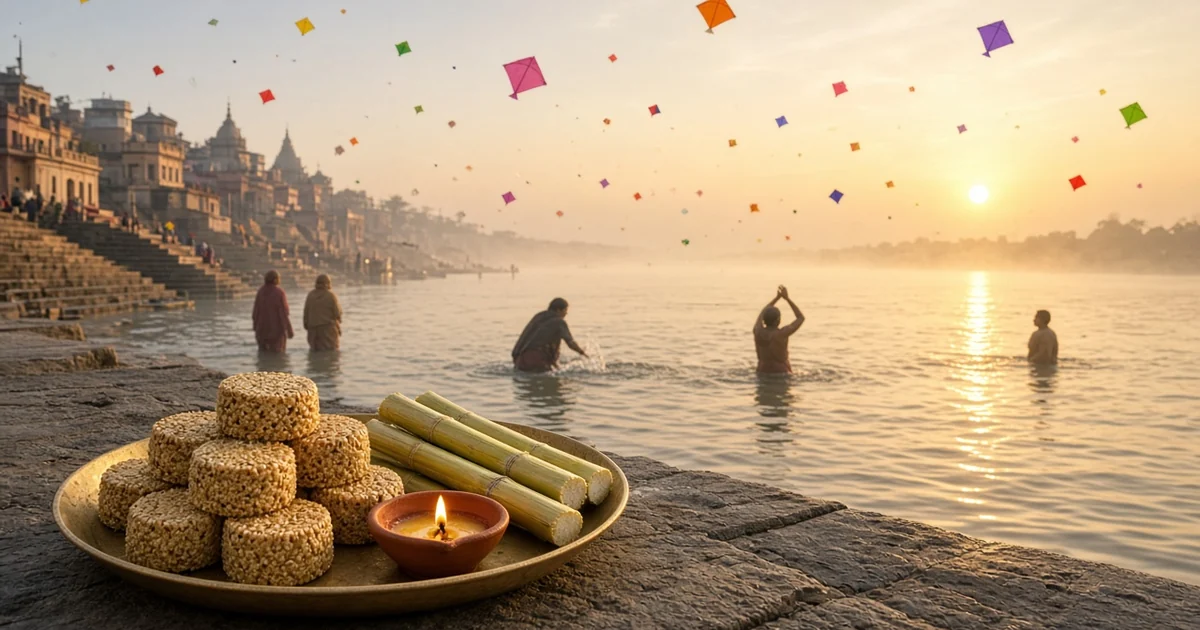
Makar Sankranti 2027 is observed on Friday, 15 January. The Sun enters the sidereal sign Makara (Capricorn) at 9:14 pm IST on Thursday, 14 January. Because that moment falls after sunset, panchangs place the festival day and its Punya Kaal on the next morning. Lohri is kept on the evening of the 14th. The same solar day is Pongal in Tamil Nadu. A longer account of the festival’s meaning is on our Makar Sankranti story page.
Makar Sankranti 2027 date and Punya Kaal
| Detail | 2027 (New Delhi, unless noted) |
|---|---|
| Festival day in India | Friday, 15 January 2027 |
| Sankranti moment | 9:14 pm IST, Thursday 14 January (the same clock moment all over India) |
| Punya Kaal | Friday 15 January, about 7:15 am to 5:46 pm |
| Maha Punya Kaal | Friday 15 January, about 7:15 am to 9:00 am |
| Evening before | Lohri; Bhogi in Tamil Nadu, Thursday 14 January |
| Also observed as | Thai Pongal; Uttarayana; Magh Bihu; Makaravilakku season at Sabarimala |
| Next days | Mattu Pongal, 16 January; Kaanum Pongal, 17 January |
Unlike most Hindu festivals, Sankranti follows the solar calendar, which is why it falls on 14 or 15 January almost every year. On the lunar calendar, 15 January 2027 is Pausha Shukla Saptami.
The date and timings were checked against Drik Panchang for New Delhi and cross-checked with other published 2027 panchangs (including Free Panchang and SanatanBodh). They agree on Friday, 15 January; the ingress time is 9:14 pm in Drik, and sometimes a minute or two later in other calculations. Confirm sunrise-based windows for your city.
Why the festival is on 15 January, not 14 January
A Sankranti is a moment, not a tithi: the instant the Sun moves from one sidereal sign to the next. When that moment falls before local sunset, the same civil day is the festival day. When it falls after sunset, the Punya Kaal — the daytime window for the bath and charity — moves to the next morning.
In 2027 the moment is 9:14 pm IST on 14 January, well after sunset in India, so Drik Panchang and other Indian panchangs keep Makar Sankranti on Friday, 15 January. Some government holiday lists still print 14 January, because that is the calendar date of the transit itself. For worship, bathing and daan in India, follow the panchang day, the 15th. Outside India the local clock time of the same moment can fall on the 14th; use a panchang for your place.
Uttarayana, Kharmas and the harvest festivals
Many calendars treat Makar Sankranti as the beginning of Uttarayana, the Sun’s northward course, and as the end of Kharmas (Dhanurmasa), which began on Dhanu Sankranti, 16 December 2026. Weddings and house-warmings that were postponed through Kharmas are traditionally taken up again from this day.
The same solar turning is kept under other names: Thai Pongal in Tamil Nadu, Magh Bihu (Bhogali Bihu) in Assam, Uttarayan kite-flying in Gujarat, and the season of Makaravilakku at Sabarimala. The story and regional customs are told more fully on the Makar Sankranti and Pongal pages.
Vidhi: bath, charity and til-gud
- Morning of 15 January: bathe, ideally in a river, tank or at home with a prayer to the Sun, within the local Punya Kaal if you can. The Maha Punya Kaal, the first part of the day, is considered especially suitable.
- Offer to the Sun: face east after sunrise, offer water (arghya) and a simple prayer. A short companion practice is the Surya mantra, or the hymn Aditya Hridayam.
- Charity: sesame, food, clothing or warmth given on this day is the traditional daan. Feeding someone before you eat is a common household rule.
- Til-gud: exchange sesame-and-jaggery sweets with the wish that speech stay as sweet as the gur. Khichdi or a sesame dish is a typical meal.
- Kites and visits: in much of western and northern India the sky fills with kites. Visit elders if you can.
- If you keep Pongal: boil fresh rice in milk until it overflows, offer it to the Sun, and share the pongal. Mattu Pongal, the honouring of cattle, is the next day.
Children, older people and anyone unwell should not take a cold river bath against medical advice. A warm bath at home and a sincere offering are enough.
Other observances around this day
The same solar day is Pongal 2027 in Tamil Nadu (Bhogi on 14 January, Mattu on 16, Kaanum on 17). The festival is preceded by Lohri on 14 January and followed by Pausha Putrada Ekadashi on 18 January. The month’s full list is in Hindu festivals in January 2027. Later in the season come Vasant Panchami on 11 February and Maha Shivratri on 6 March.
Date, Sankranti moment, Punya Kaal and Maha Punya Kaal were checked against Drik Panchang for New Delhi and cross-checked with other published 2027 panchangs. Confirm local sunrise windows.
Frequently Asked Questions
When is Makar Sankranti in 2027?
Makar Sankranti is observed on Friday, 15 January 2027 in India. The Sun enters Makara at 9:14 pm IST on Thursday, 14 January. Because that moment falls after sunset, panchangs such as Drik Panchang place the festival and its Punya Kaal on the next day, 15 January.
What is the Makar Sankranti Punya Kaal in 2027?
For New Delhi, Drik Panchang gives Punya Kaal from about 7:15 am to 5:46 pm on Friday, 15 January, and Maha Punya Kaal from about 7:15 am to 9:00 am. Times shift with local sunrise and sunset, so confirm a panchang for your city.
Why do some lists say 14 January?
The astronomical moment is on the evening of 14 January. A few civil or government holiday lists therefore print 14 January, and in some countries west of India the local clock time may still fall on the 14th. For the holy bath, charity and the festival day in India, the panchang observance is Friday, 15 January.
Is Makar Sankranti the same as Pongal, Lohri and Uttarayana?
They meet on the same solar turning but are not identical. Lohri and Bhogi are kept on the evening of 14 January 2027. Makar Sankranti, Thai Pongal, Uttarayana and Magh Bihu are observed on 15 January. Uttarayana is the name many calendars give to the Sun's northward course from this day. Kharmas, which began on Dhanu Sankranti, 16 December 2026, ends here.
What should I do on Makar Sankranti?
The traditional acts are a morning bath, preferably in a river or at a sacred tank, charity (especially of sesame, food, blankets or warmth), an offering to the Sun, and the exchange of til-gud — sesame and jaggery sweets. In the west and north of India, kites are flown. In Tamil Nadu the same day is Thai Pongal, when fresh rice is boiled in milk until it overflows.