
🪷 Mantras
Powerful Vishnu Mantras: Meaning and How to Chant
Last updated: October 9, 2026
Six widely chanted Vishnu bhagwan mantras, from the twelve-syllable Om Namo Bhagavate Vasudevaya to the Vishnu Gayatri, with verified Sanskrit, transliteration and plain meaning.
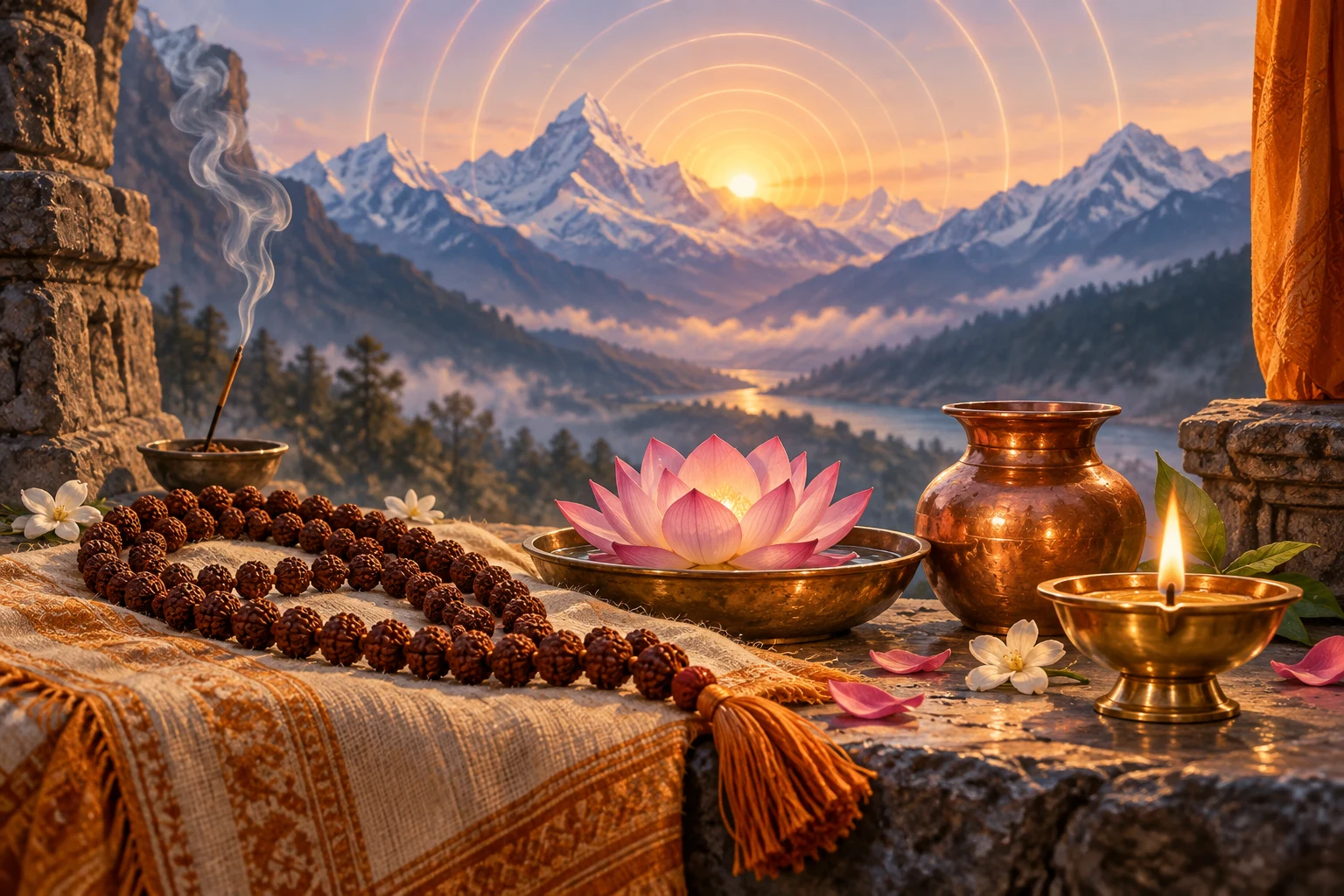
A powerful Vishnu mantra is a short prayer of surrender to Vishnu — the preserver within the Hindu trinity, worshipped also as Narayana, Vasudeva and Hari. This guide brings together the Vishnu bhagwan mantras that devotees chant most often, from the twelve-syllable Om Namo Bhagavate Vasudevaya to the Vishnu Gayatri and the well-known Shantakaram dhyana shloka. Each entry gives the Sanskrit, an IAST transliteration, a plain-English meaning and a note on how it is used. In Vaishnava practice these mantras are valued for peace, steadiness and remembrance rather than for guaranteed material results.
Vishnu mantras at a glance
| Mantra | Sanskrit | Best known for |
|---|---|---|
| Om Namo Bhagavate Vasudevaya | ॐ नमो भगवते वासुदेवाय | The twelve-syllable mantra of Vishnu as Vasudeva |
| Om Namo Narayanaya | ॐ नमो नारायणाय | The eight-syllable mantra of Vishnu as Narayana |
| Om Vishnave Namah | ॐ विष्णवे नमः | The simplest name-mantra of Vishnu, good for beginners |
| Vishnu Gayatri | ॐ नारायणाय विद्महे वासुदेवाय धीमहि तन्नो विष्णुः प्रचोदयात् | Meditation on Vishnu |
| Shantakaram | शान्ताकारं भुजगशयनं… | Dhyana shloka for peace before puja |
| Vishnu Sahasranama | 1,000 names of Vishnu | Daily or Thursday/Ekadashi recitation |
If you want a single mantra of Vishnu god for daily practice, Om Namo Bhagavate Vasudevaya is the most widely taught. For the full text, meaning, and Hindi version, see the dedicated Vishnu mantra page. Thursday (Guruvar) and Ekadashi are the days most associated with Vishnu worship.
Vishnu mantras
Om Namo Bhagavate Vasudevaya
ॐ नमो भगवते वासुदेवाय
Oṃ Namo Bhagavate Vāsudevāya
“I bow to the Blessed Lord Vasudeva.” This is the Dwadashakshari, or twelve-syllable, mantra (Om-na-mo-bha-ga-va-te-va-su-de-va-ya), and it holds a place in Vaishnavism comparable to the Panchakshari in Shaivism. Vasudeva means “the one who dwells in all things and in whom all things dwell.” It is a mantra of complete surrender, widely chanted on Ekadashi and as daily practice with a Tulsi mala.
Om Namo Narayanaya
ॐ नमो नारायणाय
Oṃ Namo Nārāyaṇāya
“I bow to Narayana.” Known as the Ashtakshari, or eight-syllable, mantra, this is one of the central mantras of Vaishnava tradition, especially in the Sri Vaishnava sampradaya. Narayana is Vishnu as the resting ground of all beings. It is chanted for inner quiet and refuge, and can be repeated as continuous japa or as a counted practice.
The Vishnu Gayatri
ॐ नारायणाय विद्महे वासुदेवाय धीमहि। तन्नो विष्णुः प्रचोदयात्॥
Oṃ Nārāyaṇāya Vidmahe Vāsudevāya Dhīmahi Tanno Viṣṇuḥ Pracodayāt
Composed on the Gayatri pattern, this verse means roughly: “May we know Narayana, may we meditate on Vasudeva; may Vishnu inspire our understanding.” It is chanted during sandhya and Vishnu puja, and like other Gayatri-form verses it asks for guided understanding rather than a particular outcome.
Shantakaram Bhujagashayanam (Vishnu dhyana shloka)
शान्ताकारं भुजगशयनं पद्मनाभं सुरेशं विश्वाधारं गगनसदृशं मेघवर्णं शुभाङ्गम्। लक्ष्मीकान्तं कमलनयनं योगिभिर्ध्यानगम्यं वन्दे विष्णुं भवभयहरं सर्वलोकैकनाथम्॥
Śāntākāraṃ bhujagaśayanaṃ padmanābhaṃ sureśaṃ viśvādhāraṃ gaganasadṛśaṃ meghavarṇaṃ śubhāṅgam lakṣmīkāntaṃ kamalanayanaṃ yogibhirdhyānagamyaṃ vande viṣṇuṃ bhavabhayaharaṃ sarvalokaikanātham
This is the most common meditation verse recited before Vishnu prayer and before the Vishnu Sahasranama. It pictures Vishnu as calm in form, resting on the serpent Shesha, lotus-navelled, cloud-coloured, the support of the universe, beloved of Lakshmi, reached by yogis in meditation, remover of the fear of worldly existence. It is recited once as a settling and focusing verse rather than counted on a mala.
The Vishnu Sahasranama
The Vishnu Sahasranama is the “thousand names of Vishnu,” a long hymn from the Anushasana Parva of the Mahabharata in which Bhishma recites a thousand epithets of Vishnu to Yudhishthira. It is not a single short mantra and is not reproduced here; devotees recite the full text from a reliable printed or teacher-verified source, often on Ekadashi, Saturdays or during Vishnu puja. Many begin with the Shantakaram dhyana shloka above and end with a short phala-shruti and aarti.
Narasimha Mantra
ॐ उग्रं वीरं महाविष्णुं ज्वलन्तं सर्वतोमुखम्। नृसिंहं भीषणं भद्रं मृत्युमृत्युं नमाम्यहम्॥
Oṃ Ugraṃ Vīraṃ Mahāviṣṇuṃ Jvalantaṃ Sarvatomukham Nṛsiṃhaṃ Bhīṣaṇaṃ Bhadraṃ Mṛtyu-mṛtyuṃ Namāmyaham
Narasimha is the man-lion avatar of Vishnu who protected the child devotee Prahlada. The verse means: “I bow to the fierce and heroic form of the great Vishnu — Narasimha — blazing, facing all directions, terrifying yet auspicious, who is death to death itself.” It is chanted firmly and with full attention, often during Narasimha Jayanti or when a devotee is facing a difficult situation.
How to chant these mantras
Chant in a clean, quiet place, ideally in the morning; Ekadashi (the eleventh lunar day) is the occasion most associated with Vishnu. Sit with a straight, comfortable posture and take a few slow breaths first. The short mantras suit a mala of 108 repetitions with Tulsi or Rudraksha beads, or continuous japa through the day; the longer verses are recited once, slowly, with each word given its full sound. Learn pronunciation by listening to a trusted reciter rather than by speed, and follow any rules your teacher or lineage sets for Vedic recitation.
Frequently asked questions
Which Vishnu mantra is most powerful?
Traditions differ. Om Namo Narayanaya and Om Namo Bhagavate Vasudevaya are the two most often described as the principal Vishnu mantras, and both are widely used for daily japa. “Powerful” here means the depth and steadiness the practice builds, not a guaranteed effect.
What is the difference between Om Namo Narayanaya and Om Namo Bhagavate Vasudevaya?
They address the same Lord under different names. Om Namo Narayanaya is the eight-syllable (Ashtakshari) mantra and Om Namo Bhagavate Vasudevaya is the twelve-syllable (Dwadashakshari) mantra. Which one a devotee uses is usually decided by sampradaya, teacher or family custom.
Can I chant the Vishnu Sahasranama at home daily?
Yes, many households recite it daily or weekly. Use a reliable printed text or one verified by a teacher, and do not try to reconstruct it from memory. It is often paired with the Shantakaram dhyana shloka at the start.
Is the Narasimha Mantra a Vishnu mantra?
Yes. Narasimha is one of the ten avatars of Vishnu, so the mantra belongs to Vaishnava practice. It is chanted specifically for courage and protection in situations that feel overwhelming.
Do I need initiation to chant a Vishnu mantra?
For household devotional practice of Om Namo Narayanaya or Om Namo Bhagavate Vasudevaya there is usually no initiation requirement, though some Vaishnava sampradayas give these mantras formally. If you follow a particular tradition, follow its guidance.