
Mantra · Narasimha
Narasimha Mantra (Om Ugram Viram Mahavishnum)
Last updated: August 31, 2026
Om Ugram Viram Mahavishnum, the Narasimha mantra for protection from fear — Sanskrit text, meaning, benefits, and how to chant it correctly.
ॐ उग्रं वीरं महाविष्णुं ज्वलन्तं सर्वतोमुखम्। नृसिंहं भीषणं भद्रं मृत्युमृत्युं नमाम्यहम्॥
Om Ugram Viram Mahavishnum Jvalantam Sarvatomukham Nrisimham Bhishanam Bhadram Mrityu-mrityum Namamyaham
Meaning
I bow to the fierce and heroic form of the great Vishnu — Narasimha — blazing, facing all directions, terrifying yet auspicious, who is death to death itself.
मैं उस उग्र, वीर, महाविष्णु स्वरूप नृसिंह को नमन करता हूँ, जो प्रज्वलित हैं, सभी दिशाओं में मुख वाले हैं, भयंकर होते हुए भी कल्याणकारी हैं, और जो स्वयं मृत्यु के लिए भी मृत्यु के समान हैं।
Benefits
- Chanted for protection from fear, danger, and negative influences.
- Believed to be especially powerful for overcoming obstacles that feel overwhelming or urgent.
- Associated with removing fear of death and instilling fearlessness.
- Popular during Narasimha Jayanti and whenever facing a genuinely difficult situation.
How to Chant
This mantra is traditionally chanted with intensity and focus, reflecting Narasimha's fierce protective nature. It can be repeated 108 times using a mala, and is often chanted during Narasimha Jayanti or in moments requiring courage and protection.
Recommended count: 108 times (1 mala)
About the Lord Narasimha mantra
The Lord Narasimha mantra — Om Ugram Viram Mahavishnum — is a short Sanskrit prayer to Narasimha, the man-lion avatar of Vishnu. It is chanted for courage and for protection in situations that feel frightening or impossible to escape. The verse is sometimes called the Narasimha Gayatri or the “fearsome” (ugra) form of the prayer, and it appears in Vaishnava devotional practice alongside longer texts such as the Vishnu Sahasranamam.
Origin
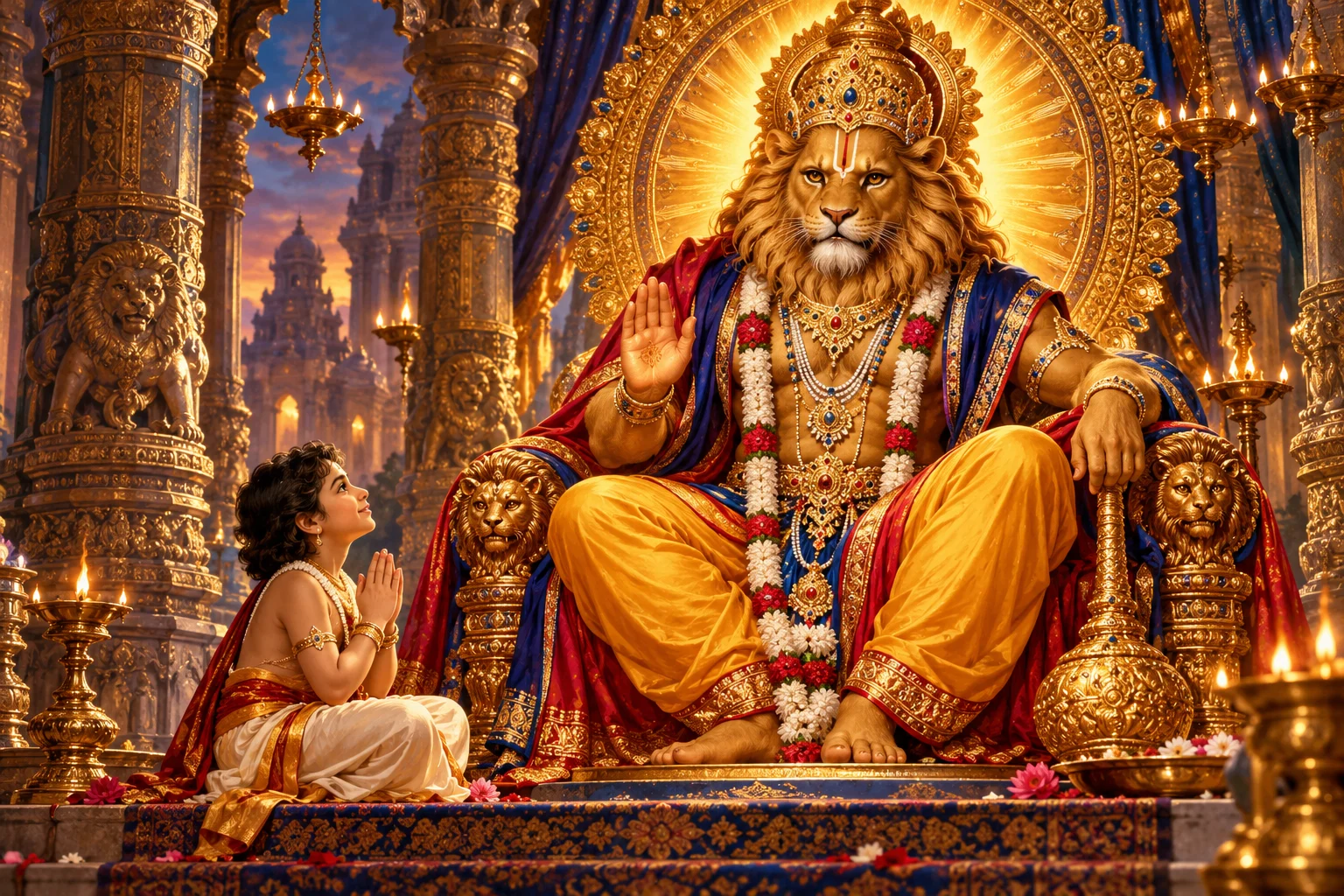
Narasimha, the half-man half-lion avatar of Vishnu, appears in the Puranas to protect his devotee Prahlada from his demonic father Hiranyakashipu, who could not be killed by man or beast, indoors or outdoors, by day or night — a boon Narasimha’s unique form circumvented entirely. This mantra draws on that story, invoking Narasimha specifically as a protector who overcomes situations that seem impossible to escape. The same episode is remembered during Narasimha Jayanti and is one of the ten avatars of Vishnu.
Word-by-word breakdown
| Sanskrit | Meaning |
|---|---|
| Ugram | Fierce, intense |
| Viram | Heroic, valiant |
| Mahavishnum | The great Vishnu |
| Jvalantam | Blazing, radiant |
| Sarvatomukham | Facing in all directions |
| Nrisimham | Narasimha, the man-lion |
| Bhishanam | Terrifying |
| Bhadram | Auspicious, benevolent |
| Mrityu-mrityum | Death to death itself |
| Namamyaham | I bow |
When it is chanted
Widely chanted during Narasimha Jayanti, and by devotees seeking protection during moments of acute fear, danger, or seemingly inescapable difficulty — reflecting the story of Prahlada’s rescue that the mantra directly references. Some devotees add it to a daily Vishnu practice alongside the Vishnu Mantra or the Hare Krishna Maha Mantra.
How to chant the Narasimha mantra
Sit in a clean, quiet place and settle the breath before you begin. Because the verse invokes a fierce protective form, it is usually recited firmly and with full attention rather than softly. A common practice is one mala of 108 repetitions, though a smaller count done carefully is better than a large one rushed. If you are new to mala chanting, read why mantras are chanted 108 times and the guide to starting a daily mantra practice.
Traditional benefits and honest limits
Devotees associate the Narasimha mantra with courage, steadiness under pressure, and freedom from fear. These are devotional associations, not guaranteed medical, legal, or financial outcomes. Chanting can support calm and resolve, but real dangers and difficulties still deserve qualified practical help. Approach the mantra with respect for the tradition it comes from.
Frequently asked questions
What is the Lord Narasimha mantra for?
It is chanted for protection and courage, especially in situations that feel overwhelming or inescapable. The words invoke Narasimha as “death to death itself” and as terrifying yet auspicious — a protector for his devotees.
How many times should the Narasimha mantra be chanted?
The traditional count is 108 times, one full mala. Many devotees also chant it a few times a day during a difficult period. Consistency and attention matter more than a large number.
When is the best time to chant the Narasimha mantra?
It can be chanted any day. It is especially associated with Narasimha Jayanti and with moments when a devotee is facing acute fear or a serious challenge.
Is the Narasimha mantra a beej mantra?
No. It is a short praise verse (stotra) rather than a single-syllable seed sound. To understand the difference, read what is a beej mantra.
Frequently Asked Questions
What does Narasimha Mantra (Om Ugram Viram Mahavishnum) mean?
I bow to the fierce and heroic form of the great Vishnu — Narasimha — blazing, facing all directions, terrifying yet auspicious, who is death to death itself.
How many times should Narasimha Mantra (Om Ugram Viram Mahavishnum) be chanted?
The traditional recommendation is 108 times (1 mala).
What are the benefits of chanting Narasimha Mantra (Om Ugram Viram Mahavishnum)?
Chanted for protection from fear, danger, and negative influences. Believed to be especially powerful for overcoming obstacles that feel overwhelming or urgent.