
🌳 Festivals
Vat Savitri Story and Significance: The Devotion of Savitri
Last updated: September 26, 2026
Vat Savitri remembers a woman whose wisdom and devotion brought Satyavan back from death, making it a story of courage, intelligence, and steadfast love.
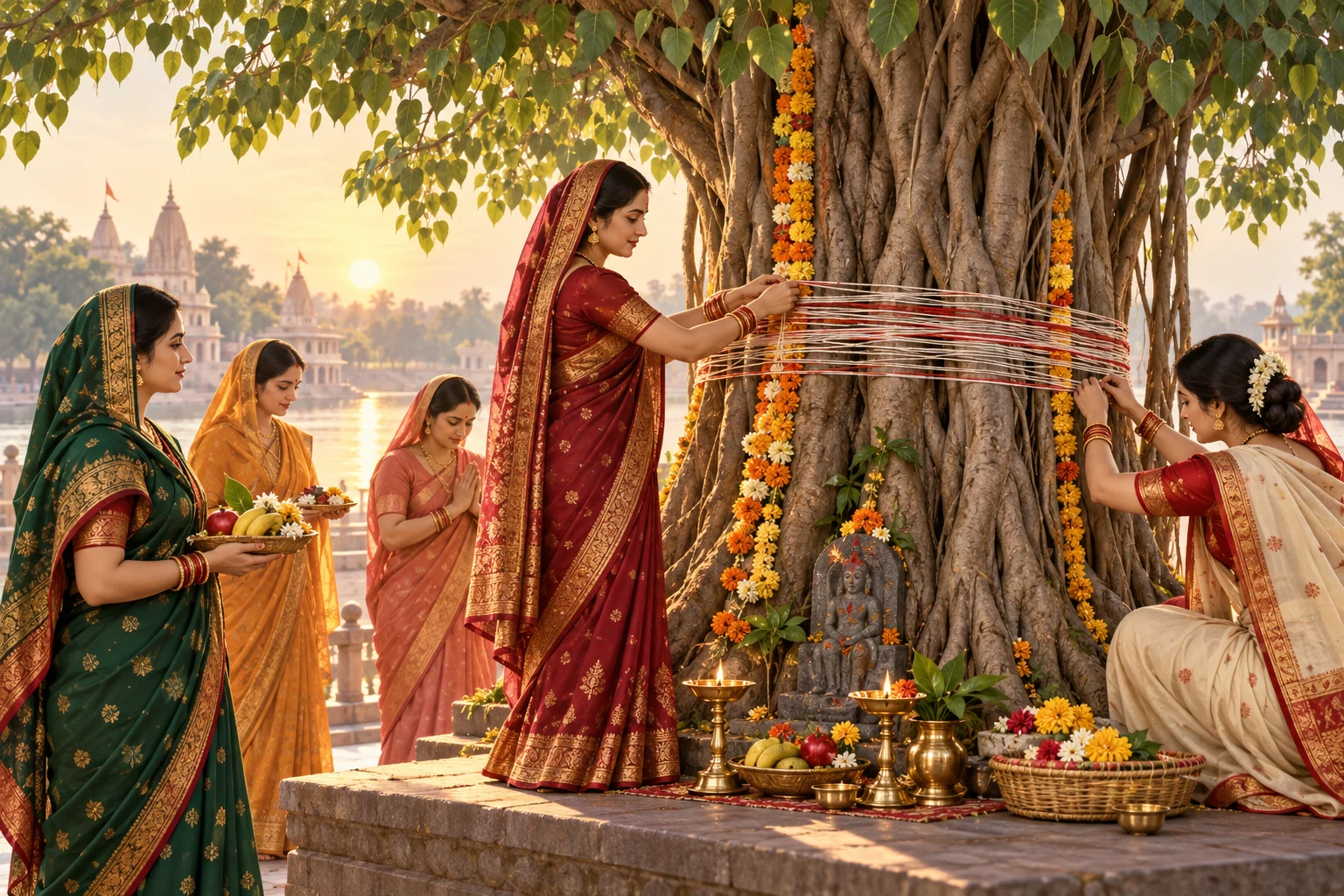
Vat Savitri Vrat is a Hindu observance connected with Savitri and Satyavan in the Mahabharata. Married women traditionally pray for their husbands’ wellbeing, listen to the story, and honour a banyan tree. The date and ritual sequence vary: some communities observe Vat Savitri around the new moon of Jyeshtha, while others keep Vat Purnima around the full moon. A local temple or family calendar is the best guide.
The story of Savitri and Satyavan
Princess Savitri chooses Satyavan even after the sage Narada warns that he is destined to die within a year. She does not treat the warning lightly. She joins Satyavan and his exiled parents in the forest, lives with discipline, and approaches the predicted day with alertness.
When Satyavan grows weak while cutting wood, he rests with his head in Savitri’s lap and dies. Yama, the lord of death and justice, comes for him. Savitri follows. Yama repeatedly asks her to return, yet she answers with thoughtful reflections on duty, companionship, and righteous conduct. Impressed, he offers boons—anything except Satyavan’s life.
Savitri asks that her blind father-in-law regain sight and his kingdom, that her own father have descendants, and finally that she and Satyavan have children. The last boon cannot be fulfilled without Satyavan, so Yama restores his life. The episode presents Savitri as active and intellectually composed, not merely patient. Her loyalty works together with moral reasoning and skillful speech.
For its literary setting, see the Mahabharata overview in the Encyclopaedia Britannica, then explore VedicVani’s Mahabharata and Bhagavad Gita guide.
Why the banyan tree matters
The banyan’s long life, aerial roots, and broad shelter make it a natural symbol of endurance and continuity. The tree also evokes the forest where the decisive part of Savitri’s story unfolds. During worship, participants may offer water, flowers, or a sacred thread and walk around the tree while praying.
Ritual should not damage the living tree. Tie thread loosely, avoid nails, plastic decorations, synthetic cloth, or excessive substances on the bark, and leave the site clean. If no banyan is accessible, a respectful prayer at home is preferable to trespassing or harming a tree.
A simple, health-conscious observance
Begin by bathing or washing, tidying a small prayer space, and setting out water, fruit, and flowers if available. Remember Savitri and Satyavan, state your intention, and read or listen to the story. At a banyan tree, offer water without waterlogging the roots and make a few mindful circumambulations according to local custom. Close with gratitude and share food or useful supplies with someone in need.
Fasting traditions range from avoiding certain foods to a day-long fast. They are not suitable for everyone. Pregnant or breastfeeding people, children, older adults, people with diabetes or an eating-disorder history, and anyone taking medication should seek appropriate medical guidance and choose a safe alternative. Devotion is not measured by dehydration or pain.
Meaning for relationships today
Although the traditional vrat is often described as a wife’s prayer for her husband, its enduring values can be practiced mutually. Partners can pray for one another, discuss health honestly, share household responsibilities, and renew promises of respect. Unmarried devotees may reflect on courage, family care, and wise commitment without claiming a ritual role that is not theirs.
Savitri’s example does not ask people to tolerate abuse or erase themselves for a relationship. Her power lies in clear judgment, persistence, and speech grounded in dharma. Anyone facing coercion or danger should seek trusted support rather than interpret suffering as a religious duty.
The vrat becomes most meaningful when prayer is joined to practical care: arranging a health check, listening without interruption, planting or protecting a native tree, or helping a family in difficulty. Like Karwa Chauth, its healthiest contemporary reading is not one-sided sacrifice but responsible love.
If children are included, tell the story as a conversation about choices: Why does Savitri follow Yama? Which boon shows foresight? What makes her speech effective? This keeps the observance from becoming a list of instructions and helps the next generation recognise Savitri’s intelligence as clearly as her devotion.
Frequently Asked Questions
What is the main story behind Vat Savitri Vrat?
The vrat recalls Savitri, who follows Yama after her husband Satyavan dies and uses courage, wisdom, and carefully chosen boons to secure the continuation of their family and Satyavan's life.
Why is a banyan tree worshipped on Vat Savitri?
The long-lived banyan represents continuity, shelter, and resilience. It also recalls the forest setting in which Satyavan dies and Savitri begins her determined encounter with Yama.
Is fasting compulsory for Vat Savitri?
Practices differ by family and region, and fasting should never endanger health. A prayer, reading of the story, charitable act, or care for a tree can be a meaningful alternative.
Are Vat Savitri and Vat Purnima the same observance?
They honour the same Savitri-Satyavan tradition, but communities may observe the vrat on different lunar dates, commonly Amavasya in some northern regions and Purnima in parts of western India.