
🧘 Practice Guides
Mantra vs Meditation: How Chanting Supports a Steady Mind
Last updated: August 31, 2026
Mantra and meditation are often treated as competing practices. In many Hindu traditions, a mantra is actually one of the simplest ways to train attention.
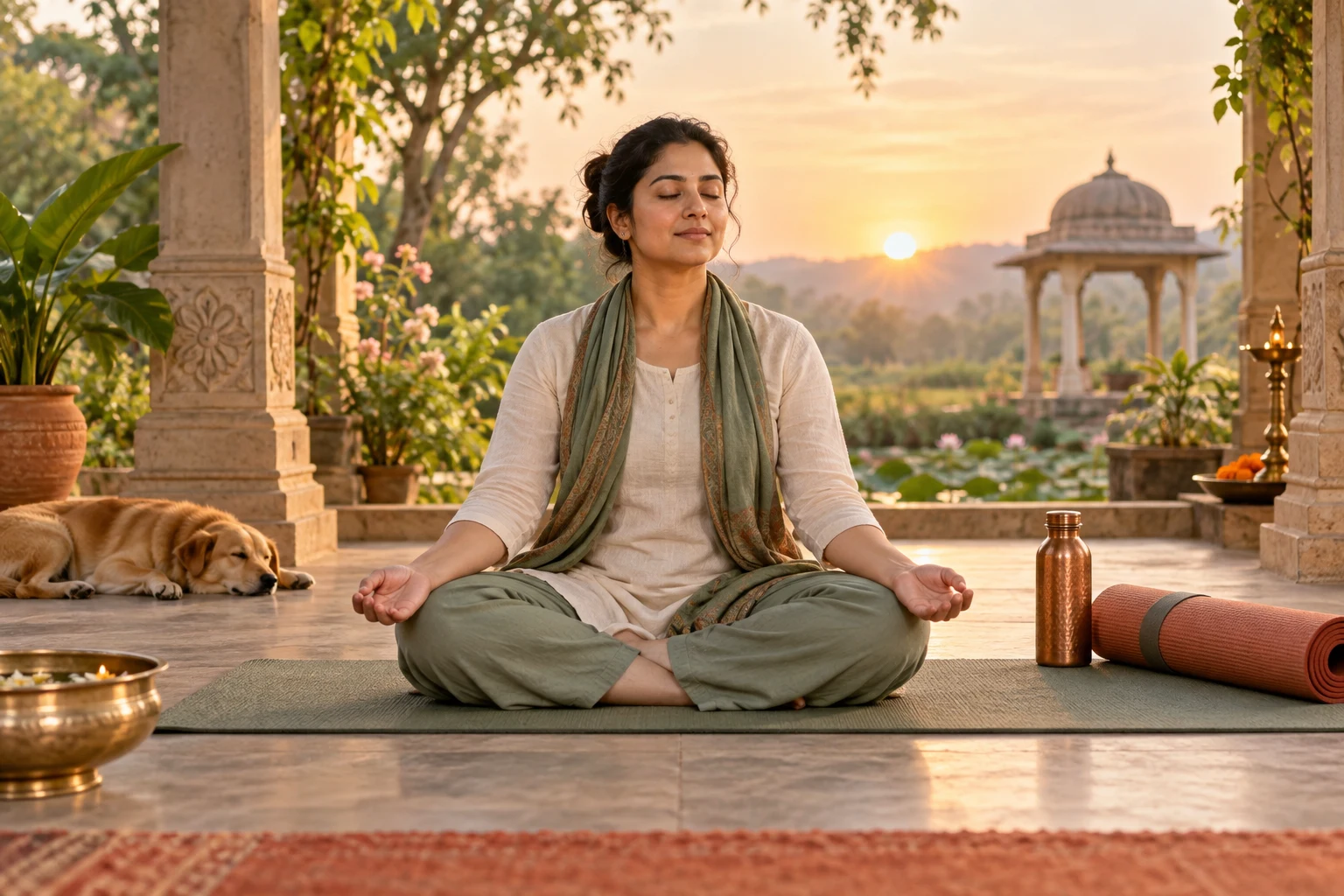
Mantra practice and meditation overlap, but they are not identical. Meditation is a broad discipline of training attention and awareness. A mantra is a sound, word, or sacred phrase used as the object of that attention. You can meditate with a mantra, but meditation can also use the breath, bodily sensations, an image, or open awareness.
What mantra practice does
In japa, a practitioner repeats a mantra aloud, softly, or mentally. The repetition gives the mind a stable pattern to return to when thoughts wander. Mantras also carry meaning and devotional associations, so the practice can involve reverence as well as concentration.
For example, Om Namah Shivaya gives the mind a short rhythmic phrase and a relationship of reverence toward Shiva. The Gayatri Mantra uses a longer prayer connected with illumination and discernment.
What meditation does
Meditation trains the ability to notice experience without immediately being controlled by it. A beginner may sit with the breath, notice a thought, and return to the breath. The important movement is the return. The mind does not need to become blank for practice to be useful.
Mantra makes that return more concrete. Instead of asking “what should I focus on now?”, the practitioner already has a word or phrase waiting.
How to combine them
A simple ten-minute routine is enough:
- Sit comfortably and take three natural breaths.
- Repeat one mantra for five minutes, using the pronunciation and meaning from its page.
- Stop repeating and sit quietly for three minutes, observing the breath and the effects of the practice.
- Close with a short prayer or intention for the day.
If five minutes feels too long, begin with 11 repetitions. The daily mantra practice guide explains how to build consistency without overloading the routine.
Which should a beginner choose?
Choose mantra if you find it easier to concentrate on a sound, want a devotional framework, or prefer a practice with a clear beginning and end. Choose breath meditation if you want a minimal method that does not depend on learning Sanskrit or a particular tradition. Either can become deeper over time.
The aim is not to collect techniques. It is to become a little more attentive, less reactive, and more capable of returning to what matters.
See also mantra vs prayer, why mantras are chanted 108 times, and the beginner’s guide to Hindu mantras.
Frequently asked questions
Is a mantra the same as meditation?
No. Meditation is the broad discipline of training attention; a mantra is one object that attention can rest on. You can meditate using a mantra, the breath, or open awareness.
Should a beginner start with mantra or breath meditation?
Choose a mantra if you concentrate more easily on a sound or want a devotional framework. Choose breath meditation if you prefer a minimal method with no Sanskrit to learn. Either can deepen over time.
Can I use mantra and meditation together?
Yes. A common routine is to repeat a mantra for a few minutes, then sit quietly with the breath for a few more, and close with a short intention.