
🤲 Practice Guides
Hand Mudras: Meaning of Mudra, Definition, and Common Mudras with Their Meanings
Last updated: October 10, 2026
Mudras look like a small detail in yoga and meditation, but they're a distinct practice with their own tradition. Here's what they actually are and why hand position matters.
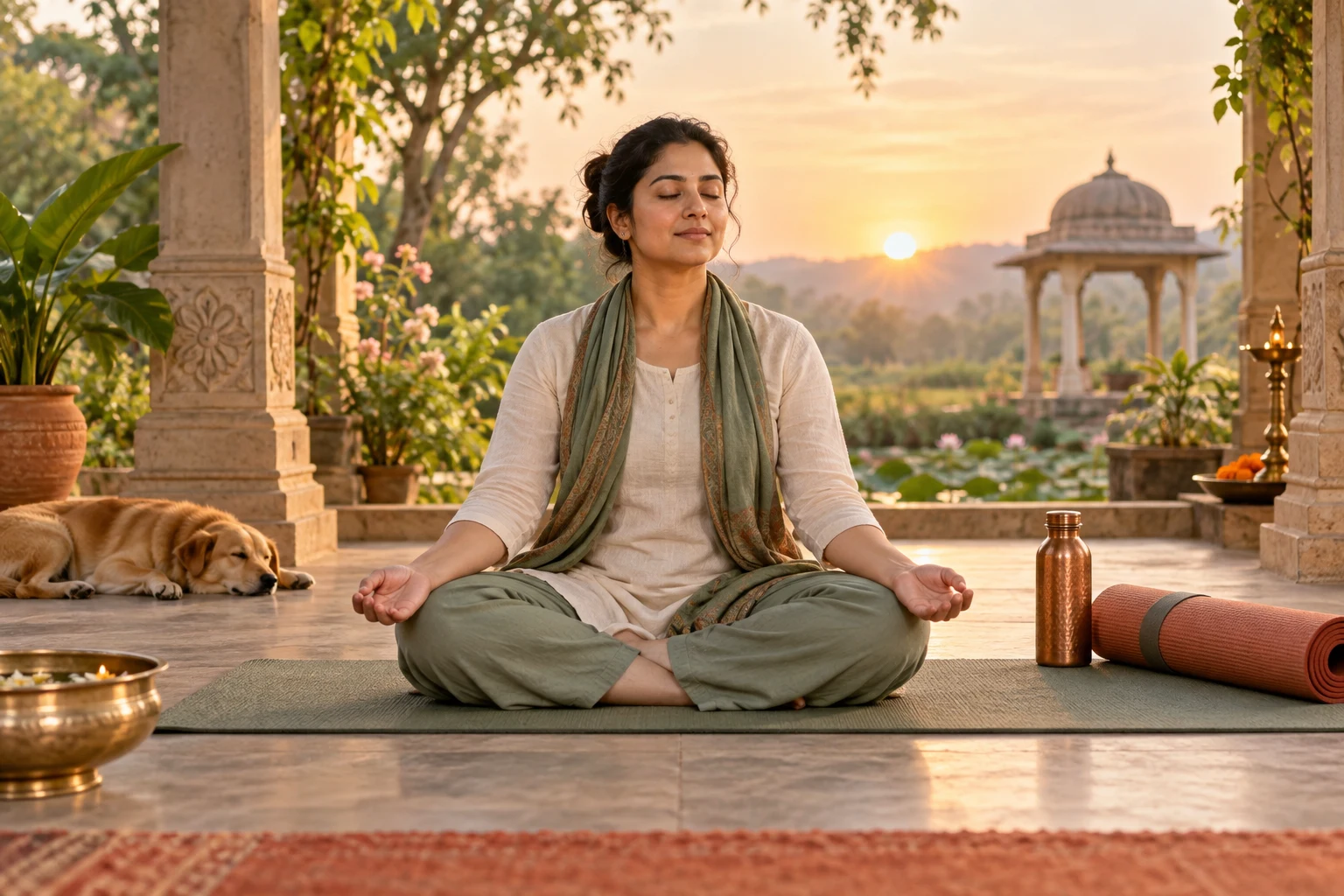
Hand mudras are symbolic gestures made with the fingers and palms during yoga, meditation, prayer, and classical Indian dance. The meaning of mudra in Sanskrit is “seal” or “gesture”: a mudra is defined as a position of the hands (or body) that “seals” attention and is traditionally believed to direct the flow of prana, the body’s vital energy.
Mudras are often the smallest, easiest-to-overlook detail in a practice, but they represent a distinct tradition of their own, built on the idea that hand position has a specific effect on energy, attention, or meaning. This guide covers the definition of mudra, the main types, and a list of common hand mudras with their meanings, with links to step-by-step guides for each.
Meaning and definition of mudra
Definition: a mudra (मुद्रा) is a symbolic or energetic gesture — most often of the hands — used in yoga, meditation, ritual worship, iconography, and dance.
Mudra is Sanskrit for “seal,” “mark,” or “gesture” — reflecting the traditional idea that a specific hand position “seals” or directs energy in a particular way, similar to how a seal fixes an impression in wax. Beyond yoga and meditation, mudras also appear extensively in classical Indian dance such as Bharatanatyam and Kathakali, and in temple iconography, where a deity’s hand gesture communicates a specific meaning to those who know how to read it. A raised open palm on a statue of a deity, for example, is the abhaya mudra, the gesture of fearlessness and protection.
Types of mudras
Not every mudra is a hand gesture. Classical hatha yoga texts use the word more broadly: the Hatha Yoga Pradipika (Chapter 3) describes ten mudras, such as Maha Mudra, Khechari Mudra, and Viparita Karani, that involve the whole body, breath, and internal locks. The Gheranda Samhita lists twenty-five. A modern classification popularised by the Bihar School of Yoga groups mudras into five types:
- Hasta mudras — hand gestures (the focus of this guide).
- Mana mudras — head gestures using the eyes, ears, nose, or tongue, such as Shambhavi Mudra.
- Kaya mudras — postural gestures combining body position and breath.
- Bandha mudras — gestures combined with internal energy locks.
- Adhara mudras — perineal gestures that redirect energy upward.
The idea behind hand mudras
Hasta mudras used in yoga and meditation are based on a traditional system connecting the fingers to the five classical elements (pancha mahabhuta):
| Finger | Element |
|---|---|
| Thumb | Fire (agni) |
| Index finger | Air (vayu) |
| Middle finger | Space or ether (akasha) |
| Ring finger | Earth (prithvi) |
| Little finger | Water (jala) |
Touching a fingertip to the thumb is traditionally believed to balance or strengthen the corresponding element, while folding a finger under the thumb is said to reduce it. These associations come from yoga and Ayurvedic teaching rather than anatomy, and different teachers explain them differently.
13 common hand mudras and their meanings
| Mudra | How to form it | Traditional meaning |
|---|---|---|
| Gyan Mudra | Index fingertip touches thumb tip; other fingers extended | Knowledge, focus, calm |
| Chin Mudra | Same as Gyan Mudra, palms facing down | Consciousness, grounding |
| Prana Mudra | Ring and little fingertips touch thumb tip | Vitality, life force |
| Apana Mudra | Middle and ring fingertips touch thumb tip | Elimination, letting go |
| Prithvi Mudra | Ring fingertip touches thumb tip | Earth, stability, strength |
| Vayu Mudra | Index finger folded to thumb base, thumb presses lightly over it | Reducing air element, steadiness |
| Surya Mudra | Ring finger folded to thumb base, thumb presses lightly over it | Fire, warmth, energy |
| Varuna Mudra | Little fingertip touches thumb tip | Water, fluidity |
| Shunya Mudra | Middle finger folded to thumb base, thumb presses lightly over it | Space, emptiness, listening |
| Anjali Mudra | Palms pressed together at the heart | Reverence, greeting (namaste) |
| Dhyana Mudra | Right hand resting in left in the lap, thumb tips touching | Meditation, stillness |
| Abhaya Mudra | Right palm raised, facing outward | Fearlessness, protection |
| Varada Mudra | Palm facing outward, fingers pointing down | Generosity, granting blessings |
The linked guides give step-by-step instructions, symbolism, and precautions for each mudra. Two other popular gestures, Kubera Mudra and Ganesha Mudra, have their own guides.
How to practise hand mudras
- Sit comfortably on a chair, cushion, or mat with the spine naturally upright.
- Relax the shoulders and arms, resting the backs of the hands on the thighs or knees.
- Form the mudra lightly — fingertips touch without pressing.
- Breathe naturally, or combine the mudra with gentle pranayama such as Anulom Vilom or Bhramari.
- Hold for 5–15 minutes, building up gradually. Some teachers suggest up to 45 minutes a day, split into sessions.
- Release slowly, stretch the fingers, and notice how you feel.
Most hasta mudras are held during seated meditation or pranayama practice, and can be held for as long as the seated practice lasts — minutes to much longer with experience. Unlike physical postures, mudras require no flexibility or strength, making them one of the most accessible parts of yogic practice to begin.
Benefits and realistic expectations
Traditionally, each mudra is associated with a particular quality — knowledge, vitality, grounding, or calm. A realistic, well-supported benefit is simpler: a deliberate hand position gives attention an anchor, signals the start of practice, and helps the body settle. Mudras are best treated as part of a contemplative practice, not as a substitute for medical diagnosis or treatment. Stop if you feel pain, numbness, or cramping in the hands.
Frequently asked questions
What is the meaning of mudra?
“Seal,” “mark,” or “gesture” in Sanskrit — reflecting the idea that a hand position seals or directs energy in a specific way.
What is the definition of mudra in yoga?
In yoga, a mudra is a gesture of the hands, eyes, or whole body used with breath and meditation to focus attention and, traditionally, to direct prana.
What are the most common hand mudras?
Gyan (Chin), Prana, Apana, Prithvi, Vayu, Surya, Varuna, Shunya, Anjali, and Dhyana Mudra are among the most widely taught hand mudras in yoga and meditation.
Are mudras only used in yoga?
No — mudras also appear extensively in classical Indian dance, Hindu and Buddhist ritual, and religious iconography, where specific gestures communicate distinct meanings.
Do mudras require any special skill?
No — unlike physical yoga postures, mudras require no flexibility or strength and can be practiced by anyone, making them one of the most accessible parts of a broader practice.
How long should a mudra be held?
There’s no fixed rule — mudras are typically held for the duration of a seated meditation or pranayama session, which can range from a few minutes to much longer with experience.