
📿 Practice Guides
Why 108 Times? The Significance of the Mala
Last updated: August 31, 2026
Almost every mantra on this site recommends '108 times, one mala' — but why 108 specifically, and what is a mala anyway? Here's where the number comes from.
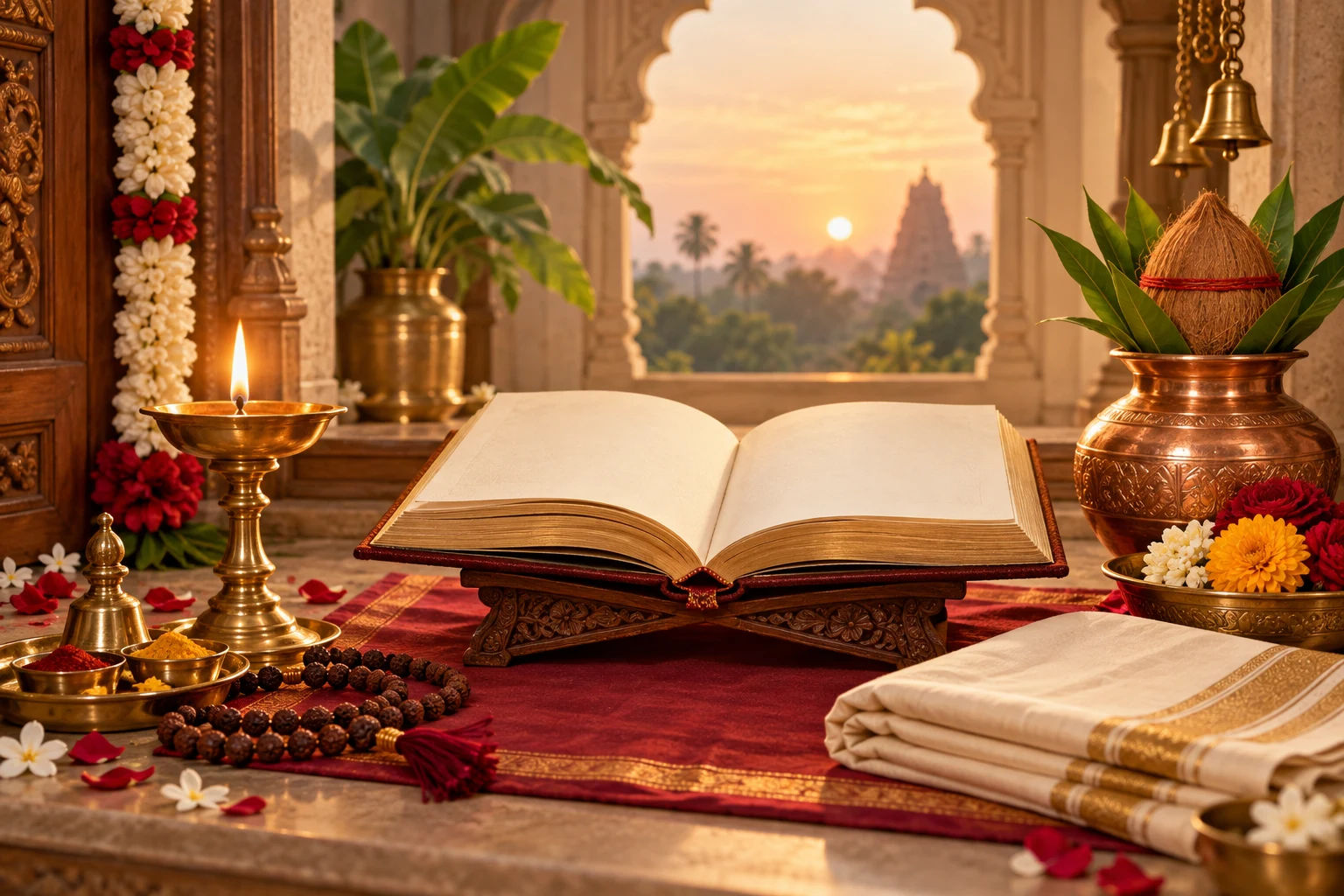
If you’ve browsed more than one or two mantra pages on this site, you’ve noticed the same recommendation appearing again and again: chant 108 times, one full mala. It’s such a consistent number across completely different mantras and deities that it’s worth asking where it actually comes from.
What a mala is
A mala is a string of prayer beads — traditionally 108 beads plus one additional, slightly larger “guru bead” (sumeru) that isn’t counted, marking the start and end of a round. During japa (mantra repetition), a practitioner moves one bead per repetition using the thumb and middle finger, working around the mala until reaching the guru bead again, at which point one full round — 108 repetitions — is complete. The physical counting exists specifically so the mind doesn’t need to keep count itself, freeing attention for the mantra rather than arithmetic.
Why 108 specifically
There’s no single official explanation — several traditional reasons are given, and they aren’t mutually exclusive:
- Astronomical/cosmological: 108 appears repeatedly in traditional Vedic accounts of astronomy — cited as related to the number of divisions in the zodiac (27 lunar mansions, each divided into 4 parts) and other classical calculations connecting the number to cosmic cycles.
- Sanskrit alphabet: Sanskrit is traditionally described as having 54 letters, each with a masculine and feminine (Shiva and Shakti) aspect, giving 108.
- Numerological significance: In Hindu numerology, 1 represents unity/the divine, 0 represents emptiness/completeness in spiritual practice, and 8 represents infinity — together read as a symbolic statement about the nature of ultimate reality.
- Sacred geometry and mathematics: 108 is also noted for mathematical properties that ancient mathematicians and astronomers found significant, reinforcing its use in a culture where numbers often carried both practical and symbolic weight.
No single explanation is treated as definitively “the” reason — the number’s significance is better understood as layered and reinforced across multiple traditions, rather than traced to one single origin.
Do you actually need a mala?
No — a mala is a tool, not a requirement. Counting on fingers, using a phone counter, or simply chanting for a set amount of time all work fine, especially for beginners. That said, a mala offers a few real practical advantages: it removes the need to consciously count, its repetitive tactile motion can itself become calming, and completing a physical round provides a clear, satisfying sense of “done” that a vague time-based session doesn’t always give.
Getting started
If you’re just beginning a practice, there’s no need to complete a full 108 right away — see our guide to starting a daily mantra practice for how to build up gradually. Any mala with 108 beads works, and inexpensive ones made of Rudraksha or Tulsi wood are widely available and perfectly suitable for daily use. Mantra pages such as the Gayatri Mantra, Om Namah Shivaya, and the Hanuman Beej Mantra each note a recommended count, and the beginner’s guide to Hindu mantras gives wider context.
Frequently asked questions
Why are mantras chanted 108 times?
Several layered reasons are given — astronomical cycles, the 54 letters of Sanskrit doubled, and numerological symbolism — rather than one official origin. A full mala of 108 beads is the standard unit of counted japa.
Do I have to chant exactly 108 times?
No. 108 is a traditional target, not a rule. Beginners often chant 11, 21, or 27 times, or for a set number of minutes, and build up gradually.
What is the extra bead on a mala for?
The larger “guru bead” (sumeru) marks the start and end of a round and is not counted. When you reach it again, one round of 108 is complete; you turn the mala around rather than crossing it to begin the next round.
What mala should a beginner buy?
An inexpensive Rudraksha or Tulsi mala with 108 beads is perfectly suitable. The material matters far less than a steady daily habit.