
Shiva · Chalisa · Written by Ayodhya Das
Shiv Chalisa
Shiv Chalisa full lyrics in Hindi with English transliteration and meaning — all forty verses, how to recite this hymn to Lord Shiva, and when it is traditionally read.
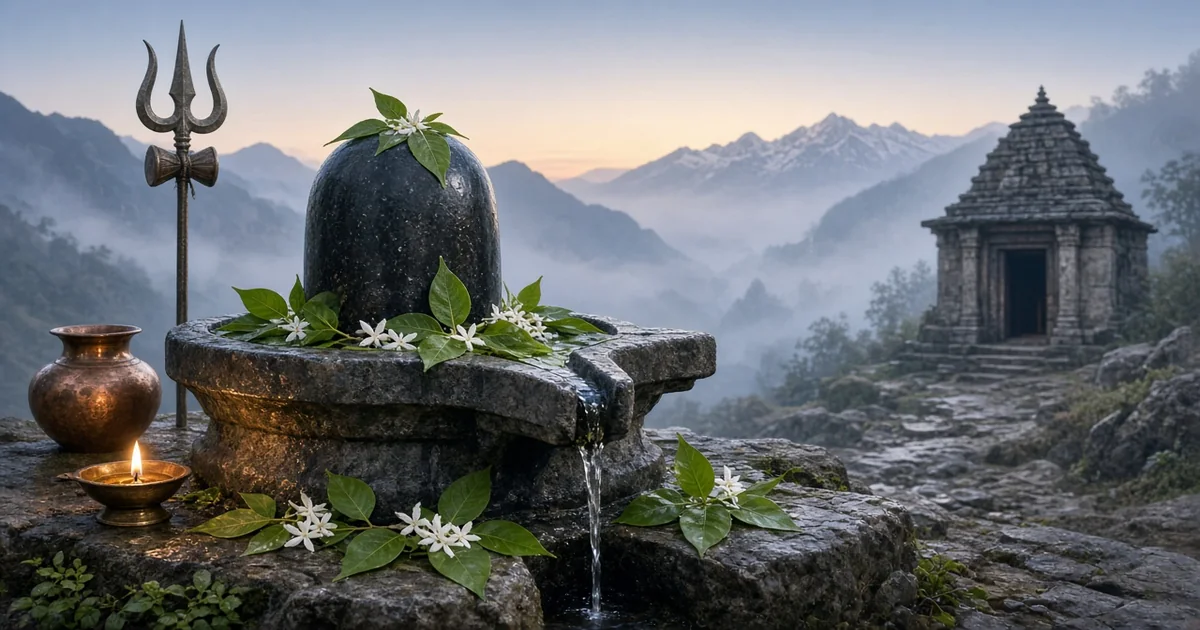
Significance
The Shiv Chalisa is one of the most widely recited Hindi hymns to Shiva, used in daily worship, on Mondays (traditionally associated with Shiva), and throughout Maha Shivratri. Its language is direct and memorable, which is part of why households return to it alongside the Om Jai Shiv Omkara aarti and the name-mantra Om Namah Shivaya.
How to Perform
Recite after bathing, facing a Shiva lingam or image, with a lit diya. The closing couplet itself commends rising at dawn and reading the Chalisa as a daily observance. Many devotees open with Om Namah Shivaya and close with the Om Jai Shiv Omkara aarti, and offer water, bilva leaves, incense and a simple naivedya. Mondays and Maha Shivratri are the most common special occasions. Recitation is a spiritual practice, not a substitute for medical, legal or practical help.
The Shiv Chalisa (also searched as Shiva Chalisa) is a forty-verse Hindi devotional hymn to Lord Shiva. This page gives the widely recited text in Devanagari, a readable transliteration of the opening and closing couplets, and an original English meaning of each verse, written from the Hindi rather than copied from another translation. A shorter companion on themes and practice, without the full lyrics, is the Shiva Chalisa meaning guide.
Opening Doha
ॐ नमः शिवाय
जय गणेश गिरिजासुवन, मंगल मूल सुजान। कहत अयोध्यादास तुम, देउ अभय वरदान॥
Transliteration: Om Namah Shivaya. Jaya Ganesh Girijasuvan, Mangal Mul Sujan. Kahat Ayodhyadas Tum, Deu Abhay Varadan.
Meaning: Salutations to Shiva. Victory to Ganesha, son of Girija (Parvati), the wise source of what is auspicious. Ayodhya Das asks you to grant the blessing of fearlessness.
Chaupai (Forty Verses)
जय गिरिजापति दीनदयाला। सदा करत सन्तन प्रतिपाला॥ भाल चन्द्रमा सोहत नीके। कानन कुण्डल नाग फनी के॥
अंग गौर शिर गंग बहाये। मुण्डमाल तन क्षार लगाये॥ वस्त्र खाल बाघम्बर सोहे। छवि को देखि नाग मन मोहे॥
मैना मातु कि हवे दुलारी। वाम अंग सोहत छवि न्यारी॥ कर त्रिशूल सोहत छवि भारी। करत सदा शत्रुन क्षयकारी॥
नंदी गणेश सोहैं तहं कैसे। सागर मध्य कमल हैं जैसे॥ कार्तिक श्याम और गणराऊ। या छवि कौ कहि जात न काऊ॥
देवन जबहीं जाय पुकारा। तबहिं दुख प्रभु आप निवारा॥ किया उपद्रव तारक भारी। देवन सब मिलि तुमहिं जुहारी॥
तुरत षडानन आप पठायौ। लव निमेष महं मारि गिरायौ॥ आप जलंधर असुर संहारा। सुयश तुम्हार विदित संसारा॥
त्रिपुरासुर सन युद्ध मचाई। तबहिं कृपा कर लीन बचाई॥ किया तपहिं भागीरथ भारी। पुरब प्रतिज्ञा तासु पुरारी॥
दानिन महं तुम सम कोउ नाहीं। सेवक स्तुति करत सदाहीं॥ वेद माहि महिमा तुम गाई। अकथ अनादि भेद नहीं पाई॥
प्रकटे उदधि मंथन में ज्वाला। जरत सुरासुर भए विहाला॥ कीन्ह दया तहं करी सहाई। नीलकंठ तब नाम कहाई॥
पूजन रामचंद्र जब कीन्हां। जीत के लंक विभीषण दीन्हा॥ सहस कमल में हो रहे धारी। कीन्ह परीक्षा तबहिं त्रिपुरारी॥
एक कमल प्रभु राखेउ जोई। कमल नयन पूजन चहं सोई॥ कठिन भक्ति देखी प्रभु शंकर। भये प्रसन्न दिए इच्छित वर॥
जय जय जय अनंत अविनाशी। करत कृपा सबके घट वासी॥ दुष्ट सकल नित मोहि सतावैं। भ्रमत रहौं मोहे चैन न आवैं॥
त्राहि त्राहि मैं नाथ पुकारो। यह अवसर मोहि आन उबारो॥ ले त्रिशूल शत्रुन को मारो। संकट से मोहिं आन उबारो॥
मात पिता भ्राता सब कोई। संकट में पूछत नहिं कोई॥ स्वामी एक है आस तुम्हारी। आय हरहु मम संकट भारी॥
धन निर्धन को देत सदा ही। जो कोई जांचे सो फल पाहीं॥ अस्तुति केहि विधि करौं तुम्हारी। क्षमहु नाथ अब चूक हमारी॥
शंकर हो संकट के नाशन। मंगल कारण विघ्न विनाशन॥ योगी यति मुनि ध्यान लगावैं। शारद नारद शीश नवावैं॥
नमो नमो जय नमः शिवाय। सुर ब्रह्मादिक पार न पाय॥ जो यह पाठ करे मन लाई। ता पर होत हैं शम्भु सहाई॥
रनियां जो कोई हो अधिकारी। पाठ करे सो पावन हारी॥ पुत्र होन की इच्छा जोई। निश्चय शिव प्रसाद तेहि होई॥
पण्डित त्रयोदशी को लावे। ध्यान पूर्वक होम करावे॥ त्रयोदशी व्रत करै हमेशा। तन नहिं ताके रहै कलेशा॥
धूप दीप नैवेद्य चढ़ावे। शंकर सम्मुख पाठ सुनावे॥ जन्म जन्म के पाप नसावे। अन्त धाम शिवपुर में पावे॥
Closing prayer and doha
कहैं अयोध्यादास आस तुम्हारी। जानि सकल दुख हरहु हमारी॥
Transliteration: Kahain Ayodhyadas Aas Tumhari, Jani Sakal Dukh Harahu Hamari.
Meaning: Ayodhya Das says, my hope is in you; knowing all our sorrows, take them away.
नित नेम उठि प्रातःही पाठ करो चालीस। तुम मेरी मनकामना पूर्ण करो जगदीश॥
Transliteration: Nit Nem Uthi Pratahhi Path Karo Chalisa, Tum Meri Manakamana Purna Karo Jagadish.
Meaning: Rising each day at dawn as a regular observance, may I recite this Chalisa. O Lord of the world, fulfill this wish of my heart.
English meaning, verse by verse
- Victory to the lord of Girija, compassionate to those in need, who always protects the saints. The moon shines beautifully on your forehead; in your ears are earrings of cobra hoods.
- Your body is fair; the Ganga flows from your head; a garland of skulls and sacred ash adorn your body. A garment of tiger-skin looks beautiful on you; seeing your form, even the serpents are enchanted.
- Maina’s daughter, her dear child, shines with a distinctive beauty at your left side. The trident in your hand is a magnificent sight, and it always destroys those who oppose you.
- How do Nandi and Ganesha shine there? Like lotuses in the middle of the ocean. Kartikeya, Shyama (Parvati), and Ganarau (Ganesha) — no one can fully describe that scene.
- Whenever the gods have gone and called out to you, you yourself have removed their sorrow. When the demon Taraka caused great havoc, all the gods together bowed to you.
- You at once sent Shadanana (six-faced Kartikeya), who struck the demon down in the merest instant. You yourself destroyed the asura Jalandhara; your fair fame is known throughout the world.
- You waged war with Tripurasura, and then, in compassion, you saved the worlds. Bhagiratha performed a great austerity, and you, Purari, fulfilled his vow to bring the Ganga to earth.
- Among givers there is none like you; your servants praise you always. The Vedas have sung your glory, yet your beginningless mystery has not been fathomed.
- In the churning of the ocean a fierce flame — the poison — appeared; gods and asuras burned and were distraught. You took compassion and came to their aid; then you were called Nilakantha, the blue-throated one.
- When Ramachandra worshipped you, he conquered Lanka and gave it to Vibhishana. He had taken up a thousand lotuses for the worship; then you, Tripurari, put him to the test.
- You, Lord, withheld one lotus; the lotus-eyed one wished to offer his own eye in worship. Seeing such difficult devotion, Lord Shankara, you were pleased and granted the boon he desired.
- Victory, victory, victory to the infinite, the imperishable one, who shows kindness and dwells in every heart. The wicked torment me daily; I wander, and no peace comes to me.
- Save me, save me — I call out, O Lord; come at this moment and rescue me. Take up your trident and strike down my enemies; come and lift me out of this distress.
- Mother, father, brother — all of them; in distress, no one asks after me. Lord, my only hope is in you; come and remove this heavy trouble of mine.
- You always give wealth to the poor; whoever asks of you receives the fruit. In what way shall I praise you? Forgive, O Lord, my faults now.
- Shankara, you are the destroyer of distress, the cause of welfare, the remover of obstacles. Yogis, ascetics and sages fix their meditation on you; Sharada (Saraswati) and Narada bow their heads.
- Salutations, salutations, victory — namah Shivaya. The gods, beginning with Brahma, have not found your farther shore. Whoever recites this hymn with a devoted mind, Shambhu himself comes to their aid.
- Even a reciter under the burden of debt, if they have the standing to read it, is purified by the recitation. One who wishes for a son — that wish, the hymn says, is fulfilled by Shiva’s grace.
- One who brings a learned priest on the trayodashi (the thirteenth lunar day) and has a homa performed with concentration, and who always keeps the trayodashi vow, finds that affliction does not remain in the body.
- One who offers incense, a lamp and naivedya, and recites this hymn in Shankara’s presence, destroys the faults of birth after birth and at the end attains a place in Shiva’s abode (Shivapur).
These last verses are the hymn’s own phalashruti — a traditional statement of spiritual fruit — not a medical or worldly guarantee.
Text and sources
The Hindi here follows the widely recited recension of the Shiv Chalisa attributed to Ayodhya Das, as given in the proofread Sanskrit Documents edition (shrii siva chaaliisaa, file siva40, last updated 13 March 2015). It was cross-checked against the Naval Kishore Press Shiv Stuti Chalisa (Lucknow, undated, printed before about 1950; Internet Archive scan), which carries the same opening doha, the same sequence of deeds (Taraka, Jalandhara, Tripura, Bhagiratha, Nilakantha, Rama’s lotus-worship), and the same author’s name in the closing prayer. A Gita Press Gorakhpur booklet of the hymn is also in circulation; its scan was too poorly recognised to collate line by line, so it is noted only as a third printed witness.
This recension has forty chaupais, then Ayodhya Das’s closing prayer couplet, then the final doha. A few common printed variants are worth knowing: some copies read देहु for देउ, है दुलारी for the older हवे दुलारी, and ऋणियां (those in debt) for रनियां in verse 18 — a reading that matches the sense given above. None of these changes the hymn’s overall meaning. Some booklets print the Om Jai Shiv Omkara aarti immediately after the Chalisa; that aarti is a separate composition and is kept on its own page.
The English meanings on this page are original to VedicVani, written from the Hindi, and are not taken from the English rendering printed with the Sanskrit Documents file.
How to recite the Shiv Chalisa
Choose a quiet time when you can read without rushing. Sit facing a lingam or a simple image of Shiva if you have one, light a diya, and read the forty verses slowly enough that the sound can settle. Beginners often keep the Hindi, a transliteration and the English meaning side by side for a few weeks, then return to the Devanagari as pronunciation grows steadier. Many households recite the hymn on Monday, and at greater length during Maha Shivratri. The Om Namah Shivaya mantra and the Mahamrityunjaya Mantra are natural companions; other Shiva mantras are collected separately. Ahead of Kaal Bhairav Jayanti on Tuesday, 1 December 2026, the Kalabhairava Ashtakam is another short hymn in the same tradition.
Meaning and traditional benefits
Devotees turn to the Shiv Chalisa for a complete, memorable praise of Shiva’s form and compassion, and for the hymn’s own promise of protection, the removal of distress, and a mind turned toward Shiva. The text itself commends regular dawn recitation, the trayodashi vow, and offering incense, a lamp and naivedya while the hymn is read in Shiva’s presence. Those statements belong to the devotional tradition of the poem; they are not a substitute for care, medicine or practical judgement.
Overall Meaning
The Shiv Chalisa is a forty-verse Hindi hymn in praise of Lord Shiva. It opens by honouring Ganesha, then describes Shiva's form — the moon on his forehead, the Ganga in his matted hair, the serpent earrings, the trident, and Parvati at his left — and retells well-known deeds: the slaying of Taraka and Jalandhara, the war with Tripurasura, the descent of the Ganga for Bhagiratha, the drinking of the ocean-poison that gave him the name Nilakantha, and the test of Rama's worship with a thousand lotuses. The later verses are a devotee's prayer for rescue from distress and a phalashruti describing the fruits of regular recitation, especially on the lunar trayodashi. The hymn is traditionally attributed to Ayodhya Das, whose name appears in the opening and closing couplets.
Frequently Asked Questions
What is the meaning of Shiv Chalisa?
The Shiv Chalisa is a forty-verse Hindi hymn in praise of Lord Shiva. It opens by honouring Ganesha, then describes Shiva's form — the moon on his forehead, the Ganga in his matted hair, the serpent earrings, the trident, and Parvati at his left — and retells well-known deeds: the slaying of Taraka and Jalandhara, the war with Tripurasura, the descent of the Ganga for Bhagiratha, the drinking of the ocean-poison that gave him the name Nilakantha, and the test of Rama's worship with a thousand lotuses. The later verses are a devotee's prayer for rescue from distress and a phalashruti describing the fruits of regular recitation, especially on the lunar trayodashi. The hymn is traditionally attributed to Ayodhya Das, whose name appears in the opening and closing couplets.
Why is Shiv Chalisa significant?
The Shiv Chalisa is one of the most widely recited Hindi hymns to Shiva, used in daily worship, on Mondays (traditionally associated with Shiva), and throughout Maha Shivratri. Its language is direct and memorable, which is part of why households return to it alongside the Om Jai Shiv Omkara aarti and the name-mantra Om Namah Shivaya.
Who wrote the Shiv Chalisa?
The Shiv Chalisa was composed by Ayodhya Das.
Is the Shiv Chalisa the same as Om Jai Shiv Omkara?
No. The Shiv Chalisa is a forty-verse hymn. Om Jai Shiv Omkara is a shorter aarti sung at the close of Shiva worship. Some printed booklets place the aarti after the Chalisa, but they are distinct compositions.
When should the Shiv Chalisa be recited?
Daily by many devotees, especially on Mondays, and throughout Maha Shivratri. The closing couplet commends reciting it at dawn as a regular observance.