
🔱 Hindu Festivals
Maha Shivratri Puja Guide: Simple Shiva Worship and Meaning
Last updated: September 26, 2026
Maha Shivratri invites stillness, remembrance, and devotion to Shiva. A simple puja can centre on the mantra, self-control, and compassion.
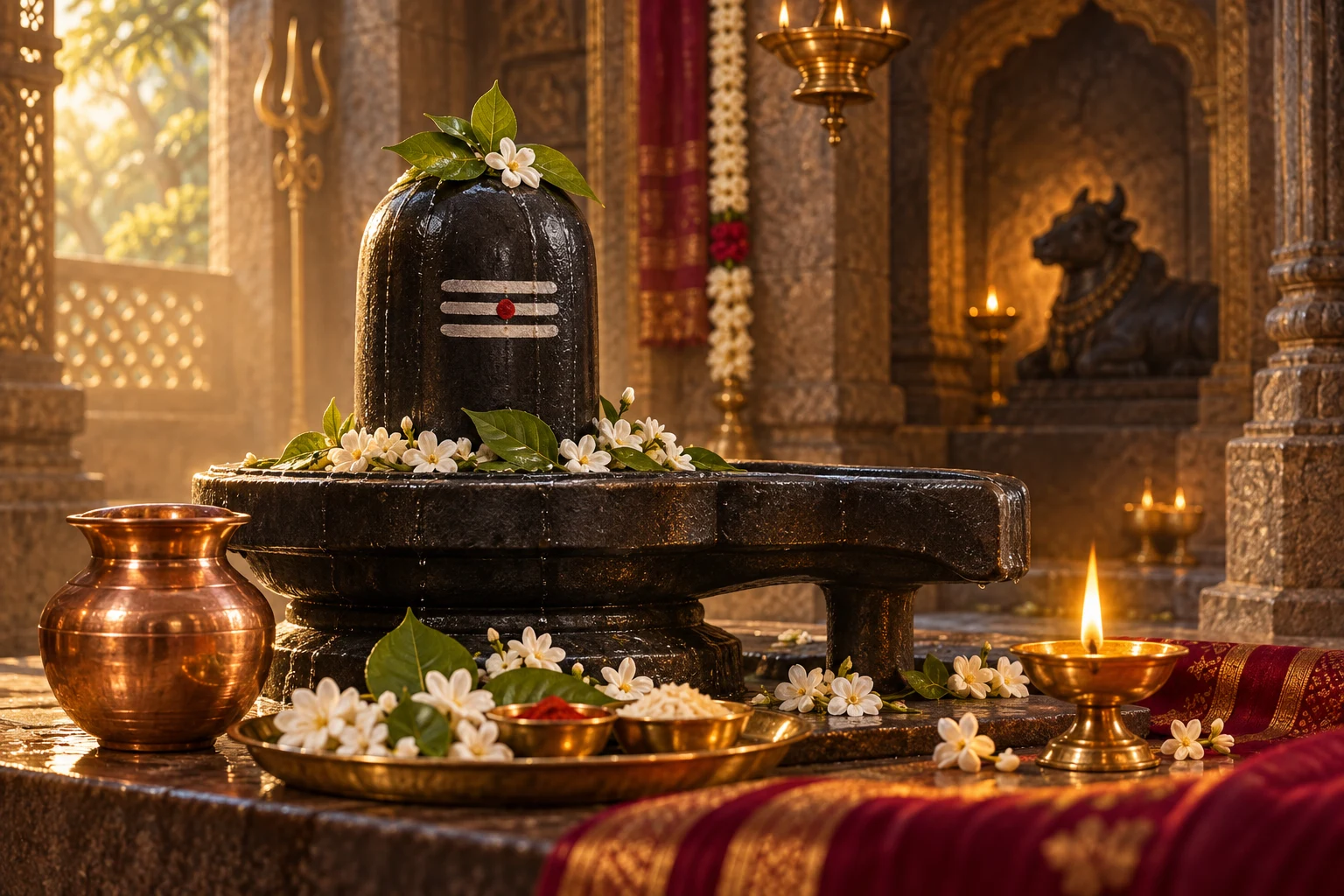
Maha Shivratri, the “great night of Shiva,” is observed through worship, fasting, mantra, vigil and contemplation. Communities explain its sacred stories in different ways: some remember Shiva and Parvati’s marriage, some honour the appearance of the linga, and others emphasise the night as a time of inner stillness. These interpretations can coexist without forcing every household into one ritual pattern.
The festival’s discipline is not merely endurance. Shiva’s names and stories point devotees toward auspiciousness, transformation, fearlessness and the silence beneath restless thought. A simple puja can therefore be complete when it brings careful attention and kinder conduct.
What you need for a simple Shiva puja
Prepare a stable, clean place with a Shiva lingam or image, water, flowers, fruit, a diya or electric lamp, and bilva leaves if they are locally available and used in your tradition. You may also keep an aarti text and mala.
Milk, honey and other bathing ingredients are used in some forms of abhishekam, but they are not required for a meaningful home observance. Use only a murti made for bathing, keep ingredients hygienic, and minimise waste. Never pour liquids on framed pictures, porous objects or electrical decorations.
Maha Shivratri puja steps at home
- Clean and settle. Wash, tidy the altar and sit for a minute without a phone or conversation.
- Make a sankalpa. State a modest intention: to reduce anger, speak truthfully, release a harmful habit, or serve with steadiness.
- Light the lamp safely. Offer a brief salutation to Ganesha according to family custom, then turn attention to Shiva.
- Offer water. Pour a small amount over a suitable lingam, or place water before an image. Offer flowers or bilva leaves gently.
- Chant. Repeat Om Namah Shivaya slowly. The Om Namah Shivaya guide explains the mantra without promising guaranteed supernatural results.
- Read and reflect. Choose one episode from the stories of Lord Shiva or read a few verses from a trusted scripture or stotra.
- Sit in silence. Let the mantra fade and observe the breath for several minutes.
- Close the puja. Sing the Shiva aarti if customary, offer gratitude, and share prasad.
Some households repeat worship in four periods through the night. If that is your inherited practice, obtain the sequence from a trusted priest or elder. A beginner does not need to imitate a complex temple ritual without instruction.
Fasting and the night vigil
Fasts may involve a simple vegetarian diet, fruit and fluids, or abstinence for a defined period. Their rules vary by community. Hydration, medication and health take priority; anyone with a medical condition should use professional advice. Children and vulnerable adults should never be shamed for eating or sleeping.
For a manageable vigil, divide the evening into chanting, reading, quiet meditation and rest. Avoid driving or hazardous work while sleep-deprived. Staying awake while scrolling a phone is not the same as a devotional vigil; the purpose is wakeful remembrance.
What Shiva worship can change in daily life
Shiva is often associated with transformation: poison is held rather than passed onward, uncontrolled force is disciplined, and stillness remains amid cosmic movement. Apply that symbolism practically. Pause before repeating hurtful words. Reduce one intoxicating or compulsive habit. Make peace with impermanence. Give quietly to someone in need.
The Shiva Chalisa meaning guide and powerful Shiva mantras can support continued study, but consistency matters more than collecting many practices.
Respectful and sustainable worship
Use a small quantity of clean water, compost natural flowers where possible, and do not pour offerings into public waterways. Follow temple queues and photography rules. If a crowded night visit is unsafe or inaccessible, worship at home without guilt.
After Maha Shivratri, retain one small discipline: five mantra repetitions before reacting, a weekly period of silence, or a promise to abandon one destructive pattern. The festival then becomes a beginning rather than a single demanding night.
Frequently Asked Questions
How do I perform Maha Shivratri puja at home?
Clean the altar, light a lamp safely, offer water and flowers or bilva leaves if customary, chant Om Namah Shivaya, read or hear a Shiva teaching, sit in silence, and close with aarti or gratitude. Follow family tradition for additional rites.
What can I offer to Shiva on Maha Shivratri?
Water, bilva leaves, flowers and fruit are common offerings. Traditions differ on other ingredients, so use items accepted by your lineage and suitable for the particular lingam or image, and avoid unnecessary waste.
Do I have to stay awake all night on Maha Shivratri?
A night vigil is important in many observances but should be adapted for health, age and responsibilities. Prayer before sleep, attending one temple service, or keeping a period of evening silence can be a sincere alternative.
Is fasting compulsory for Maha Shivratri?
Fasting customs vary and are not safe for everyone. Choose a form appropriate to your health and medical needs; children, pregnant people and those taking medication should not be pressured to fast.