
Bhagavad Gita · Chapter 7
Jnana Vijnana Yoga — Knowledge and Realisation
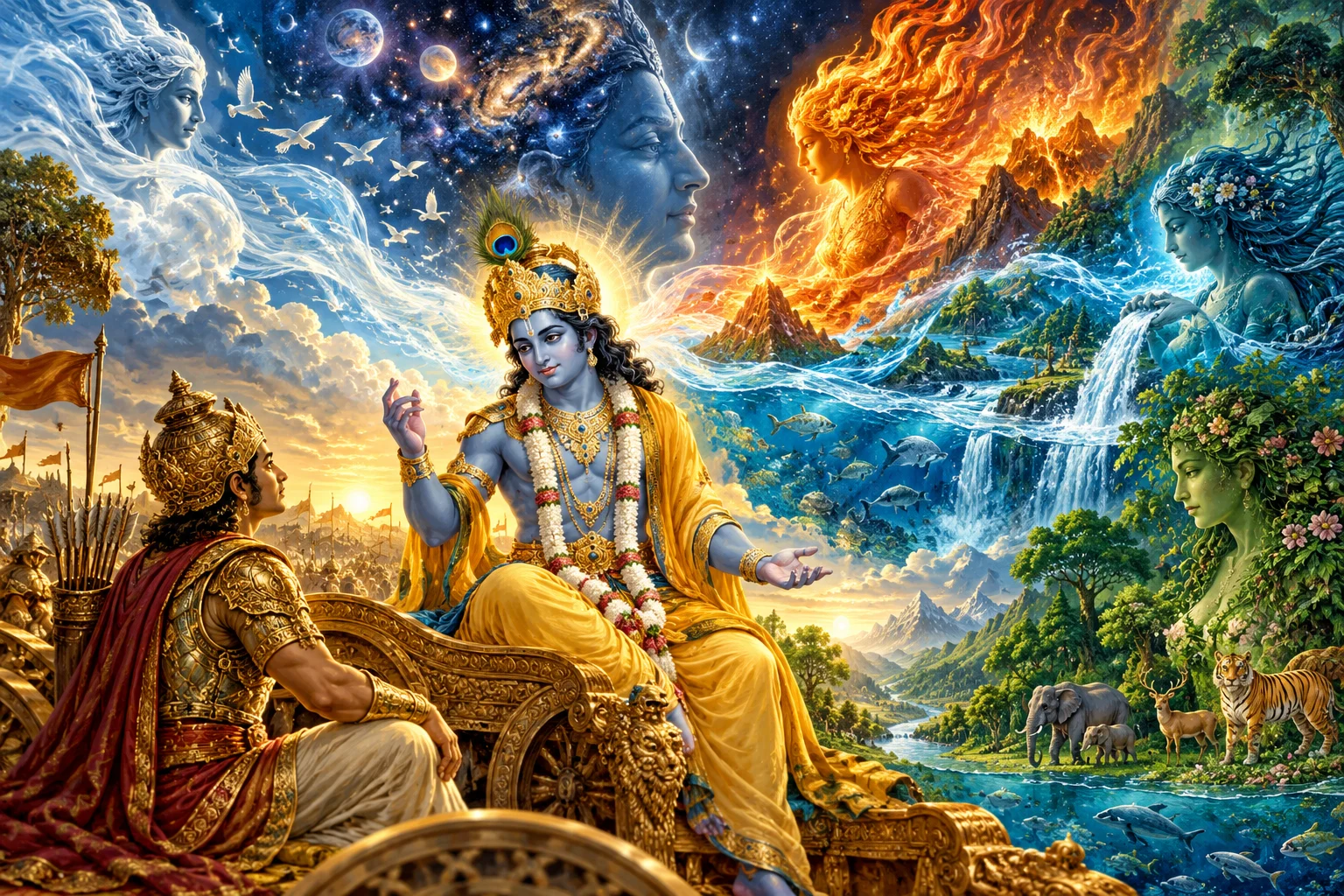
Chapter 7 of the Bhagavad Gita, Jnana Vijnana Yoga — Knowledge and Realisation, is part of Krishna's dialogue with Arjuna on the battlefield of Kurukshetra. Each shloka below includes the original Sanskrit verse, a transliteration, Hindi and English meaning, a clear explanation of the philosophy behind it, and the practical life lesson it offers — so you can read a single verse in depth or follow this chapter's complete argument verse by verse. See thefull chapter list to move between all 18 chapters.
How to study Chapter 7
Read the verses in sequence first, then return to the shlokas that speak most directly to your question. Notice the movement between Arjuna's concerns and Krishna's response: the Gita develops its teaching through dialogue, examples, discipline, and repeated clarification. Sanskrit preserves the sound of the original text, transliteration helps with pronunciation, and the meanings provide an accessible doorway for daily reflection.
A useful practice is to choose one verse for a week. Write its central idea in your own words, observe where attachment or fear appears in your day, and revisit the verse before making a difficult choice. This chapter is part of the larger 18-chapter Bhagavad Gita, so compare its theme with the chapters before and after it rather than reading any single line as an isolated slogan.
श्रीभगवानुवाच | मय्यासक्तमनाः पार्थ योगं युञ्जन्मदाश्रयः | असंशयं समग्रं मां यथा ज्ञास्यसि तच्छृणु
7.1 The Blessed Lord said O Arjuna, hear how you shall without doubt know Me fully, with the mind intent on Me, practising Yoga and taking refuge in Me.
7.2ज्ञानं तेऽहं सविज्ञानमिदं वक्ष्याम्यशेषतः | यज्ज्ञात्वा नेह भूयोऽन्यज्ज्ञातव्यमवशिष्यते
7.2 I shall declare to thee in full this knowledge combined with realisation, after knowing which nothing more here remains to be known.
7.3मनुष्याणां सहस्रेषु कश्चिद्यतति सिद्धये | यततामपि सिद्धानां कश्चिन्मां वेत्ति तत्त्वतः
7.3 Among thousands of men, one perchance strives for perfection; even among those successful strivers, only one perchance knows Me in essence.
7.4भूमिरापोऽनलो वायुः खं मनो बुद्धिरेव च | अहंकार इतीयं मे भिन्ना प्रकृतिरष्टधा
7.4 Earth, water, fire, air, ether, mind, intellect and egoism thus is My Nature divided eightfold.
7.5अपरेयमितस्त्वन्यां प्रकृतिं विद्धि मे पराम् | जीवभूतां महाबाहो ययेदं धार्यते जगत्
7.5 This is the inferior Prakriti, O mighty-armed (Arjuna); know thou as different from it My higher Prakriti (Nature), the very life-element, by which this world is upheld.
7.6एतद्योनीनि भूतानि सर्वाणीत्युपधारय | अहं कृत्स्नस्य जगतः प्रभवः प्रलयस्तथा
7.6 Know that these two (Natures) are the womb of all beings. So I am the source and dissolution of the whole universe.
7.7मत्तः परतरं नान्यत्किञ्चिदस्ति धनञ्जय।
O Dhananjaya (Arjuna), there is nothing higher than Me. Everything that exists is strung upon Me, like pearls on a thread.
7.8रसोऽहमप्सु कौन्तेय प्रभास्मि शशिसूर्ययोः | प्रणवः सर्ववेदेषु शब्दः खे पौरुषं नृषु
7.8 I am the sapidity in water, O Arjuna; I am the light in the moon and the sun; I am the syllable Om in all the Vedas, sound in ether and virility in men.
7.9पुण्यो गन्धः पृथिव्यां च तेजश्चास्मि विभावसौ | जीवनं सर्वभूतेषु तपश्चास्मि तपस्विषु
7.9 I am the sweet fragrance in the earth and the brilliance in the fire, the life in all beings, and I am the austerity in ascetics.
7.10बीजं मां सर्वभूतानां विद्धि पार्थ सनातनम् | बुद्धिर्बुद्धिमतामस्मि तेजस्तेजस्विनामहम्
7.10 Know Me, O Arjuna, as the eternal seed of all beings; I am the intelligence of the intelligent; the splendour of the splendid objects am I.
7.11बलं बलवतां चाहं कामरागविवर्जितम् | धर्माविरुद्धो भूतेषु कामोऽस्मि भरतर्षभ
7.11 Of the strong, I am the strength devoid of desire and attachment, and in (all) beings, I am the desire unopposed to Dharma, O Arjuna.
7.12ये चैव सात्त्विका भावा राजसास्तामसाश्च ये | मत्त एवेति तान्विद्धि न त्वहं तेषु ते मयि
7.12 Whatever beings (and objects) that are pure, active and inert, know that they proceed from Me. They are in Me, yet I am not in them.
7.13त्रिभिर्गुणमयैर्भावैरेभिः सर्वमिदं जगत् | मोहितं नाभिजानाति मामेभ्यः परमव्ययम्
7.13 Deluded by these Natures (states or things) composed of the three alities of Nature all this world does not know Me as distinct from them and immutable.
7.14दैवी ह्येषा गुणमयी मम माया दुरत्यया | मामेव ये प्रपद्यन्ते मायामेतां तरन्ति ते
7.14 Verily, this divine illusion of Mine, made up of the (three) alities (of Nature) is difficult to cross over; those who take refuge in Me alone, cross over this illusion.
7.15न मां दुष्कृतिनो मूढाः प्रपद्यन्ते नराधमाः | माययापहृतज्ञाना आसुरं भावमाश्रिताः
7.15 The evil-doers and the deluded who are the lowest of men do not seek Me; they whose knowledge is destroyed by illusion follow the ways of demons.
7.16चतुर्विधा भजन्ते मां जनाः सुकृतिनोऽर्जुन | आर्तो जिज्ञासुरर्थार्थी ज्ञानी च भरतर्षभ
7.16 Four kinds of virtuous men worship Me, O Arjuna, and they are the distressed, the seekr of knowledge, the seekr of wealth and the wise, O lord of the Bharatas.
7.17तेषां ज्ञानी नित्ययुक्त एकभक्तिर्विशिष्यते | प्रियो हि ज्ञानिनोऽत्यर्थमहं स च मम प्रियः
7.17 Of them the wise, ever steadfast and devoted to the One, excels (is the best); for I am exceedingly dear to the wise and he is dear to Me.
7.18उदाराः सर्व एवैते ज्ञानी त्वात्मैव मे मतम् | आस्थितः स हि युक्तात्मा मामेवानुत्तमां गतिम्
7.18 Noble indeed are all these; but I deem the wise man as My very Self; for, steadfast in mind he is established in Me alone as the supreme goal.
7.19बहूनां जन्मनामन्ते ज्ञानवान्मां प्रपद्यते।
After many births, the one who has attained true knowledge surrenders to Me, realizing that Vasudeva is everything. Such a great soul is extremely rare to find.
7.20कामैस्तैस्तैर्हृतज्ञानाः प्रपद्यन्तेऽन्यदेवताः | तं तं नियममास्थाय प्रकृत्या नियताः स्वया
7.20 Those whose wisdom has been rent away by this or that desire, go to other gods, following this or that rite, led by their own nature.
7.21यो यो यां यां तनुं भक्तः श्रद्धयार्चितुमिच्छति | तस्य तस्याचलां श्रद्धां तामेव विदधाम्यहम्
7.21 Whatsoever form any devotee desires to worship with faith that (same) faith of his I make firm and unflinching.
7.22स तया श्रद्धया युक्तस्तस्याराधनमीहते | लभते च ततः कामान्मयैव विहितान्हि तान्
7.22 Endowed with that faith, he engages in the worship of that (form) and from it he obtains his desire, these being verily ordained by Me (alone).
7.23अन्तवत्तु फलं तेषां तद्भवत्यल्पमेधसाम् | देवान्देवयजो यान्ति मद्भक्ता यान्ति मामपि
7.23 Verily the reward (fruit) that accrues to those men of small intelligence is finite. The worshippers of the gods go to them, but My devotees come to Me.
7.24अव्यक्तं व्यक्तिमापन्नं मन्यन्ते मामबुद्धयः | परं भावमजानन्तो ममाव्ययमनुत्तमम्
7.24 The foolish think of Me, the Unmanifest, as having manifestation, knowing not My higher, immutable and most excellent nature.
7.25नाहं प्रकाशः सर्वस्य योगमायासमावृतः | मूढोऽयं नाभिजानाति लोको मामजमव्ययम्
7.25 I am not manifest to all (as I am) veiled by the Yoga-Maya. This deluded world does not know Me, the unborn and imperishable.
7.26वेदाहं समतीतानि वर्तमानानि चार्जुन | भविष्याणि च भूतानि मां तु वेद न कश्चन
7.26 I know, O Arjuna, the beings of the past, the present and the future, but no one knows Me.
7.27इच्छाद्वेषसमुत्थेन द्वन्द्वमोहेन भारत | सर्वभूतानि सम्मोहं सर्गे यान्ति परन्तप
7.27 By the delusion of the pairs of opposites arising from desire and aversion, O Bharata, all beings are subject to delusion at birth, O Parantapa.
7.28येषां त्वन्तगतं पापं जनानां पुण्यकर्मणाम् | ते द्वन्द्वमोहनिर्मुक्ता भजन्ते मां दृढव्रताः
7.28 But those men of virtuous deeds whose sins have come to an end, and who are freed from the delusion of the pairs of opposites, worship Me, steadfast in their vows.
7.29जरामरणमोक्षाय मामाश्रित्य यतन्ति ये | ते ब्रह्म तद्विदुः कृत्स्नमध्यात्मं कर्म चाखिलम्
7.29 Those who strive for liberation from old age and death, taking refuge in Me, realise in full ï1thatï1 Brahman, the whole knowledge of the Self and all action.
7.30साधिभूताधिदैवं मां साधियज्ञं च ये विदुः | प्रयाणकालेऽपि च मां ते विदुर्युक्तचेतसः
7.30 Those who know Me with the Adhibhuta (pertaining to the elements), Adhidaiva (pertaining to the gods) and the Adhiyajna (pertaining to the sacrifice) know Me even at the time of death, steadfast in mind.
30 verses of Chapter 7 are covered so far, with more being added as each one is written, translated, and checked for accuracy rather than published all at once. If there's a specific shloka from this chapter you'd like to see next, let us know via the contact page.