
🙏 Practice Guides
Anjali Mudra: Meaning, How to Do It, and Its Connection to Namaste
Last updated: October 4, 2026
Anjali Mudra is the gesture behind Namaste — palms pressed together at the chest. Here's what the gesture itself is understood to mean.
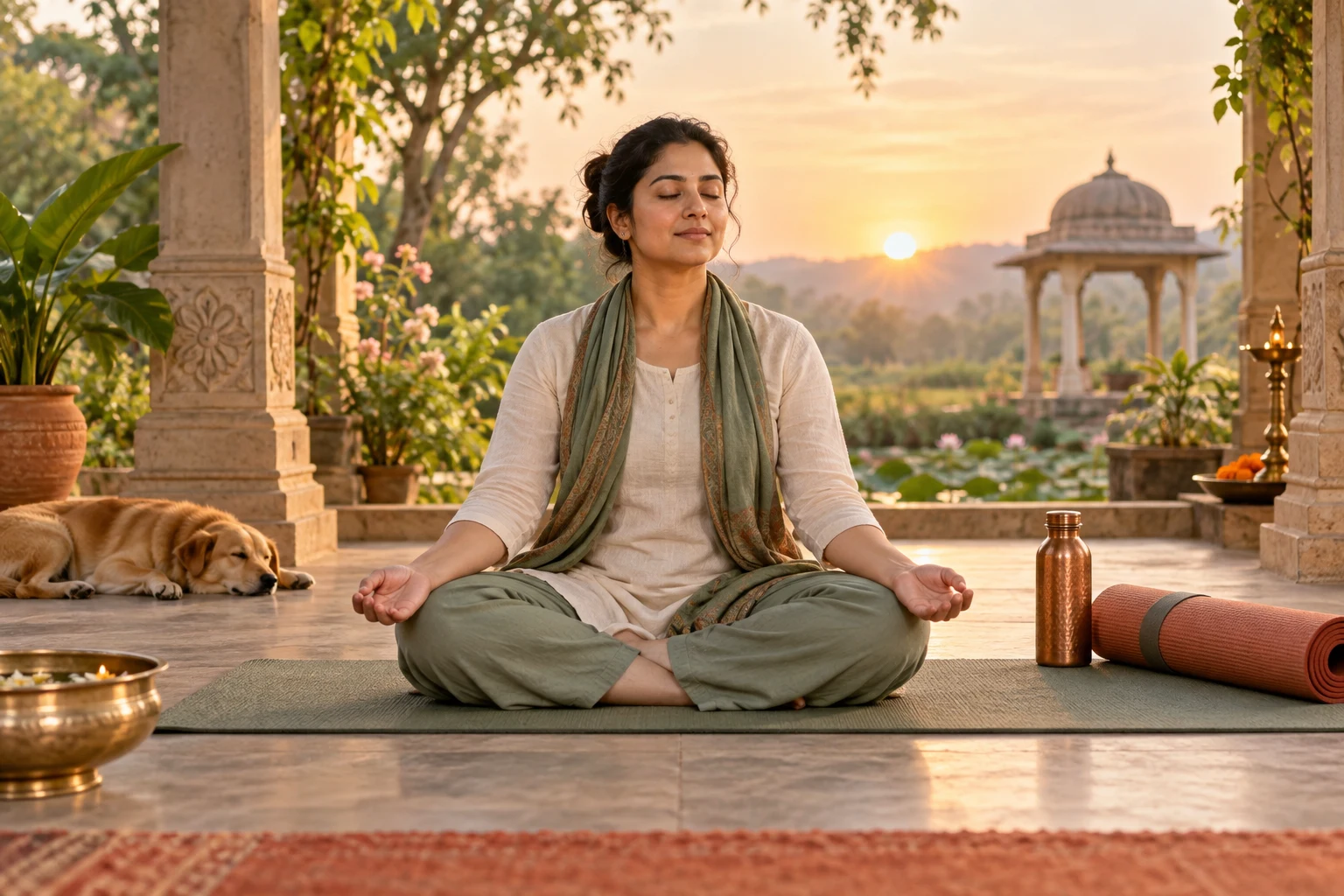
Anjali Mudra is the familiar gesture of bringing the palms together, usually near the heart. It appears in yoga, prayer, temple etiquette, dance, greeting, gratitude, and leave-taking across South Asian traditions. Many people know the shape through Namaste, although the gesture and spoken word are related rather than identical.
The Sanskrit word anjali refers to a reverential offering or the cupped hands used to present one. Mudra can mean a gesture or seal. Context determines whether the joined palms express greeting, devotion, respect, thanks, or a moment of inward attention.
How to form Anjali Mudra
Sit or stand comfortably. Bring the palms together with the fingers pointing upward and the thumbs near the breastbone. Use light, even contact rather than squeezing. Let the shoulders settle and the elbows fall naturally. Keep the head upright unless a bow is appropriate to the setting.
If the wrists or shoulders are uncomfortable, leave a small space between the palms, lower the hands, or bring only the fingertips together. The intention of respect does not depend on forcing a perfect shape. In some practices the hands are raised to the forehead or above the head; these positions can carry distinct ritual meanings and are best learned in context.
Meaning: offering, respect, and integration
Teachers often interpret the joined hands as bringing two sides into relationship: left and right, action and reflection, individual and shared life. The heart-level placement may indicate sincerity or devotion. These explanations are meaningful traditional interpretations rather than a single universal code shared by every community.
In a yoga class, Anjali Mudra may mark the beginning or close of practice. In a temple it may accompany darshan or prayer. In daily life it may be a respectful greeting. Classical dance uses joined-hand gestures within its own precise vocabulary, so a dance meaning should not automatically be substituted for a yoga one.
Anjali Mudra and Namaste
Anjali Mudra names the hand position; namaste is a spoken salutation often accompanied by it. People can make the gesture silently, and they can say namaste without holding it for long. Our Namaste meaning guide explains the language and cautions against reducing the greeting to the popular but oversimplified formula “the divine in me bows to the divine in you.”
When greeting someone, follow the social context. A gentle gesture is enough; do not imitate an elaborate bow or sacred ritual for effect. Cultures and individuals differ, and not every South Asian person uses namaste in the same situations.
A one-minute centering practice
Bring the palms together comfortably and feel where they meet. Notice the weight in the feet or seat. Take three natural breaths. On the first, acknowledge the present moment; on the second, recall a person or responsibility deserving care; on the third, choose one quality to bring into the next action. Release the hands without hurry.
This can be a useful attention cue, but it is not a medical treatment. If joined palms aggravate wrist, hand, or shoulder pain, use a comfortable alternative. Explore What Are Mudras? for the wider category and Gyan Mudra for a different meditation gesture.
When teaching children or newcomers, demonstrate the gesture without insisting that everyone attach the same religious meaning to it. Respect includes allowing people to participate according to their own context and comfort.
Benefits of Anjali Mudra
The benefits traditionally described for Anjali Mudra are about attention and attitude rather than cure. Bringing the palms together at the centre of the chest is a simple, symmetrical posture that many practitioners use to:
- Settle the mind before meditation, prayer, or a yoga session, by giving the hands one clear point of focus.
- Encourage slower breathing, since the lifted chest and relaxed shoulders make an easy, even breath more natural.
- Mark a transition, opening or closing a practice with a moment of respect and intention.
- Improve posture awareness, as the gesture invites a long spine, open chest, and soft shoulders.
- Cultivate humility and gratitude, which is the gesture’s devotional meaning in greeting and worship.
These are reflective effects reported by practitioners, not medical claims. Anjali Mudra is gentle and safe for almost everyone; if pressing the palms strains the wrists, keep the hands lightly touching or rest them in the lap.
Frequently asked questions
What does “Anjali Mudra” mean?
It is commonly translated as “offering gesture” or “reverential salutation,” referring to joined or cupped hands presented respectfully.
Is Anjali Mudra the same as Namaste?
Anjali Mudra is the hand gesture, while namaste is a spoken salutation often paired with it. Either can occur without the other.
When is Anjali Mudra typically used?
It is used in yoga, prayer, worship, greeting, gratitude, classical arts, and leave-taking. The exact meaning depends on the setting.
Does Anjali Mudra require any skill to practice?
No. Use light pressure and a comfortable height. If palms-together contact hurts, keep a little space between the hands or touch only the fingertips.