
🤲 Practice Guides
Prana Mudra: Meaning, How to Do It, Benefits, and Precautions
Last updated: October 10, 2026
Prana Mudra is named directly after the life force it's meant to activate. Here's how it's formed and what it's traditionally believed to support.
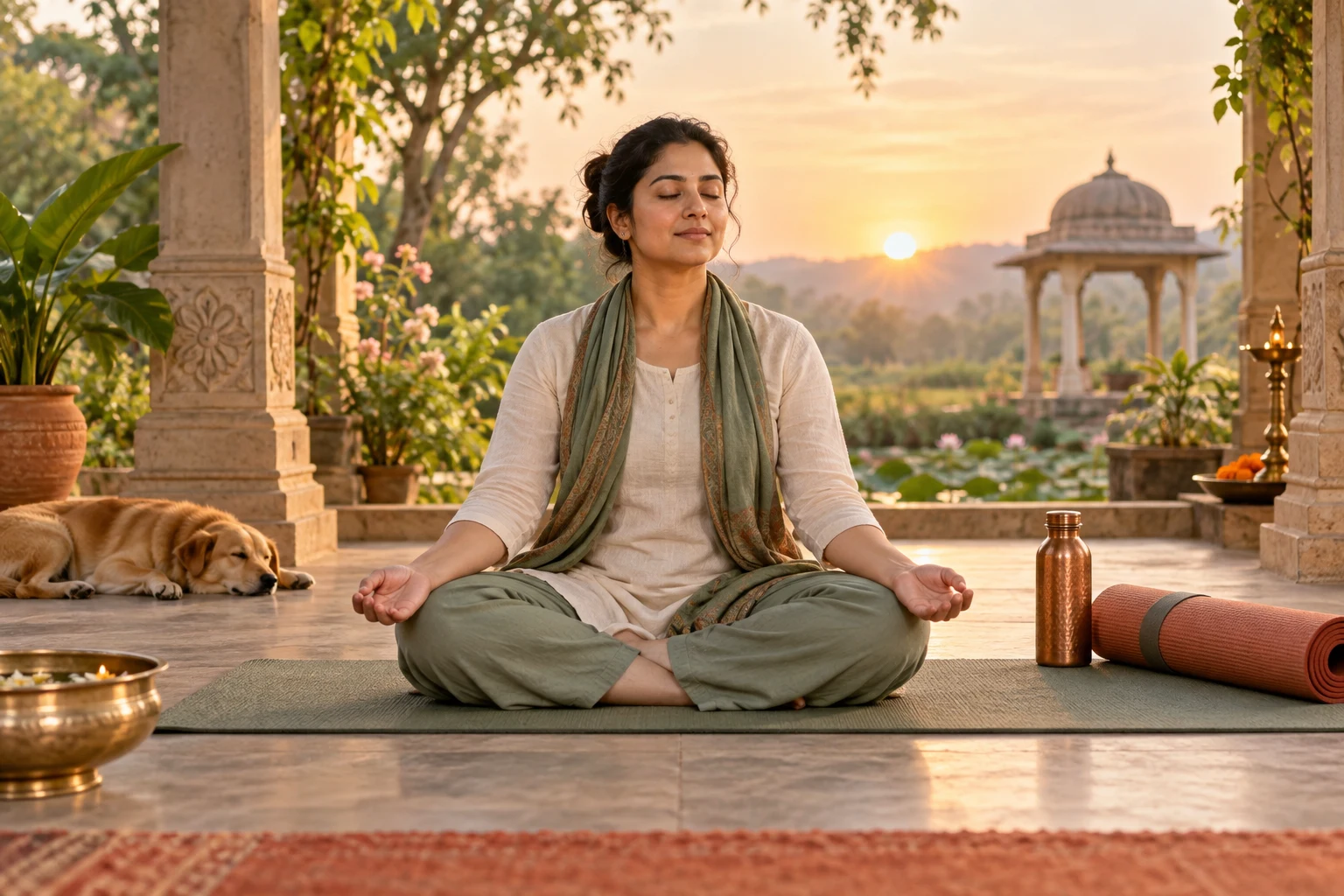
Prana Mudra (प्राण मुद्रा) is the “gesture of life force”: a hand mudra in which the tips of the ring finger and little finger touch the tip of the thumb, while the index and middle fingers stay extended. Among the mudras, prana mudra is the one traditionally used to awaken vitality, steady energy, and support meditation and breathwork.
It is named after prana, the life force or vital energy described in yogic philosophy, and is used during meditation and breath practice as a symbol of vitality and inner balance. It is simple to learn and requires no force, special flexibility, or religious commitment. See hand mudras and their meanings for the broader tradition in which hand gestures are used.
| Sanskrit name | Prana Mudra (प्राण मुद्रा) |
| Meaning | Gesture or seal of prana, the vital life force |
| Fingers | Ring and little fingertips touch the thumb tip; index and middle fingers extended |
| Elements | Earth (ring) and water (little) joined with fire (thumb) |
| Traditional focus | Vitality, alertness, balanced energy |
| Duration | 5 minutes to start; up to 15–30 minutes with practice |
How to do Prana Mudra step by step
- Sit comfortably on a chair, cushion, or mat — Sukhasana (easy cross-legged pose), Vajrasana, or Padmasana all work — with the spine naturally upright.
- Rest the hands on the thighs or knees, palms facing up.
- Bend the ring and little fingers and touch their tips lightly to the tip of the thumb.
- Keep the index and middle fingers extended but relaxed, not stiff.
- Close the eyes and breathe slowly and naturally through the nose.
- Hold for 5 minutes, noticing the touch of the fingertips and the movement of the breath.
- Release by opening the hands and stretching the fingers.
The contact should be light; pressing hard does not make the practice more effective. If sitting is painful, the gesture can also be used while lying down or standing safely. Relax the jaw and shoulders, and release the hands if there is cramping, numbness, tingling, or strain.
Traditional meaning of the fingers
In a commonly taught elemental interpretation of hasta mudras, the ring finger represents earth, the little finger represents water, and the thumb represents fire. Bringing them together is traditionally understood as supporting the circulation or balance of prana.
These associations belong to yoga and Ayurveda-based teaching systems; they are not anatomical findings. They can be used as contemplative symbols: earth may suggest stability, water adaptability, and fire purposeful energy. Schools and teachers may explain the symbolism differently.
A simple five-minute practice
Begin by choosing a stable, unhurried place. Form the gesture in both hands and let the breath remain easy. On each inhalation, notice the sense of receiving energy; on each exhalation, soften unnecessary tension. There is no need to hold the breath.
After several breaths, place attention on a realistic action that would support energy today—drinking water, eating regularly, walking, resting, or completing one manageable task. End by releasing the fingers and observing whether the hands and breath feel different.
Prana Mudra is commonly paired with meditation or gentle pranayama. Beginners should keep breath practices comfortable and avoid forceful retention without qualified instruction.
Traditional benefits and modern evidence
Traditional practitioners associate Prana Mudra with vitality, alertness, and balanced energy. Commonly cited traditional benefits include:
- Vitality — a sense of renewed energy when the mind feels flat or sluggish.
- Focus — a clear sensory anchor that keeps attention with the breath.
- Grounding — the earth element of the ring finger is associated with stability.
- Support for pranayama — the mudra is often held during Anulom Vilom, Ujjayi, or Bhramari breathing.
Some people find that forming a deliberate gesture helps anchor attention or creates a useful pause. Those experiences are valid as personal observations.
However, strong claims that this mudra treats fatigue, improves eyesight, cures illness, or changes specific body systems are not established by robust clinical evidence. Research on yoga may examine packages of movement, breathing, meditation, and lifestyle together; that does not prove that one finger position produces a medical result.
Treat Prana Mudra as a low-intensity contemplative practice, not a substitute for diagnosis, sleep, nutrition, medication, or professional care. Persistent or sudden fatigue can have many causes and deserves appropriate medical assessment.
Comfort, timing, and precautions
There is no universally required duration. Start with two to five minutes and extend toward ten or fifteen only if comfortable. It can be practised in the morning, during a meditation break, or whenever a quiet transition would be helpful. Consistency matters more than a long session.
Do not force stiff or injured finger joints. People with hand pain, arthritis, recent surgery, or nerve symptoms can use a looser shape or skip the gesture. Stop if symptoms increase and consult a qualified clinician when needed.
Prana Mudra is sometimes confused with Gyan Mudra, in which the index finger meets the thumb. The finger position and traditional emphasis differ, though both may serve as attention anchors.
Prana Mudra and other mudras
| Mudra | Fingers | Traditional emphasis |
|---|---|---|
| Prana Mudra | Ring + little finger to thumb | Vitality |
| Gyan Mudra | Index finger to thumb | Knowledge, focus |
| Prithvi Mudra | Ring finger to thumb | Grounding, stability |
| Apana Mudra | Middle + ring finger to thumb | Elimination, letting go |
| Vayu Mudra | Index finger folded under thumb | Calming air element |
| Surya Mudra | Ring finger folded under thumb | Warmth, fire element |
Frequently asked questions
How do you do Prana Mudra?
Sit comfortably, rest the hands palms up, and lightly touch the tips of the ring and little fingers to the tip of the thumb while keeping the index and middle fingers extended. Breathe naturally for five minutes.
What does “Prana Mudra” mean?
The name means the “gesture of prana.” In yogic philosophy, prana is the vital force associated with life and activity; the term is broader than the physical breath alone.
Which fingers touch in Prana Mudra?
The ring finger and little finger lightly touch the thumb, while the index and middle fingers remain extended without locking. Both hands can use the gesture.
What is Prana Mudra traditionally used for?
It is traditionally associated with vitality and balanced energy and is often used during meditation. These are traditional claims, not proof that the gesture treats a medical condition.
How does Prana Mudra differ from Gyan Mudra?
Gyan Mudra touches the index finger to the thumb and is associated with knowledge and meditation. Prana Mudra joins the ring and little fingers to the thumb and is associated with vitality.
How long should you hold Prana Mudra?
Start with two to five minutes and build gradually to 15 minutes or more if the hands stay comfortable. Many teachers suggest up to 30 minutes a day, split into shorter sessions.
Who should avoid Prana Mudra?
The gesture itself is gentle, but people with finger or hand injuries, arthritis flare-ups, or nerve symptoms should use a looser shape or skip it. It is not a substitute for medical treatment.