
🐒 Festivals
Hanuman Jayanti Story and Significance: Celebrating Hanuman's Birth
Last updated: September 26, 2026
Hanuman Jayanti celebrates the birth of Hanuman, whose strength, humility, courage, and devotion to Rama continue to shape Hindu practice.
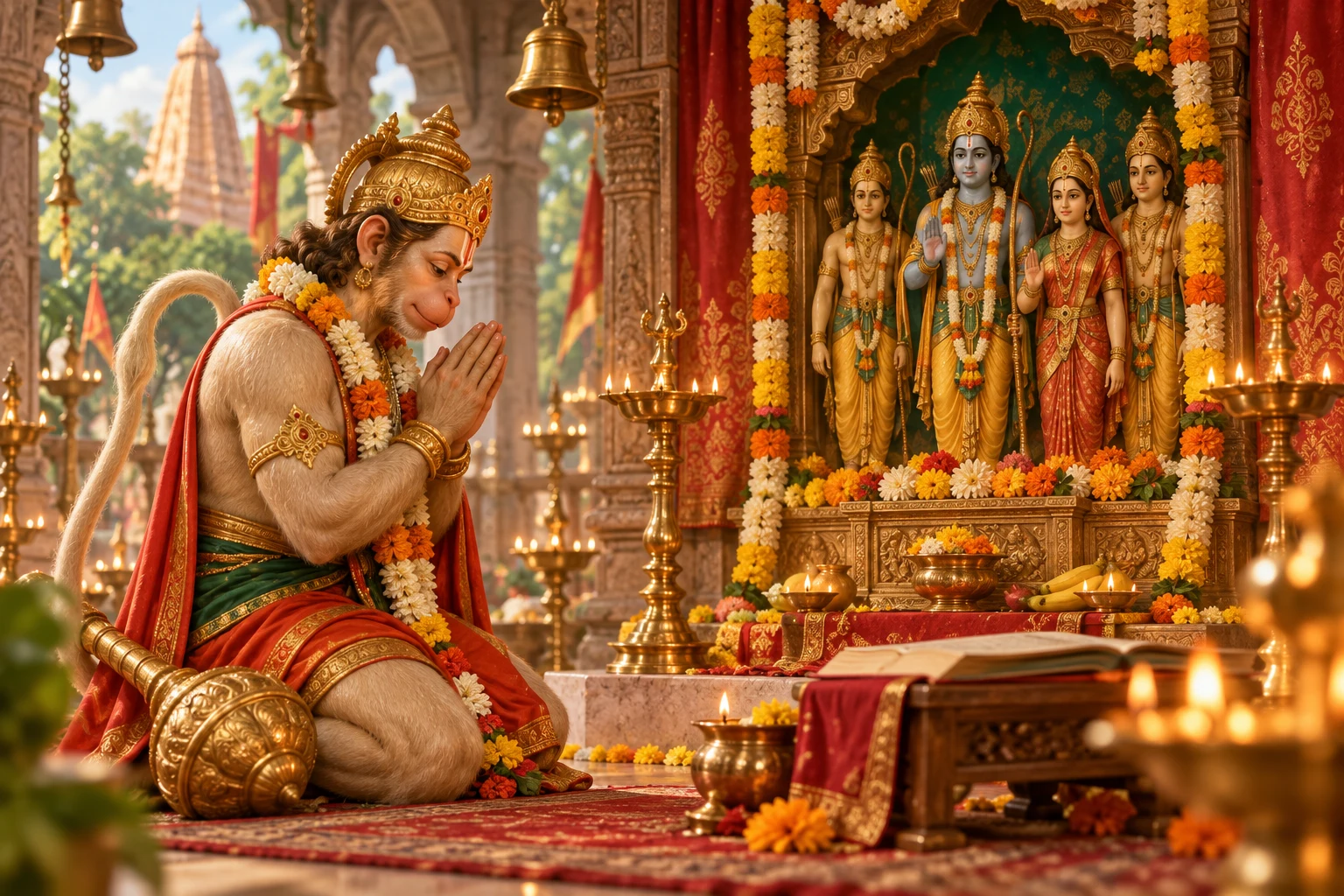
Hanuman Jayanti celebrates the birth of Hanuman, Rama’s devoted servant and one of the most loved figures in the Ramayana. The day honours strength guided by humility, courage directed toward service, and learning used for a worthy purpose. Regional traditions observe Hanuman’s birth on different dates, so a trusted local calendar or temple should guide timing.
Hanuman’s divine birth
Hanuman is traditionally described as the son of Anjana and Kesari and as specially blessed or fathered by Vayu, the wind deity. Some devotional traditions connect his birth with Shiva and Rama’s future mission. These are not necessarily one standard biography; the Ramayana, later Puranic literature, and regional retellings preserve different emphases.
What they share is the idea of immense potential that finds direction through dharma. Hanuman’s gifts are not celebrated as status. They become sacred when used to find Sita, reassure her, serve Rama, help allies, and protect life.
The child who reached for the Sun
One childhood story tells that Hanuman sees the rising Sun and mistakes it for a ripe fruit. He leaps toward it with astonishing energy. Events that follow lead to divine boons and, in some retellings, a condition that he will forget his powers until reminded of them.
That motif returns before the leap to Lanka. Jambavan reminds Hanuman of his capacity, but the mission is not self-promotion—it is the search for Sita. The episode offers a balanced lesson for students and adults: confidence matters, yet ability reaches its highest value when memory, judgment, and service work together. Explore more context in Ramayana stories and lessons.
Why dates and customs differ
Many northern communities observe Hanuman Jayanti on Chaitra Purnima. Other traditions connect Hanuman’s birth with dates in Kartika, Margashirsha, or regional months. The variation reflects India’s living calendar traditions, not an error that must be “corrected” online. Ask which calendar a temple follows before announcing that another community has the wrong date.
Offerings also vary. Sindoor, oil, flowers, bananas, sweets, and prasad are common in different places, but devotees should follow temple rules. Never apply substances directly to a murti without permission, and do not leave food or packaging where it creates waste.
How devotees observe the day
Begin by bathing or washing, cleaning a small prayer space, and placing an image of Hanuman or Rama if that belongs to your practice. Offer water, fruit, flowers, or joined palms. Recite the Hanuman Chalisa slowly enough to stay attentive; the Hanuman Chalisa meaning guide can keep sound connected to sense. A shorter option is the Hanuman Beej Mantra.
Temple visits may be crowded. Queue patiently, follow photography and footwear rules, avoid blocking entrances, and assist children or older visitors without pushing. If using a diya, keep it stable and supervised. Loud recitation should respect neighbours, hospitals, animals, and local time restrictions.
Read Hanuman beyond physical strength
The Ramayana also presents Hanuman as an observant messenger and skilled speaker. In Lanka, he must decide when to remain hidden, how to identify himself to Sita without frightening her, and what evidence will establish trust. Courage therefore includes patience, communication, and adapting one’s approach to another person’s vulnerability.
A family discussion can ask which quality solves each problem: memory before the ocean leap, discretion in Ashoka Vatika, reassurance when meeting Sita, or practical action when carrying the healing mountain. This prevents devotion from shrinking Hanuman into a symbol of muscle alone.
Some devotees fast or eat a simple vegetarian diet. Anyone who is pregnant, breastfeeding, diabetic, elderly, recovering from illness, has an eating-disorder history, or takes medication should prioritise medical guidance. Devotion does not require dizziness, dehydration, or hiding health needs.
Seva is central to the celebration
Pair recitation with seva: donate blood if eligible, help someone carry a burden, tutor a student, feed people through a responsible organisation, or complete a neglected duty without seeking praise. The critical edition and research work of the Oriental Institute, The Maharaja Sayajirao University of Baroda provides scholarly context for the Ramayana textual tradition.
Hanuman’s power is never most impressive when it dominates. It is most impressive when it crosses an impossible distance for someone else. Hanuman Jayanti asks devotees to cultivate that combination—strength without arrogance, loyalty without blindness, and courage with compassion.
Frequently Asked Questions
What does Hanuman Jayanti celebrate?
It celebrates Hanuman's birth and honours his courage, disciplined strength, humility, wisdom, and complete devotion to Rama.
Why is Hanuman Jayanti observed on different dates?
Regional calendars and traditions identify different lunar dates and occasions with Hanuman's birth, so devotees should follow their local temple or family calendar.
What can beginners recite on Hanuman Jayanti?
The Hanuman Chalisa is widely recited. A beginner may also repeat a short Hanuman mantra, read a translated Ramayana episode, or offer a simple prayer.
Is fasting necessary for Hanuman Jayanti?
No single fasting rule applies everywhere, and health comes first. Prayer, service, scripture reading, and a simple meal are valid ways to observe the festival.