
🌙 Festivals
Hindu Festivals Calendar: Tithi, Regions, and How to Plan
A practical Hindu festivals calendar guide explaining tithi, regional calendars, changing dates, and how to plan worship without treating one local tradition as universal.
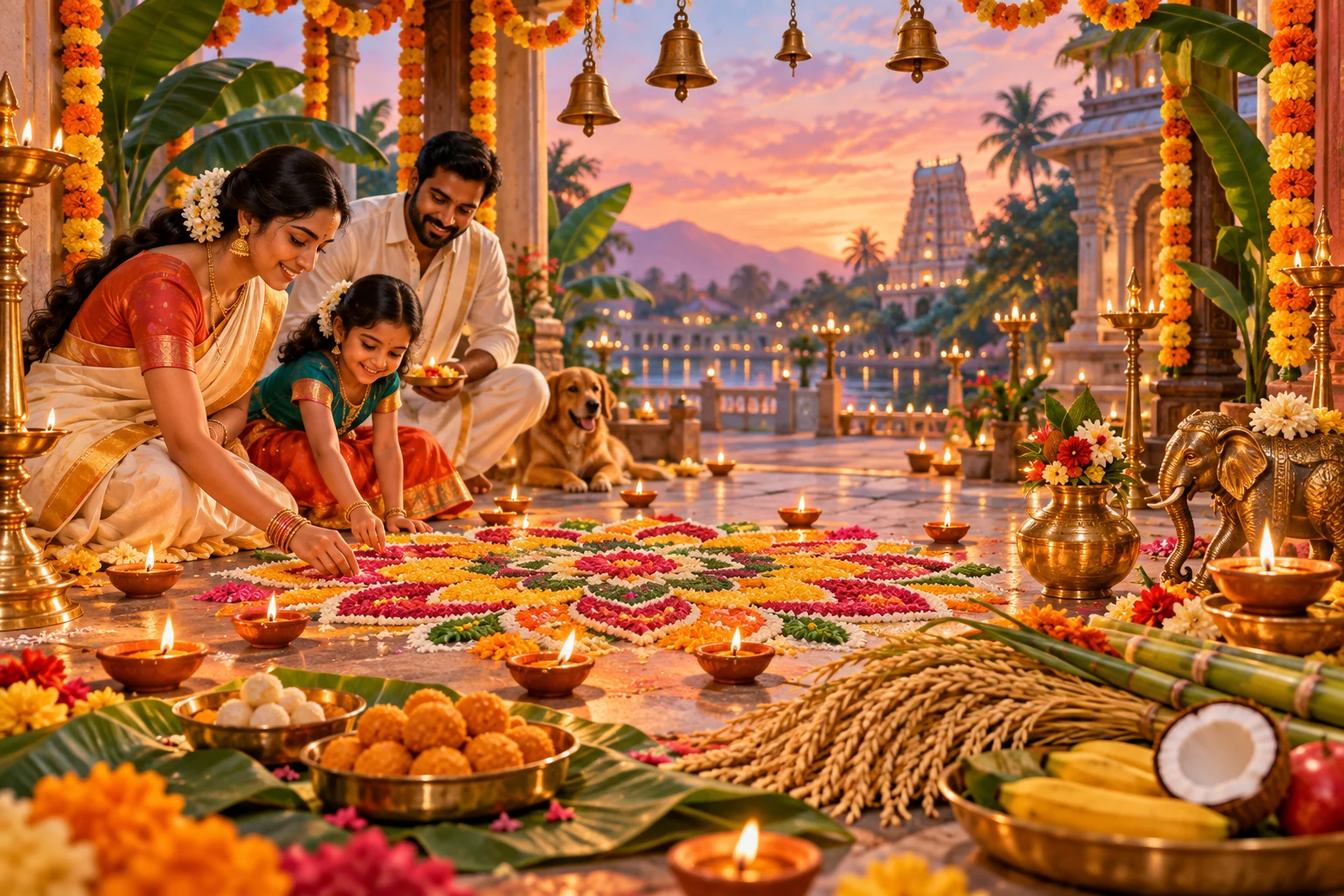
A Hindu festivals calendar is more than a list of fixed dates. Many observances follow the lunar day, or tithi, while others are connected with the solar year, a season, a harvest, or a regional historical tradition. This is why the date of Diwali, Janmashtami, Holi, Navratri, or Maha Shivratri changes from year to year and may differ slightly between locations.
The upcoming Hindu festivals guide is useful for planning. This article explains how to read a calendar and why two reliable calendars can sometimes show different local timings.
What is a tithi?
A tithi is a lunar day calculated from the changing relationship between the Sun and Moon. It is not exactly the same as a 24-hour clock day. A tithi may begin or end after sunrise, which means the date on which an observance is performed depends on the rule used for that festival and the location where the calendar is being consulted.
This is why a festival calendar may list a fasting day on one civil date and the main puja on another. The relevant tithi might be required at sunrise, during sunset, at moonrise, or at midnight. Always read the observance note rather than relying only on the name of the date.
Lunar and solar festivals
Many major festivals use lunar calculations. Diwali, Holi, Janmashtami, Maha Shivratri, and Navratri are familiar examples. Their Gregorian dates move because the lunar cycle does not repeat on the same date every solar year.
Other observances are more closely connected with the solar calendar or a fixed civic date. Makar Sankranti, for example, is associated with the Sun’s movement and the harvest season. National observances such as Independence Day and Republic Day use fixed dates, even though communities may include prayers or religious customs alongside them.
Why regional calendars differ
India has many living calendar traditions. A festival may be called by different names, observed across different lengths of time, or assigned a date using a regional calculation. Amanta and Purnimanta month systems can also affect how a lunar month is named. Local sunrise, sunset, moonrise, and the time zone matter too.
A difference does not automatically mean that one calendar is wrong. It may reflect a different city, sampradaya, regional panchang, or observance rule. When planning a fast, travel, temple visit, or family puja, use the calendar followed by the local temple or household tradition.
Major festivals to find on a Hindu festival calendar
Most broad calendars include the following observances, although their local dates and customs vary:
- Diwali: a multi-day season connected with light, Lakshmi Puja, Rama’s return, family gatherings, and renewal.
- Navratri and Dussehra: observances connected with the forms of Durga, the victory of dharma, and regional stories of Rama and Ravana.
- Janmashtami: the birth of Krishna, often marked by fasting, singing, midnight worship, and stories from Krishna’s childhood.
- Maha Shivratri: a night of Shiva worship, prayer, fasting for those who observe it, and reflection.
- Holi: a spring festival associated with Prahlada and Holika, Krishna traditions, colour, forgiveness, and community.
- Ganesh Chaturthi: worship of Ganesha, the remover of obstacles, with regional forms of installation and immersion.
- Ram Navami and Hanuman Jayanti: observances connected with Rama’s birth and Hanuman’s devotion and service.
Read the individual festival stories and significance guides for the narratives behind these names rather than treating a calendar as a list without context.
How to use a Hindu festivals calendar responsibly
First, choose your location. A calendar calculated for one city may not give the correct local timings for another. Next, identify what you are planning: a fast, a home puja, a temple visit, a family gathering, or simply an opportunity to learn. Different activities may use different timing rules.
Then check the source’s notes. Look for sunrise, sunset, moonrise, midnight, tithi beginning and ending, and whether the calendar follows a particular regional tradition. If the date is important for a temple event or a formal observance, confirm it with the temple or a trusted local panchang.
Preparing for a festival
Preparation does not need to be expensive. Read the festival story, clean a small worship area, learn one aarti or mantra, prepare a simple offering, visit family, or share food with someone who needs support. Fasting is a personal and traditional practice, not a requirement for everyone; health, age, medication, pregnancy, and work should be respected.
The meaning of a festival is often carried through ordinary actions: gratitude, generosity, restraint, service, music, prayer, and time spent with others. A calendar tells you when to pause. The way you observe gives the day its depth.
Frequently asked questions
Is there one Hindu festivals calendar for all of India?
There are widely shared festivals, but no single calendar captures every regional observance or local calculation. Use the calendar appropriate to your city and tradition.
Why does the date of a Hindu festival change each year?
Many festivals follow lunar tithis or astronomical events rather than a fixed Gregorian date. The date therefore moves within the solar calendar.
Where can I find the meaning behind each festival?
Start with the major Hindu festivals overview and then follow the individual story pages for Diwali, Holi, Navratri, Janmashtami, Maha Shivratri, and other observances.