
📅 Hindu Festivals
Upcoming Hindu Festivals and Hindu Festival Calendar Guide
Last updated: August 31, 2026
Festival dates move across the Gregorian calendar, but the stories, seasons, and devotional practices give the Hindu year its rhythm. Here is how to follow it without confusion.
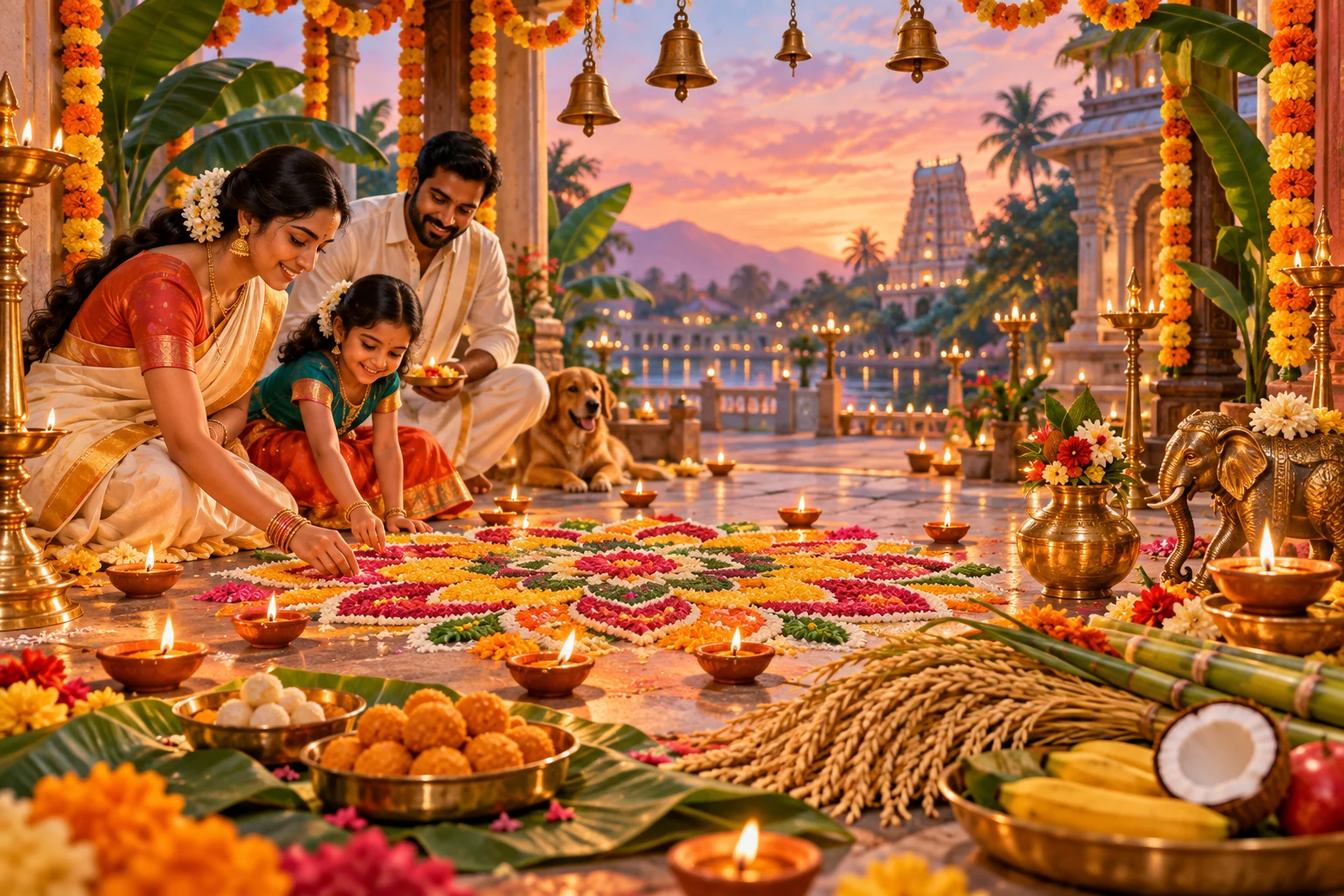
People often search for an upcoming Hindu festival or a Hindu festivals calendar when they want to plan a puja, travel home, buy an offering, observe a fast, or understand why a community is celebrating. The reliable answer is to check a current panchang or local temple calendar for the exact city-specific date and muhurat, then use this guide for the story and preparation. Hindu festival dates are not all fixed on the Gregorian calendar: many observances follow tithi, the lunar day, while others follow the solar year or a regional calendar.
For an exact date, consult a current panchang or local temple calendar for your city. This guide explains the meaning and preparation behind the major observances so that a changing date does not make the tradition feel confusing.
Upcoming Hindu festivals in 2026: dates at a glance
For India-based planning in the remainder of 2026, the next major observances include Janmashtami on 4 September, Ganesh Chaturthi on 14 September, Sharad Navratri beginning 11 October, Dussehra on 20 October, and Karwa Chauth on 29 October. The Diwali season follows with Dhanteras on 6 November, Diwali and Lakshmi Puja on 8 November, Govardhan Puja on or around 9–10 November depending on city, and Chhath Puja on 15 November.
These are date guides, not a substitute for local muhurat: tithi boundaries, sunrise, and regional practice can change the observance date or timing. Confirm the final puja window with a panchang set to your city.
How Hindu festival dates are calculated
The Hindu calendar combines lunar and solar ideas. A lunar month is divided into the bright half, shukla paksha, and the dark half, krishna paksha. Festival names often refer to a tithi, a full moon, a new moon, or a transition of the Sun. Makar Sankranti is strongly tied to the solar movement and therefore usually falls around the same Gregorian period, while Diwali, Holi, Janmashtami, and Maha Shivratri shift each year.
A panchang normally gives more than a date. It may list the tithi, nakshatra, sunrise, sunset, moonrise, fasting window, and the best time for a puja. Different regions and traditions can publish slightly different timings. That does not mean one family is celebrating incorrectly; it reflects the diversity of Hindu calendrical practice.
Major upcoming festivals to watch
How to use this Hindu festival calendar
Use this list as a planning guide, not as a substitute for local timings. For the next festival in your family’s calendar, open the linked guide, verify its date and puja window in a current local panchang, and choose a simple observance that suits your household. For the 2026 autumn season, see the Dhanteras 2026 guide, Govardhan Puja 2026 guide, and Gita Jayanti 2026 guide.
Janmashtami
Krishna Janmashtami celebrates the birth of Krishna and is often observed with devotional singing, fasting, midnight worship, and stories from Krishna’s childhood. Read the Janmashtami story and significance and explore the Krishna Mantra before the festival.
Ganesh Chaturthi
Ganesh Chaturthi honours Ganesha as a remover of obstacles and a guide at new beginnings. Homes and public communities may install images, offer prayers, sing the Jai Ganesh Deva Aarti, and conclude with visarjan. Customs around immersion, materials, and duration vary, so follow local guidance and protect waterways.
Navratri and Dussehra
Navratri is a nine-night observance dedicated to forms of Devi. Some communities fast, some perform garba or devotional music, and others focus on daily recitation and home puja. The tenth day, Vijayadashami or Dussehra, is associated with victory over destructive forces. The nine forms of Durga guide explains the sequence and symbolism.
Diwali and its surrounding days
Diwali is a season rather than only one evening. Dhanteras, Naraka Chaturdashi, Lakshmi Puja, Govardhan Puja, and Bhai Dooj are observed differently by region and family. Prepare by cleaning safely, lighting diyas responsibly, sharing food, and learning the story behind the day. Start with the Diwali story, Dhanteras guide, and Lakshmi Aarti meaning.
Maha Shivratri
Maha Shivratri is marked by prayer, fasting for those who observe it, night vigils, and offerings to Shiva. A simple practice may include water or flowers, the Om Namah Shivaya mantra, and quiet reflection. Read the Maha Shivratri story for the festival’s major interpretations.
Holi and Makar Sankranti
Holi welcomes spring through stories of Prahlada and Holika, community colour, and renewal. Read the Holi story and significance before planning Holika Dahan or colour play. Makar Sankranti is connected with the Sun’s movement, harvest, charity, sesame, and the northward journey known as Uttarayan. Both festivals have strong regional forms, so local customs are an important part of preparation.
A respectful way to prepare
Start with the meaning, then choose one manageable practice. You might read the festival story, clean a small worship area, sing one aarti, visit a temple, donate food, or call an elder. Fasting is not compulsory for everyone and should never be treated as a test of devotion when health, age, medication, or work makes it unsafe. Children can participate through stories, drawing, music, or helping prepare a simple offering.
Festival preparation should also include practical care. Keep lamps away from fabric, use fireworks responsibly or avoid them, reduce disposable waste, and never leave a flame unattended. A celebration becomes more meaningful when it creates safety, generosity, and connection rather than pressure to spend.
Frequently asked questions
Why do Hindu festival dates change every year?
Most major festivals are linked to lunar tithis or astronomical events, so their Gregorian date moves. Regional calendars can also use different calculations.
Which calendar should I follow?
Use the calendar followed by your family, temple, or local community. For exact fasting and puja timings, choose a panchang calculated for your location.
How can I find the next Hindu festival in my city?
Start with a current panchang set to your city or a local temple calendar. Look for the festival’s tithi and sunrise-based timing as well as the Gregorian date, since these details can differ across locations and traditions.
Is there one list of Hindu festivals for all of India?
There are widely shared festivals, but no single list captures every regional observance. Tamil, Bengali, Marathi, Gujarati, Telugu, Kannada, Kerala, North Indian, and Himalayan traditions may emphasise different days and names.
Where can I learn the stories behind the festivals?
The major Hindu festivals overview is a useful starting point. From there, follow the individual story pages for Diwali, Holi, Navratri, Ram Navami, Hanuman Jayanti, Janmashtami, and other observances.