
🪔 Festivals
Hindu Festivals Month by Month: A Practical Yearly Guide
A month-wise overview of major Hindu festivals, with reminders that dates vary by lunar calendar, region, and local sunrise calculations.
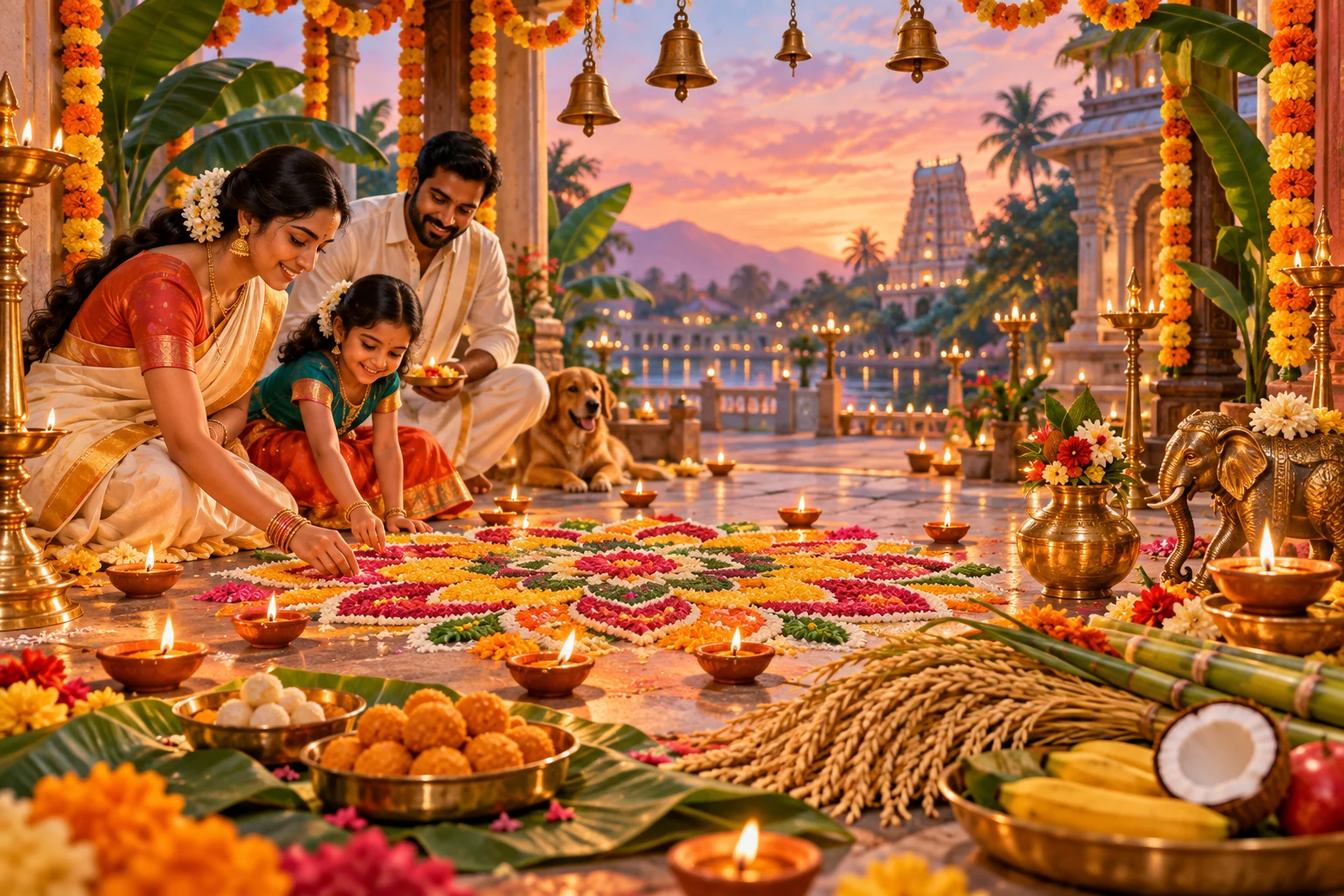
Hindu festivals follow several calendars and regional traditions, so the date of a festival can change from year to year and from one location to another. This month-wise guide is a starting map for stories, worship, fasting, family observance, and further reading—not a substitute for a local panchang when you need an exact tithi or muhurat.
January: Makar Sankranti and Vasant Panchami preparations
Makar Sankranti marks a seasonal transition and is associated with the sun, gratitude, charity, and harvest traditions. Regional names and customs differ. Vasant Panchami, when it falls in the season, honours Saraswati, learning, music, and creativity.
Read the Makar Sankranti story and significance and Vasant Panchami guide.
February and March: Maha Shivratri and Holi
Maha Shivratri is a night of Shiva worship, prayer, fasting for some devotees, and contemplation. Holi welcomes spring through colour, community, and stories of Prahlada and Holika. Practices vary widely, so celebrate with consent, safety, and respect.
Explore Maha Shivratri and Holi.
March and April: Ram Navami and Hanuman Jayanti
Ram Navami celebrates the birth of Rama, while Hanuman Jayanti honours Hanuman in traditions that may use different regional dates. Read the Ramayana stories, sing an aarti or chalisa, and connect celebration with the virtues of truth, service, courage, and humility.
See the Ram Navami story and Hanuman Jayanti guide.
April and May: Akshaya Tritiya and Buddha Purnima
Akshaya Tritiya is associated with auspicious beginnings, charity, and dharmic action. Buddha Purnima honours the life and awakening of the Buddha. These observances are reminders that celebration can include generosity, simplicity, and learning.
Read about Akshaya Tritiya and Buddha Purnima.
June and July: Jagannath traditions and Guru Purnima
The monsoon season brings regional temple festivals and Guru Purnima, a day for gratitude toward teachers and sources of knowledge. The precise observance differs by tradition. A respectful practice can be to thank a teacher, study one verse, or offer service without seeking recognition.
August and September: Janmashtami and Ganesh Chaturthi
Janmashtami celebrates the birth of Krishna through fasting, singing, storytelling, and night worship. Ganesh Chaturthi honours Ganesha, the remover of obstacles and patron of wise beginnings. Read the Janmashtami guide and Ganesh Chaturthi guide.
September and October: Navratri, Durga Puja, and Dussehra
Navratri honours forms of the Divine Mother, Durga Puja celebrates Durga’s victory over Mahishasura, and Dussehra remembers the defeat of destructive arrogance through the Rama story in many communities. See the nine forms of Durga and Dussehra significance.
October and November: Diwali, Dhanteras, and Govardhan Puja
The Diwali season includes different observances across India and the diaspora: Dhanteras, Lakshmi Puja, Govardhan Puja, Bhai Dooj, and regional new-year traditions. Cleanliness, lamps, gratitude, family, charity, and remembrance are common themes.
Read the Diwali story and significance, Dhanteras guide, and Bhai Dooj story.
November and December: Gita Jayanti and year-end observance
Gita Jayanti is associated with remembrance of Krishna’s teaching to Arjuna. It is an excellent time to read one chapter, study a verse in Sanskrit, or begin a steady daily reading practice using the Bhagavad Gita collection.
How to use a Hindu festival calendar
For exact dates, check a location-based panchang and confirm the tradition followed by your family or temple. For the meaning of a festival, begin with its story and then choose one practice: prayer, aarti, mantra, charity, fasting when appropriate, or time with family. No single custom represents every Hindu community.
Frequently asked questions
Why do Hindu festival dates change?
Many festivals use lunar or lunisolar calculations, and observance can depend on tithi, sunrise, moonrise, and local tradition.
What is the most important Hindu festival?
There is no single answer for every community. Diwali, Navratri, Holi, Janmashtami, Maha Shivratri, and many regional festivals are deeply important in different traditions.