
🪔 Hindu Concepts
Major Hindu Festivals: A Year-Round Overview
A guide to the festivals that shape the Hindu calendar year, month by month, and what each one is actually about.
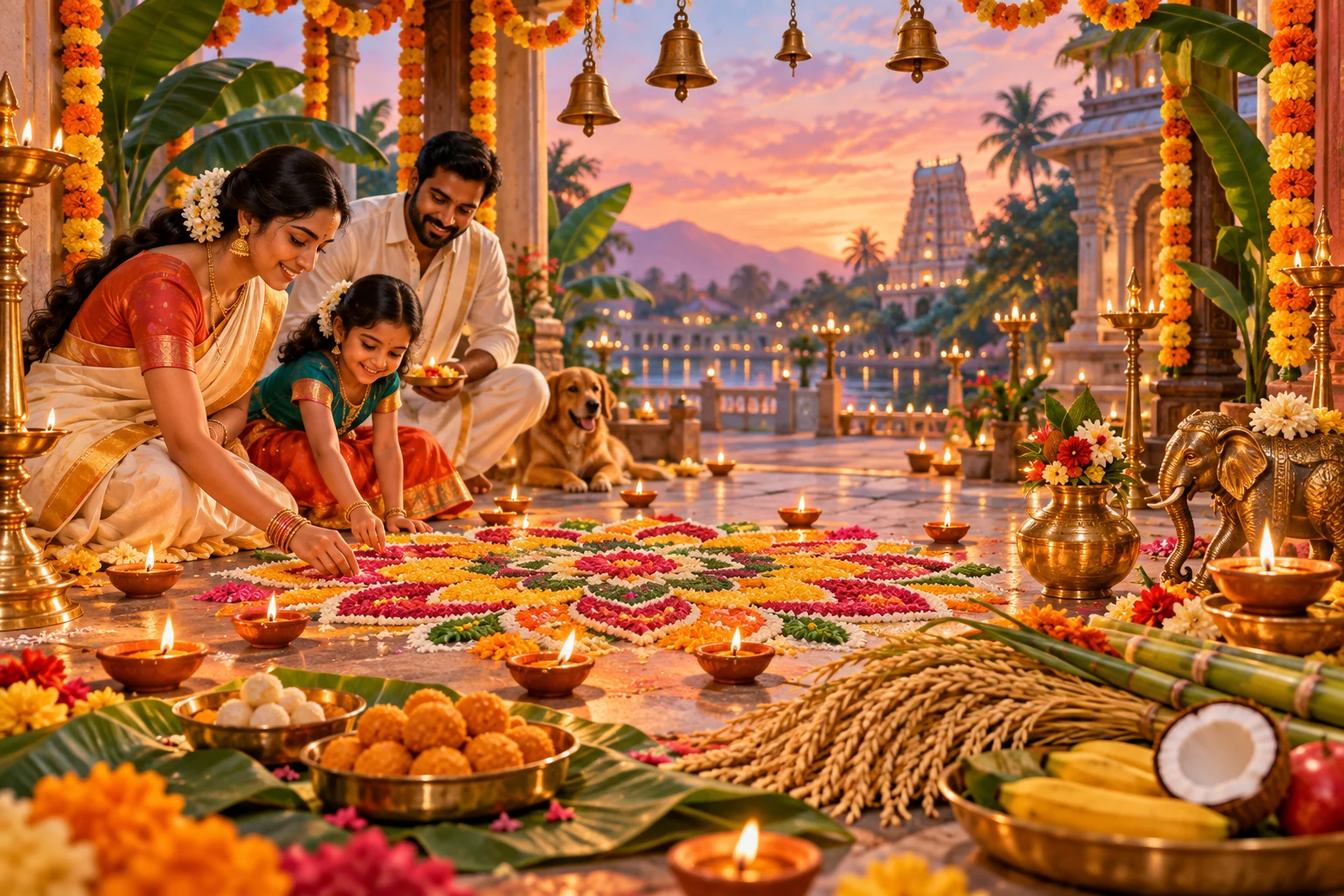
Hindu festivals follow a lunisolar calendar, which means most of them shift by a few weeks from year to year relative to the standard Gregorian calendar (this site doesn’t list specific annual dates for exactly that reason — always check a current Hindu calendar/panchang for the exact date in a given year). What doesn’t shift is the season and the underlying story or significance behind each one. Here’s an overview of the major festivals in roughly the order they occur across the year.
Makar Sankranti (mid-January)
Marking the sun’s transition into Capricorn and the start of its northward journey (Uttarayan), Makar Sankranti is one of the few Hindu festivals tied to the solar rather than lunar calendar, which is why its date stays relatively fixed each year. It’s associated with kite flying in many regions and is a harvest festival in others.
Maha Shivratri (“The Great Night of Shiva,” February/March)
Dedicated to Shiva, this is one of the most widely observed festivals, marked by fasting, night vigils, and continuous chanting. Read the full Maha Shivratri story and significance. The Mahamrityunjaya Mantra and Om Namah Shivaya are especially significant on this day.
Holi (March)
The festival of colors, marking the arrival of spring and the triumph of good over evil, is tied to the story of Holika and Prahlada. It’s one of the most widely recognized Hindu festivals outside India due to its distinctive color-throwing celebrations.
Ram Navami (March/April)
Celebrating the birth of Rama, seventh avatar of Vishnu. Read the Ram Navami story and significance. Many devotees recite the Rama Mantra and observe fasts on this day.
Hanuman Jayanti (March/April)
Marking Hanuman’s birth, this day is often marked by full recitations of the Hanuman Chalisa at temples and homes throughout the day. See the Hanuman Jayanti story and significance.
Raksha Bandhan (August)
A festival celebrating the bond between siblings, where sisters tie a protective thread (rakhi) on their brothers’ wrists, who in turn pledge protection in return. Explore the Raksha Bandhan story.
Krishna Janmashtami (August/September)
Marking Krishna’s birth, celebrated at midnight with fasting, devotional singing, and reenactments of his childhood stories. Read the Janmashtami story and significance. The Krishna Mantra and Hare Krishna Maha Mantra are central to the day’s practice.
Ganesh Chaturthi (August/September)
Celebrating Ganesha’s birth, observed over multiple days culminating in the immersion (visarjan) of Ganesha idols in water. Read the Ganesh Chaturthi story and significance. The Jai Ganesh Deva Aarti is sung daily throughout the festival.
Navratri (September/October)
Nine nights dedicated to the nine forms of Durga — see our full guide to the 9 Forms of Durga for what each night represents. The Durga Chalisa and Durga Beej Mantra are widely recited throughout.
Dussehra / Vijayadashami (September/October)
Falling on the tenth day, directly after Navratri, marking Rama’s victory over Ravana and Durga’s victory over Mahishasura — both stories of good triumphing over evil, celebrated together on the same day. Read the Dussehra story and significance.
Diwali (October/November)
The festival of lights, and arguably the most widely celebrated Hindu festival overall, marks Rama’s return to Ayodhya and, in many traditions, Lakshmi’s visit to well-lit, welcoming homes. The Lakshmi Mantra and Kuber Mantra are central to Diwali and the preceding day, Dhanteras.
The wider Diwali season also includes Dhanteras, Govardhan Puja, and Bhai Dooj, each with its own story and devotional emphasis.
Chhath Puja (October/November)
Chhath Puja is a four-day observance dedicated to Surya and Chhathi Maiya, marked by disciplined fasting and offerings beside a river or other clean water source. It is especially important in Bihar, Jharkhand, and eastern Uttar Pradesh.
Other important observances
The calendar also includes Akshaya Tritiya, Narasimha Jayanti, Ganga Dussehra, Shani Jayanti, Buddha Purnima, Mahavir Jayanti, Onam, and Pongal. Dates shift according to lunar or regional calendars, so a current panchang should be used for annual timings.
A calendar built on rhythm, not just single days
Beyond these major annual festivals, many practitioners also follow smaller, more frequent observances — Ekadashi twice a month, and specific weekdays associated with specific deities (Mondays for Shiva, Tuesdays and Saturdays for Hanuman, Fridays for Lakshmi and Durga). Together, the annual festivals and these smaller recurring observances create a calendar where devotional practice isn’t confined to a handful of big occasions, but woven throughout the year.