
🪔 Festivals
Hindu Festivals for Beginners: Stories, Practices, and Meaning
A clear introduction to Hindu festivals for beginners, explaining puja, aarti, fasting, stories, family customs, and why dates vary.
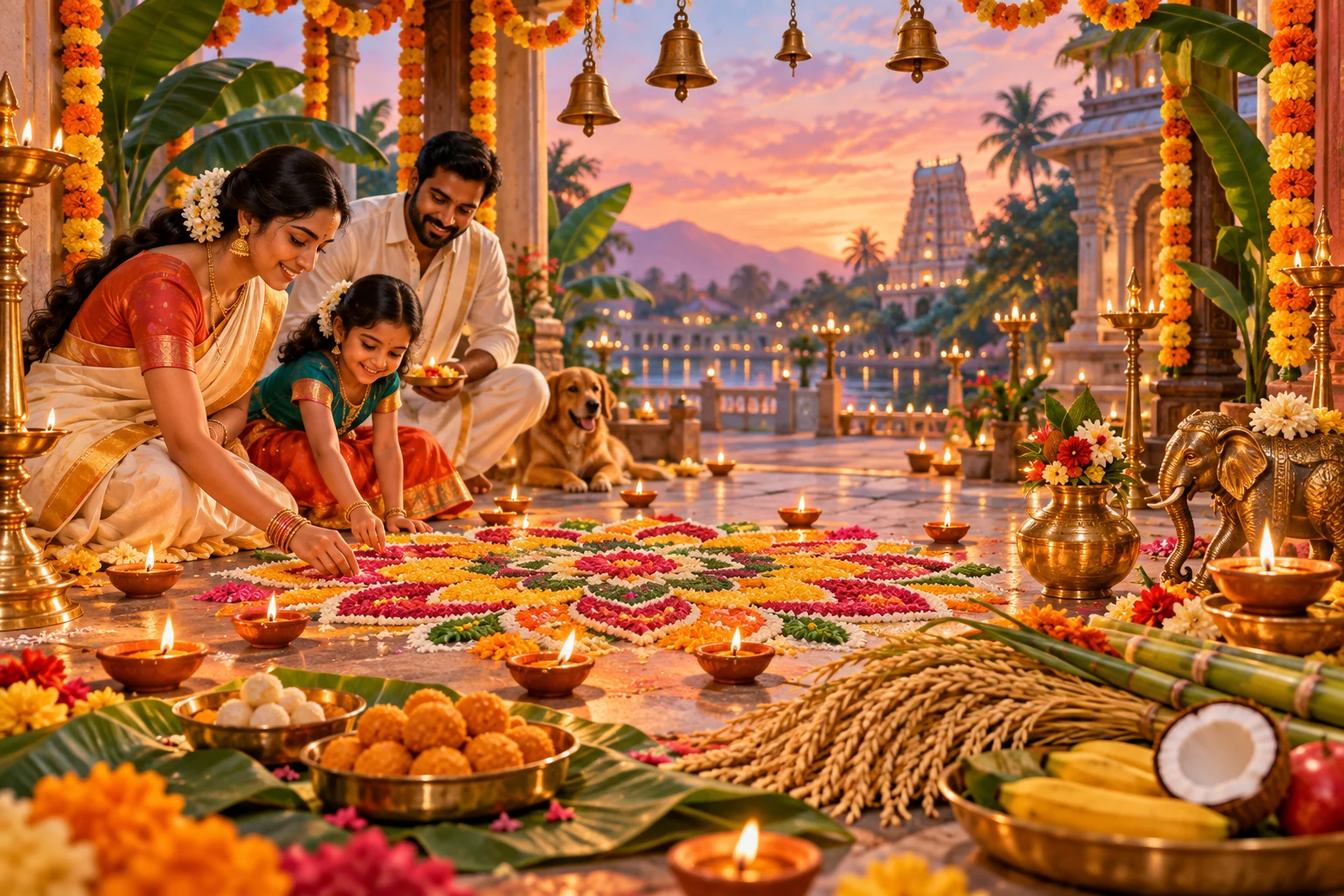
Hindu festivals are diverse celebrations of deities, seasons, harvests, stories, teachers, community, and spiritual values. There is no single Hindu festival calendar or one required way to observe every festival. Dates and customs differ by region, lunar calculation, temple, family, and local tradition.
Major festivals to know
- Diwali: a season of lamps, welcome, Lakshmi Puja, family gatherings, and stories of light and return.
- Holi: a spring festival associated with colour, community, and stories of Prahlada and Holika.
- Navratri and Durga Puja: celebrations of the Divine Mother in many forms, including Durga’s victory over Mahishasura.
- Janmashtami: remembrance of Krishna’s birth through singing, storytelling, and night worship.
- Ganesh Chaturthi: honouring Ganesha, wisdom, auspicious beginnings, and the removal of obstacles.
- Maha Shivratri: an important night of Shiva prayer, contemplation, and worship.
- Rama Navami: celebration of Rama’s birth and the values associated with his story.
Explore the month-wise Hindu festivals guide for a wider calendar map.
What happens during a festival?
Depending on the tradition, people may clean a home or temple, decorate an altar, light lamps, offer food or flowers, observe a fast, read a story, sing an aarti, repeat a mantra, visit family, or give to others. These practices are not identical across communities.
For beginners, choose one practice you can do safely and sincerely. Reading the story, learning one prayer, visiting a temple respectfully, or sharing food can be enough.
Puja, aarti, and prasad
Puja is worship through offerings, prayer, visualisation, and ritual. Aarti is an offering of light accompanied by devotional singing. Prasad is food or another offering received as a blessing and shared respectfully. The details vary, but all three are connected with attention, gratitude, and relationship.
Read the difference between mantra, aarti, and chalisa before choosing a practice.
Why do festival dates change?
Many Hindu festivals follow lunar or lunisolar calendars. The relevant tithi, sunrise, moonrise, and local tradition can change the date or worship window. Use a location-based panchang for exact timings and ask your family or temple which tradition they follow.
How to participate respectfully
Learn what the festival means before copying a ritual. Ask before photographing people or sacred spaces. Dress and behave appropriately at a temple. Avoid waste, unsafe fireworks, excessive noise, and food practices that could harm health. Devotion should include care for people, animals, and the environment.
Frequently asked questions
Which Hindu festival should a beginner start with?
Diwali, Holi, Janmashtami, Ganesh Chaturthi, Navratri, and Maha Shivratri all provide accessible starting points. Choose the story or deity that genuinely interests you.
Do I have to fast during Hindu festivals?
No single rule applies to everyone. Fasting is a personal and traditional practice that should respect age, health, medication, pregnancy, and work.