
🌸 Mantras
Lakshmi Beej Mantra: Meaning, Devotion, and Simple Practice
Last updated: September 26, 2026
Lakshmi worship connects prosperity with gratitude, generosity, cleanliness, and wise stewardship—not only with acquiring money.
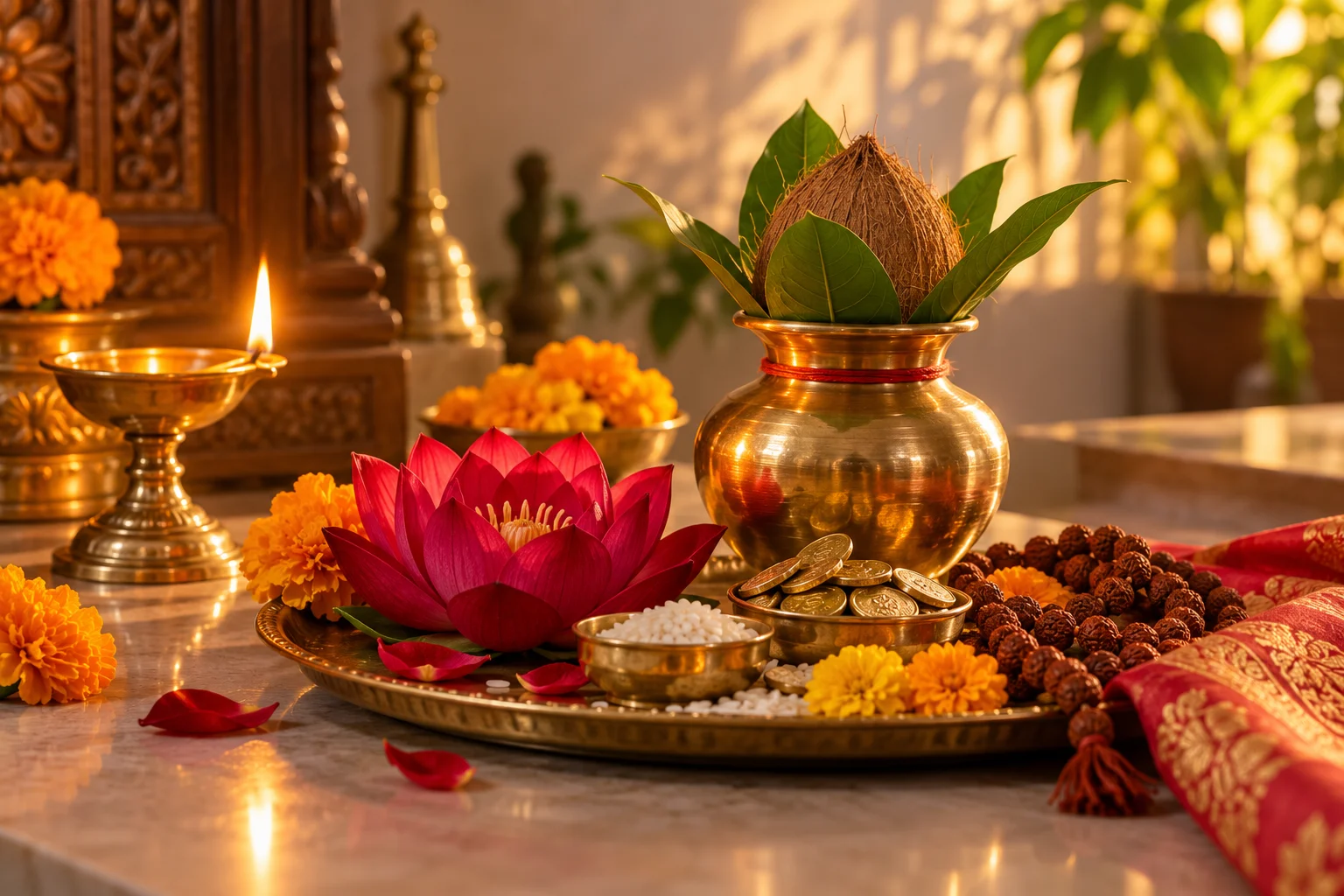
Lakshmi Beej Mantra practice is associated with Lakshmi, the goddess of prosperity, beauty, abundance, and auspiciousness. A beeja or seed syllable is a compact sacred sound used within a living mantra tradition. Different lineages use different seed sounds, pronunciations, and longer formulas, so learn the form from a reliable teacher or established text.
This practice is devotional, not a shortcut to guaranteed wealth. No responsible mantra guide can promise a financial return, remove investment risk, or replace work and planning. Its value lies in prayer, attention, gratitude, and the ethical use of whatever resources one has.
What “Shreem” points toward
Shreem (also written Shrim) is widely associated with Lakshmi and auspicious abundance. In a longer popular form—Om Shreem Mahalakshmyai Namah—the practitioner offers reverence to Mahalakshmi. English spellings are pronunciation aids, not exact replacements for hearing the mantra within a tradition.
Seed mantras may be treated as requiring initiation in some lineages, while other communities share common Lakshmi formulas openly for household devotion. Respect the guidance of your own tradition. The Lakshmi Beej Mantra page provides text and transliteration for a commonly used form.
Prosperity in a wider sense
Lakshmi can represent nourishment, good order, beauty, skill, generosity, healthy relationships, financial stability, and the capacity to support others. Prosperity is therefore broader than accumulating money. A meaningful practice includes honest earning, careful spending, gratitude, and sharing within one’s means.
Traditional images of Lakshmi often connect abundance with the lotus, cleanliness, hospitality, and generosity. These symbols invite reflection: Is the home cared for? Are obligations handled honestly? Does an increase in resources also increase one’s capacity to help? Wealth without wisdom can create new forms of instability.
Home practice
Clean a small, quiet space and wash your hands. Place an image or symbol of Lakshmi if customary. A flower, water, or fruit is sufficient; an elaborate purchase is unnecessary. If lighting a lamp, keep it on a stable surface away from fabric, children, and pets.
Begin with a respectful intention, then repeat the mantra softly and clearly. Eleven or twenty-seven repetitions can be a manageable start; 108 repetitions with a mala is traditional for a longer session. Counts support attention but are not a guarantee of results. Finish with a moment of silence and gratitude.
Fridays and the Diwali period are popular times for Lakshmi worship, though a brief daily practice is also possible. Consistency and conduct matter more than volume or speed. If pronunciation is uncertain, listen to a careful source or ask a knowledgeable teacher instead of forcing the sound.
A grounded reflection
After chanting, name one resource you already have and one responsible way to use it. You might pay an obligation, organize the home, reduce waste, help a family member, donate within your means, or review a saving goal. This turns prosperity from wishful thinking into stewardship.
Keep financial decisions separate from supernatural promises. Verify fees, risks, and credentials before buying a product or following investment advice. Do not borrow money for ritual items or pay someone who claims that a costly ceremony guarantees profit. For significant financial decisions, seek appropriately qualified advice.
Related Lakshmi practices
A household observance may combine mantra with the Lakshmi Aarti lyrics and meaning, the Lakshmi Chalisa, or the Diwali Lakshmi Puja guide. These are complementary forms, not requirements that must all be completed. The Kuber Mantra offers another traditional prosperity-focused prayer.
Frequently asked questions
What is the Lakshmi Beej Mantra?
The most widely used form is Om Shreem Mahalakshmyai Namah, built around the seed syllable Shreem, which is associated with abundance and grace. It is chanted as a prayer for prosperity in a broad sense, not only money.
When should the Lakshmi Beej Mantra be chanted?
Fridays and the Diwali period, especially Lakshmi Puja night, are the main occasions. Many devotees also chant it briefly each morning.
How many times should it be chanted?
A full practice is 108 repetitions, one mala. A shorter, attentive daily practice is better than an occasional long session.
Does the mantra guarantee money or business success?
No. It is a devotional practice, not a financial product or guarantee. Pair prayer with ethical work, budgeting, careful decisions, and qualified guidance when needed.