
🪷 Mantras
Powerful Lakshmi Mantras: 6 Chants with Meaning
A respectful collection of Lakshmi mantras for auspiciousness, gratitude, and ethical prosperity, including the Lakshmi beej mantra and Lakshmi Gayatri.
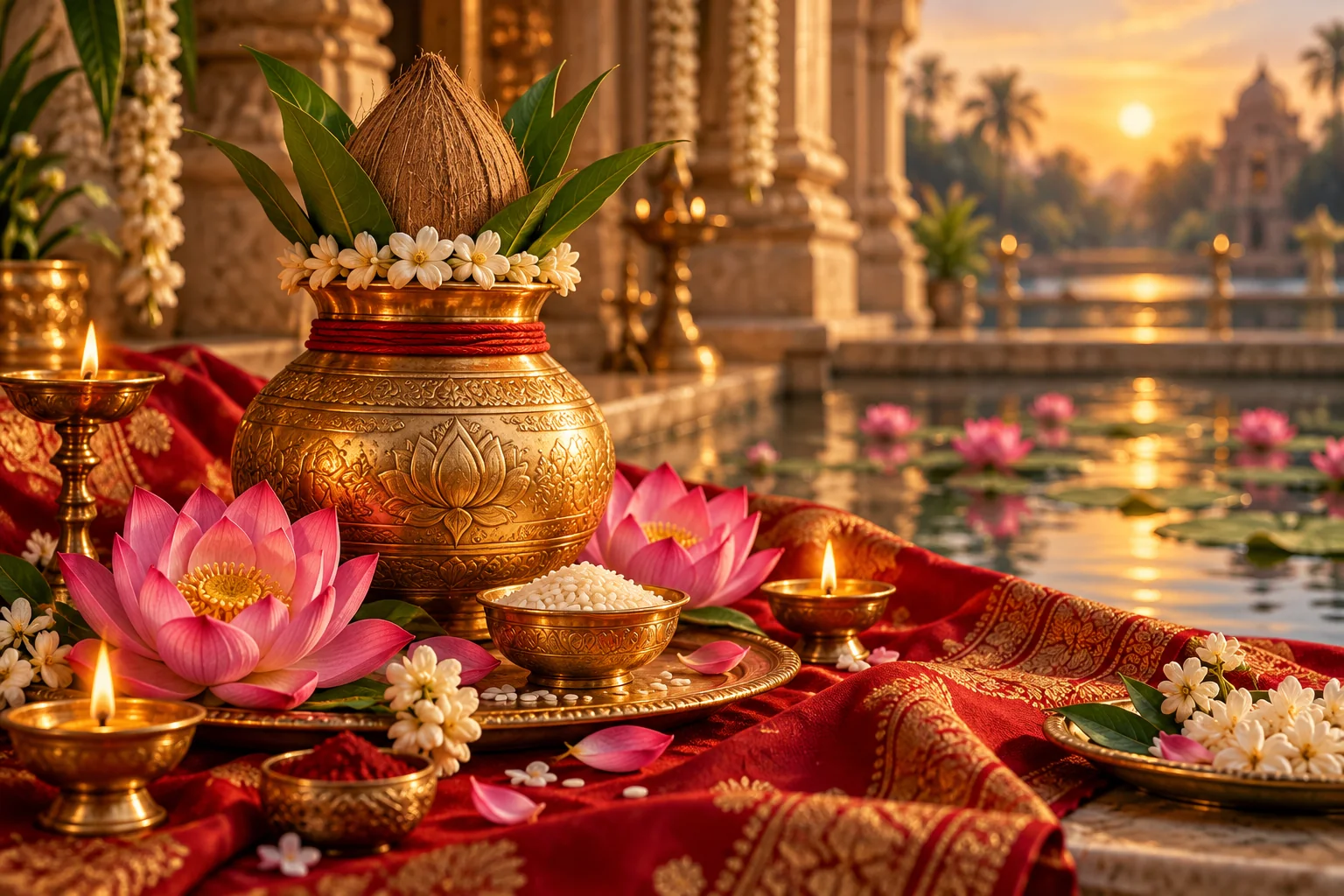
Lakshmi mantras are prayers to Lakshmi, the goddess associated with auspiciousness, nourishment, beauty, generosity, and prosperity. In Hindu tradition, prosperity includes right conduct and the capacity to share; a mantra is not a shortcut to money. These six prayers are commonly used in household worship, especially on Fridays and during Diwali.
Lakshmi mantras
Om Shreem Mahalakshmyai Namah
ॐ श्रीं महालक्ष्म्यै नमः
Oṃ Śrīṃ Mahālakṣmyai Namaḥ
“Om, salutations to great Lakshmi.” Śrīṃ is the Lakshmi beej, a seed syllable associated with auspiciousness and abundance. This is the most familiar short Lakshmi mantra for daily japa.
Lakshmi beej mantra
ॐ श्रीं
Oṃ Śrīṃ
The seed sound Śrīṃ is used as a brief invocation of Lakshmi. Because beej syllables carry particular pronunciation and lineage contexts, most beginners find the complete Om Shreem Mahalakshmyai Namah easier and more meaningful.
Om Mahalaxmyai Namah
ॐ महालक्ष्म्यै नमः
Oṃ Mahālakṣmyai Namaḥ
A plain salutation: “Om, salutations to great Lakshmi.” Without the seed syllable, this is a simple form suitable for children and for a brief daily remembrance.
Lakshmi Gayatri
ॐ महालक्ष्म्यै च विद्महे विष्णुपत्न्यै च धीमहि ।
तन्नो लक्ष्मीः प्रचोदयात् ॥
Oṃ Mahālakṣmyai Ca Vidmahe Viṣṇupatnyai Ca Dhīmahi,
Tanno Lakṣmīḥ Pracodayāt.
“May we know Mahalakshmi; may we meditate on Vishnu’s consort; may Lakshmi inspire us.” This longer prayer asks for guided understanding and is often read once during Lakshmi Puja.
Sarvabaadhaa Vinirmukto
सर्वबाधा विनिर्मुक्तो धन धान्य सुतान्वितः ।
मनुष्यो मत्प्रसादेन भविष्यति न संशयः ॥
Sarvabādhā Vinirmukto Dhana Dhānya Sutānvitaḥ,
Manuṣyo Matprasādena Bhaviṣyati Na Saṃśayaḥ.
This verse is traditionally heard in Lakshmi worship and asks for release from obstacles, nourishment, and household well-being through the goddess’s grace. Read it as a devotional aspiration, alongside responsible action and care for others.
Namastestu Mahamaye
नमस्तेऽस्तु महामाये श्रीपीठे सुरपूजिते ।
शङ्खचक्रगदाहस्ते महालक्ष्मि नमोऽस्तु ते ॥
Namaste’stu Mahāmāye Śrīpīṭhe Surapūjite,
Śaṅkhacakragadāhaste Mahālakṣmi Namo’stu Te.
“Salutations to Mahalakshmi, honoured by the gods, who holds conch, discus, and mace.” This is a well-known verse of praise often recited at the beginning or end of Lakshmi Puja.
How to chant these mantras
Friday mornings or evenings and Diwali Lakshmi Puja are customary times, though any calm daily time is suitable. Sit comfortably, begin with gratitude, and chant one short mantra 11, 21, or 108 times. Read longer verses once or three times. A flower, clean water, or a safely placed diya can be a simple offering; let the practice include generosity and honest work in daily life.
Frequently asked questions
Which Lakshmi mantra is best for daily practice?
Om Shreem Mahalakshmyai Namah is the best-known short form. Its simple rhythm makes it suitable for a small daily count.
Can I chant Lakshmi mantras on any day?
Yes. Fridays and Diwali are especially associated with Lakshmi, but a regular practice can be done on any day.
What does Shreem mean?
Śrīṃ is the seed syllable traditionally associated with Lakshmi and auspiciousness. It is not translated as an ordinary sentence.
Is a Lakshmi mantra only for wealth?
No. Lakshmi is also associated with nourishment, health, harmony, beauty, generosity, and the ethical use of resources.
Related reading
- Lakshmi Mantra — the single-mantra page with meaning and chanting guidance
- Om Jai Lakshmi Mata Aarti
- Lakshmi Aarti meaning and Puja guide
- Diwali Lakshmi Puja guide