
🪔 Festivals
Pausha Putrada Ekadashi 2027: Date, Parana Time and Story
Pausha Putrada Ekadashi falls on 18 January 2027 for most Smarta calendars, and on 19 January in many Vaishnava lists. Date, parana, the story of King Suketuman, and how to keep the vrat.
Pausha Putrada Ekadashi 2027 falls on Monday, 18 January, in most Smarta calendars, and on Tuesday, 19 January, in many Vaishnava lists. The Ekadashi tithi in New Delhi runs from about 10:26 am on 18 January to 7:49 am on 19 January. Because Dashami is still current at sunrise on the 18th, the two traditions split. Parana for the Monday fast is in the afternoon of 19 January, about 1:35 pm to 3:42 pm; parana for the Tuesday fast is on Wednesday, 20 January, about 7:14 am to 9:21 am.
It is the Shukla Ekadashi of Pausha — the same month name in both the Purnimanta and Amanta calendars — and one of two Ekadashis in the year that share the name Putrada. The other is Shravana Putrada, on 12 August 2027. For the month around this date, see Hindu festivals in January 2027. For what an Ekadashi is, see What is Ekadashi.
Date and parana time
| Detail | 2027 (New Delhi, approximate) |
|---|---|
| Smarta Pausha Putrada | Monday, 18 January 2027 |
| Vaishnava / Gauna Putrada | Tuesday, 19 January 2027 |
| Ekadashi tithi | About 10:26 am on 18 January to 7:49 am on 19 January |
| Parana after the 18 January fast | Tuesday, 19 January, about 1:35 pm to 3:42 pm |
| Hari Vasara ends (19 January) | About 1:02 pm |
| Parana after the 19 January (Gauna) fast | Wednesday, 20 January, about 7:14 am to 9:21 am |
| Lunar month | Pausha Shukla Ekadashi (Purnimanta and Amanta) |
The tithi begins only in the late morning of 18 January, so at arunodaya that day Dashami is still running. Smarta householders usually fast on the first civil day, Monday the 18th. Vaishnava calendars often wait for a sunrise at which Ekadashi is already present, and so keep the fast on Tuesday the 19th. Drik Panchang also notes that the second date is the one often suggested for sannyasis, widows, and those who keep the vrat especially with moksha in view. Follow the list your family or temple already uses. You do not need to fast on both days unless that is your own practice.
Parana is the time to break the fast, and it must fall on Dwadashi, avoiding Hari Vasara, the first quarter of that tithi.
- After the Monday fast, Hari Vasara lasts into the afternoon of 19 January (it ends about 1:02 pm), so the preferred window is 1:35 pm to 3:42 pm. This is why some January paranas are in the afternoon rather than just after sunrise.
- After the Tuesday (Gauna / Vaishnava) fast, Drik’s standard window is 20 January, 7:14 am to 9:21 am. The same page notes that Dwadashi is over before sunrise on that morning, which is why the window is a morning one. Drik’s separate ISKCON Putrada page lists a wider morning window on 20 January, about 7:14 am to 10:46 am. If you follow an ISKCON or temple calendar, use that calendar’s published parana, not a mix of the two.
Times change by city. Confirm with a local panchang.
The New Delhi timings above are taken from Drik Panchang’s Pausha Putrada 2027 page (location set to New Delhi) and agree, to the minute, with the January 2027 festival list already on this site. A second published panchang (Satmargastro) gives the same Smarta and Gauna dates and parana windows, with the tithi beginning one minute later, at 10:27 am. We follow Drik’s 10:26 am here.
The story, in brief
In the Padma Purana, Uttara Khanda, chapter 41, Yudhishthira asks Krishna for the name, the rite and the deity of the Ekadashi of Pausha’s bright fortnight — having just heard of Saphala Ekadashi. Krishna names it Putrada, says Narayana is its presiding deity, and tells this story.
Long ago, King Suketuman ruled the city of Bhadravati. He and his queen, Champaka, had no child. The king had wealth, a kingdom and loyal kin, but he was worn down by the thought of who would continue the offerings for his ancestors. One day, in that distress, he rode out into a forest. At midday he came, thirsty, to a quiet lake surrounded by the ashramas of sages.
The sages received him and told him that the day was Putrada Ekadashi, and that they had gathered at the lake with the Magha snana a few days ahead. When the king asked for a child, they told him to keep the fast of that day. He observed the vrat, broke it duly on Dwadashi, bowed to the sages and returned home. In time the queen conceived, and at the birth a radiant son was born. The boy grew, pleased his father, and became a protector of the people. The Purana does not linger on the son’s name.
Krishna closes the chapter by commending the vow, and by saying that those who keep it with a single mind, or who hear the katha, receive the fruit the text describes — in this world, and, in the final verse, a place in heaven, compared also to the fruit of the Agnishtoma sacrifice.
This is a traditional story, not a promise. The vrat is a prayer offered to Vishnu. It does not replace medical care, and it does not treat childlessness as a fault. Many households keep the day simply as the month’s Shukla Ekadashi, with a quiet puja for the family’s wellbeing.
How to keep the vrat
The rite is the ordinary Ekadashi vidhi, dedicated to Vishnu.
- Sankalpa at sunrise on the date your calendar names, after a bath if health allows. Remember Vishnu and the day’s name, Putrada.
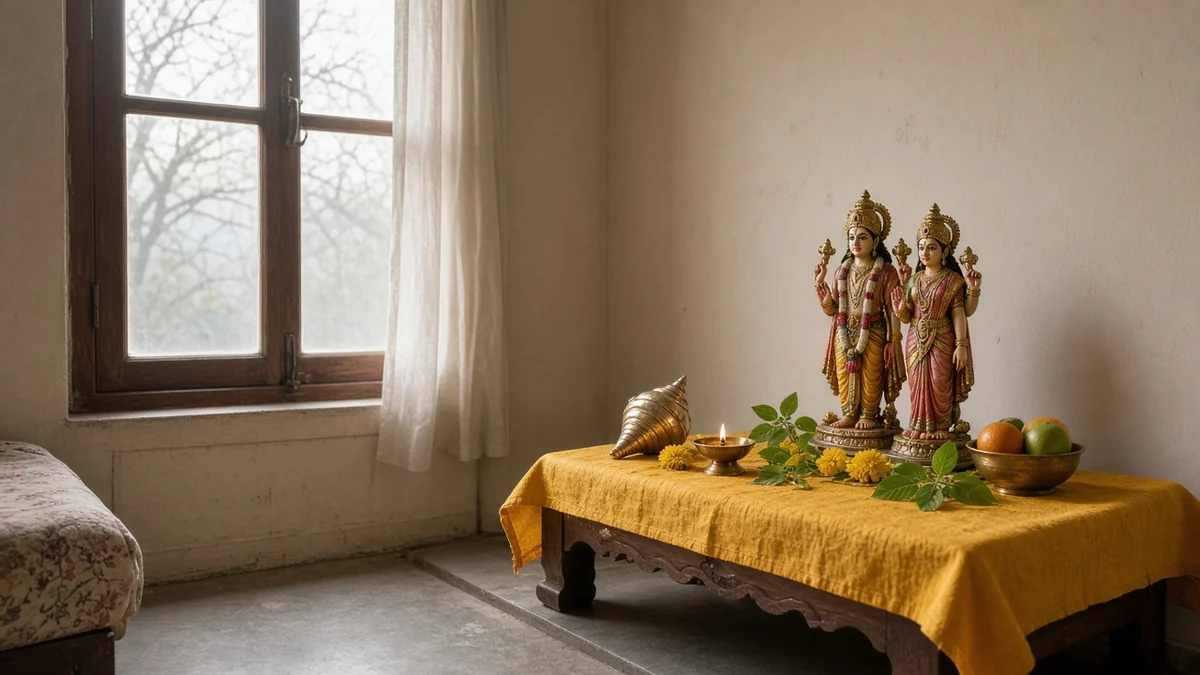
- A simple puja. A Vishnu or Lakshmi-Narayana shrine, a lamp, tulsi, a yellow or white flower, and a fruit offering are enough. Recite a Vishnu mantra, or sit through a short reading of the katha.
- The fast. Those who keep a full fast take only water, or fruit and milk. Others take a single grain-free meal. Avoid grains and beans, especially rice. See What is Ekadashi for the common food rules.
- Parana the next day in the window for your date, after a brief prayer, not in Hari Vasara and not after Dwadashi has been missed without cause.
People who are ill, pregnant, nursing, elderly, or on medication should not force a strict fast. A lamp, a name of Vishnu, and a kind act are a complete observance.
The previous Ekadashi in this month is Saphala, on 3 January. Just before Putrada come Lohri on 14 January and Makar Sankranti on 15 January. The full year is in the Ekadashi 2027 list.
Sources
- Date, tithi and New Delhi parana: Drik Panchang, 2027 Pausha Putrada Ekadashi. The ISKCON parana variant is noted from Drik’s ISKCON Putrada page for the same year.
- Cross-check: a second published panchang (Satmargastro) lists the same Smarta date (18 January), the same afternoon parana on 19 January (1:35–3:42 pm), and the same Gauna date, with the tithi start one minute later.
- Story: Padma Purana, Uttara Khanda, chapter 41 (Krishna’s reply to Yudhishthira), retold here in outline. The queen’s name, Champaka, and the king’s name, Suketuman, follow that chapter. The English wording is original to this page.
Confirm local sunrise and parana with a panchang for your city. Times on this page are for New Delhi and are given in IST (Asia/Calcutta).
Frequently Asked Questions
When is Pausha Putrada Ekadashi in 2027?
Smarta calendars list Pausha Putrada Ekadashi on Monday, 18 January 2027. Many Vaishnava calendars, and the Gauna (second) date, keep it on Tuesday, 19 January. In New Delhi the Ekadashi tithi runs from about 10:26 am on 18 January to 7:49 am on 19 January. Dashami is still current at sunrise on the 18th, which is why the two traditions split.
What is the Putrada Ekadashi parana time in 2027?
If you fast on Monday, 18 January, parana is on Tuesday, 19 January, from about 1:35 pm to 3:42 pm in New Delhi, after Hari Vasara ends at about 1:02 pm. If you keep the Vaishnava or Gauna fast on 19 January, Drik Panchang's standard window is Wednesday, 20 January, about 7:14 am to 9:21 am. Drik's ISKCON page lists a wider morning window on the 20th, to about 10:46 am. Confirm the calendar your temple follows, and use a local panchang.
Why are there two dates for Putrada Ekadashi?
The tithi begins only at 10:26 am on 18 January, so at arunodaya that morning Dashami is still running. Smarta householders usually fast on the first civil day, 18 January. Vaishnava traditions often wait for a sunrise at which Ekadashi is already present, and so fast on 19 January. Drik notes that the second date is also the one often suggested for sannyasis, widows, and those who keep the vrat especially for moksha.
What does Putrada mean? Is this only a vrat for a son?
Putrada means 'giver of a son' in the traditional language of the katha. In the Padma Purana the vow is described as a prayer for a worthy child and for the continuity of a family. It is still a Vishnu Ekadashi, and many people keep it simply as the Shukla Ekadashi of Pausha, with prayers for children and the household. The story's wording reflects its time; a daughter is not a lesser blessing, the vrat does not guarantee a child, and it is not a medical treatment. Anyone trying to conceive should also take ordinary medical care.
What is the story of Pausha Putrada Ekadashi?
In the Padma Purana, Uttara Khanda, chapter 41, Krishna tells Yudhishthira of King Suketuman of Bhadravati and his queen Champaka, who had no child. Distressed about his lineage, the king rode into a forest, came to a lake, and met sages who were keeping Putrada Ekadashi. He observed the fast as they advised, broke it duly on Dwadashi, and returned home. The queen conceived, and a radiant son was later born who grew into a just protector of the people.
Is this the same as Shravana Putrada Ekadashi?
No. Two Ekadashis in the year share the name Putrada. This page is for Pausha Shukla Ekadashi, on 18 or 19 January 2027. Shravana Putrada Ekadashi falls on Thursday, 12 August 2027. The fasting date is different; only the traditional name is shared.
What can I eat on Putrada Ekadashi?
Those who fast avoid grains and beans, especially rice. Fruit, milk, curd, nuts, sabudana, potatoes, sweet potatoes and dishes of kuttu, singhara or rajgira flour with rock salt are common. Anyone with a health condition, and anyone who is pregnant, nursing, elderly or unwell, should choose a lighter fast or a simple Vishnu puja without fasting.