
🌕 Festivals
Pausha Purnima 2027: Date, Shakambhari Purnima and Thai Pusam
Last updated: November 22, 2026
Pausha Purnima in 2027 is on Friday, 22 January — also Shakambhari Purnima and Thai Pusam. Here are the verified New Delhi times, what the three names mean, and how the day is kept.
Pausha Purnima 2027 falls on Friday, 22 January. In 2027 the same civil day is also Shakambhari Purnima and Thai Pusam (Thaipusam). The three names point to one full-moon date and to three related observances: a traditional snana and daan on the lunar Purnima, the honouring of the Devi as the giver of food, and the Tamil festival of Murugan’s vel. This is not Magha Purnima, which falls later, on 20 February 2027.
Times below are for New Delhi, taken from Drik Panchang and cross-checked against this site’s Purnima 2027 list and January 2027 festival list, which use the same panchang. Local sunrise, nakshatra and temple schedules differ by city; confirm a nearby panchang before you travel or fast.
Date and tithi
| Observance | 2027 civil date | Window (New Delhi) |
|---|---|---|
| Pausha Purnima tithi | Friday, 22 January | About 9:29 pm on 21 January to 5:46 pm on 22 January |
| Poosam (Pushya) nakshatra, for Thai Pusam | Friday, 22 January | About 10:24 am on 22 January to 7:31 am on 23 January |
| Shakambhari Purnima | Friday, 22 January | The same Purnima tithi; closes Shakambhari Navratri in many regions |
| Magha Purnima (the next full moon, a different day) | Saturday, 20 February | About 7:59 am on 20 February to 4:52 am on 21 February |
The Purnima tithi begins on the evening of Thursday, 21 January, and covers the whole of Friday’s daylight in New Delhi, ending in the late afternoon. A snana, daan or Satyanarayan puja is traditionally completed while the tithi still prevails. Thai Pusam follows the Poosam nakshatra in the Tamil month of Thai, which in 2027 is running on the same Friday; most temples keep the festival on 22 January.
Shakambhari Purnima
In many North Indian and pan-Indian calendars this full moon is Shakambhari Purnima. Shakambhari is a form of the Devi whose name is explained as the goddess who bears vegetables and food (śāka) for the world. The day often closes a nine-night Shakambhari Navratri that traditionally begins on the Ashtami of Pausha’s bright fortnight. This page does not invent that start date; look it up in a local panchang if your family keeps the navratri.
Thai Pusam and the gift of the vel
Thai Pusam is the great Murugan festival of the month of Thai, kept when the moon is with the star Poosam (Pushya). The story, told in the Tamil Kanda Puranam and remembered at every vel shrine, is that Parvati gave her son Murugan the vel so that he could face the asura Soorapadman. Armed with that spear, Murugan won, and the vel became the sharp sign of wisdom that cuts through ignorance. For Murugan’s birth, names, six abodes and other festivals, see Murugan (Kartikeya).
On the day, devotees bathe, wear simple or ochre clothes, and take offerings of milk, flowers and fruit to a Murugan temple. In some traditions, a vow is fulfilled by carrying a kavadi. Palani is among the best-known centres in Tamil Nadu; in the diaspora, Batu Caves in Malaysia is widely known. Practice varies, and some vows are physically demanding. This page describes the festival and the story; it does not describe or recommend any particular austerity. Follow your temple and your own health.
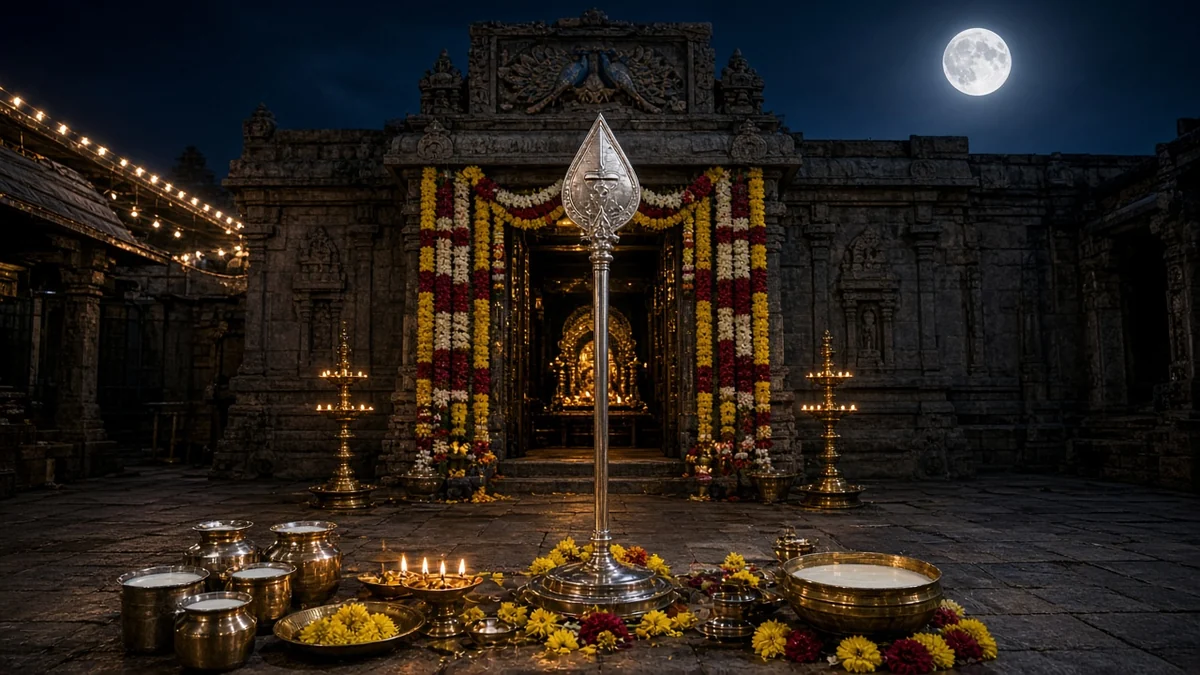
The hero image is a temple courtyard at night: a silver vel, pots of milk, oil lamps, flowers, a peacock carved above the doorway, and a full moon — the public face of the day, seen from several metres.
How the Purnima is kept
A simple home observance of Pausha Purnima, which can sit beside a Thai Pusam temple visit if that is your custom, is:
- Bathe in the morning on Friday, 22 January, while the Purnima tithi prevails (until about 5:46 pm in New Delhi).
- If you keep a Satyanarayan or Lakshmi-Narayana puja, do it on this full moon after cleaning the shrine and lighting a lamp.
- Offer daan according to your means — food, clothing, sesame, or a contribution at a temple or to someone in need.
- If you honour Shakambhari, offer seasonal vegetables, grain or a simple cooked meal, remembering the goddess as the giver of food.
- If you keep Thai Pusam, take milk and flowers to a Murugan shrine, or join your temple’s procession, and read or remember the gift of the vel.
Pausha Purnima in 2027 falls in the early part of the Magh bathing season that many pilgrims count from Makar Sankranti on 15 January. The season is often brought to a close at Magha Purnima on 20 February 2027, a different full moon, also kept as Guru Ravidas Jayanti. 2027 is not a Kumbh year; the last Prayag Kumbh was in 2025.
Sources
- Drik Panchang, Tamil Thai Pusam 2027, New Delhi — Poosam nakshatra about 10:24 am on 22 January to 7:31 am on 23 January.
- Drik Panchang, Shakambhari Purnima 2027, New Delhi — Purnima tithi about 9:29 pm on 21 January to 5:46 pm on 22 January.
- Cross-check: this site’s Purnima 2027 list and Hindu festivals in January 2027, which use the same New Delhi panchang.
Related reading
The month around this full moon is set out in Hindu festivals in January 2027 and the Hindu festival calendar 2027. For Murugan, see Murugan (Kartikeya). The Tamil month of Thai opens with Pongal 2027 on 15 January. Just before this Purnima is Pausha Putrada Ekadashi on 18 January. The next full moon is Magha Purnima on 20 February, also listed in the Purnima 2027 list.
Frequently Asked Questions
When is Pausha Purnima in 2027?
Friday, 22 January 2027. In New Delhi the Purnima tithi runs from about 9:29 pm on 21 January to 5:46 pm on 22 January (Drik Panchang). A traditional snana and daan are kept while the tithi prevails.
Is Thai Pusam on the same day as Pausha Purnima in 2027?
Yes. In 2027 they fall on the same civil date, Friday, 22 January. Thai Pusam is fixed by the Poosam (Pushya) nakshatra in the Tamil month of Thai. That nakshatra runs from about 10:24 am on 22 January to 7:31 am on 23 January (Drik Panchang, New Delhi), so the festival is kept on the 22nd.
Is this Magha Purnima?
No. Pausha Purnima is 22 January 2027. Magha Purnima is Saturday, 20 February 2027, when the Magha full-moon tithi runs from about 7:59 am on 20 February to 4:52 am on 21 February. That later day is also kept as Guru Ravidas Jayanti and is often treated as the close of the Magh snana season.
What is Shakambhari Purnima?
The same full moon is widely honoured as Shakambhari Purnima, praising the Devi as the giver of vegetation and food. In many regions it also closes Shakambhari Navratri, which traditionally begins on the Ashtami of Pausha's bright fortnight. Confirm the start of that navratri in a local panchang.
What is Thai Pusam?
Thai Pusam (Thaipusam) commemorates Parvati giving Murugan the vel, the divine spear with which he vanquished Soorapadman. Devotees offer milk and, in some traditions, carry kavadi to Murugan temples such as Palani and, in the diaspora, Batu Caves. The image on this page is a temple courtyard with a silver vel, milk pots and a full moon — not a close study of any vow of austerity.