
🪷 Hindu Festivals
Radha Ashtami: Story, Significance, and How It's Celebrated
Radha Ashtami honors Radha, whose devotion to Krishna is held up as the highest expression of divine love. Here's why the day matters and how it's observed.
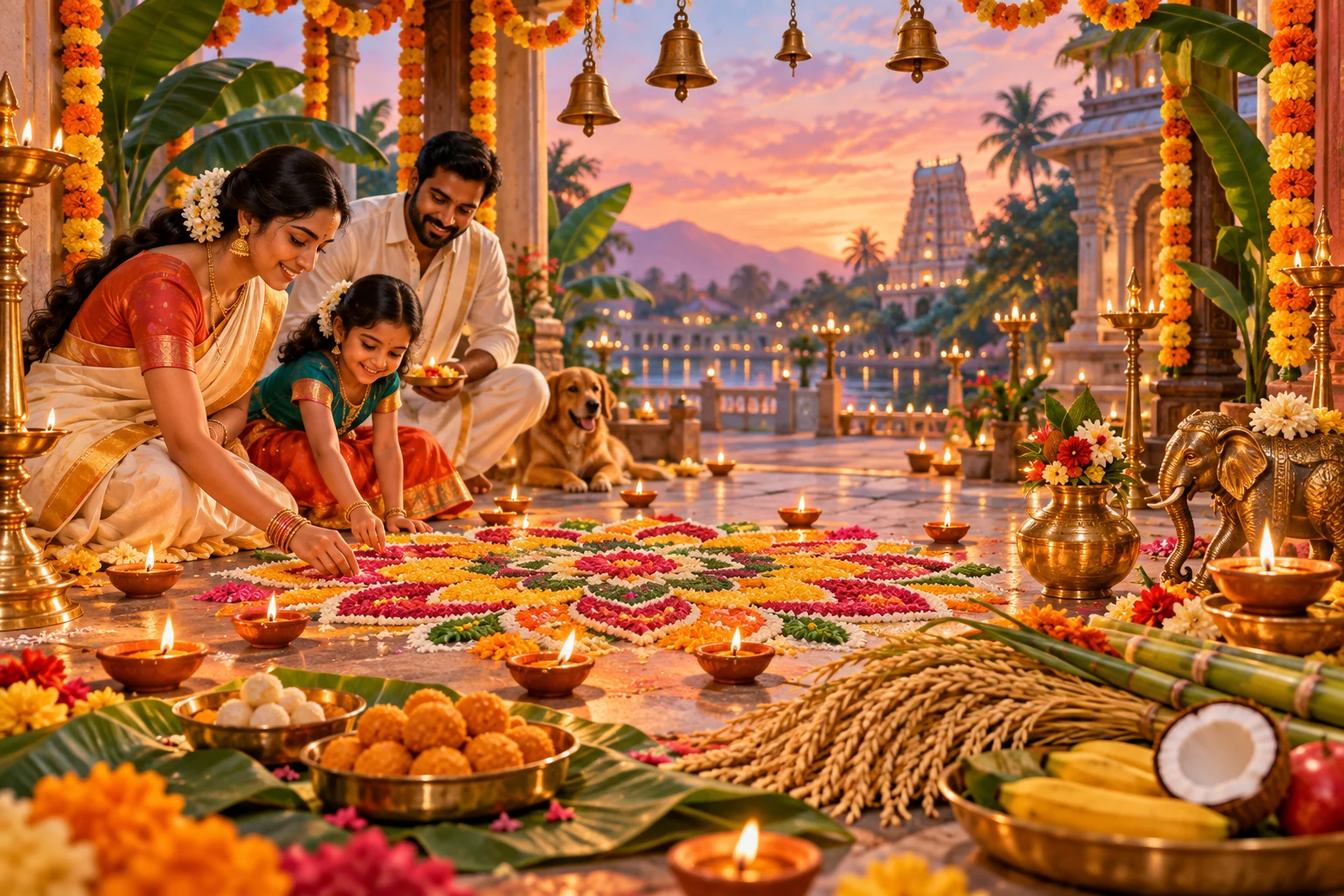
Radha Ashtami celebrates the appearance of Radha, Krishna’s most beloved devotee and companion, whose love is held up in Vaishnava tradition as the highest expression of devotion. It falls a fortnight after Janmashtami, Krishna’s own birth celebration, reflecting the way the two are understood as inseparable in devotional teaching.
When it falls
Radha Ashtami is observed on the eighth day (Ashtami) of the bright fortnight of the lunar month of Bhadrapada, typically in September. As with all lunar-calendar festivals, the exact Gregorian date shifts each year — check a current panchang for the precise date.
Why Radha holds such a central place
In Vaishnava devotional tradition, particularly Gaudiya Vaishnavism, Radha’s devotion to Krishna is read not as ordinary romantic love but as a model of complete, selfless orientation toward the divine. She’s approached as inseparable from Krishna — many traditions address prayers to “Radha-Krishna” together rather than to Krishna alone, reflecting the belief that approaching Krishna through Radha’s devotion is itself a spiritual practice. See the Radha Chalisa for more on how this devotion is expressed in hymn form.
How it’s celebrated
Temples and households observe Radha Ashtami with special decoration of Radha-Krishna images, often placing the deity in a cradle or swing for darshan around midday, considered her time of appearance. Many devotees fast until midday, followed by prayer, kirtan (devotional singing), and a festive meal. Vrindavan and Barsana — towns closely associated with Radha in tradition — see especially elaborate celebrations.
Common questions
When is Radha Ashtami celebrated?
On the eighth day of the bright fortnight of Bhadrapada, typically in September — check a current panchang for the exact date.
How is Radha Ashtami related to Janmashtami?
It falls a fortnight after Janmashtami, Krishna’s birth celebration, reflecting the belief that Radha and Krishna’s devotion cannot be separated. See Janmashtami: Story and Significance for the earlier festival.
Why is Radha considered central to Krishna devotion?
Her love is understood in Vaishnava tradition as a model of complete, selfless devotion — an ideal devotees aspire to rather than simply a companion figure in Krishna’s story.
Where can I read more about Radha and Krishna’s relationship?
See Radha and Krishna: Love and Devotion for a fuller explanation of the themes involved.