
🔱 Hindu Festivals
What Is Durga Puja? Story, Significance, 2026 Dates and the Five Days
Last updated: October 10, 2026
Durga Puja is the autumn festival honouring Goddess Durga's victory over the buffalo demon Mahishasura, celebrated above all in Bengal with pandals, clay idols and immersion. In 2026 it runs from about 17 to 21 October.
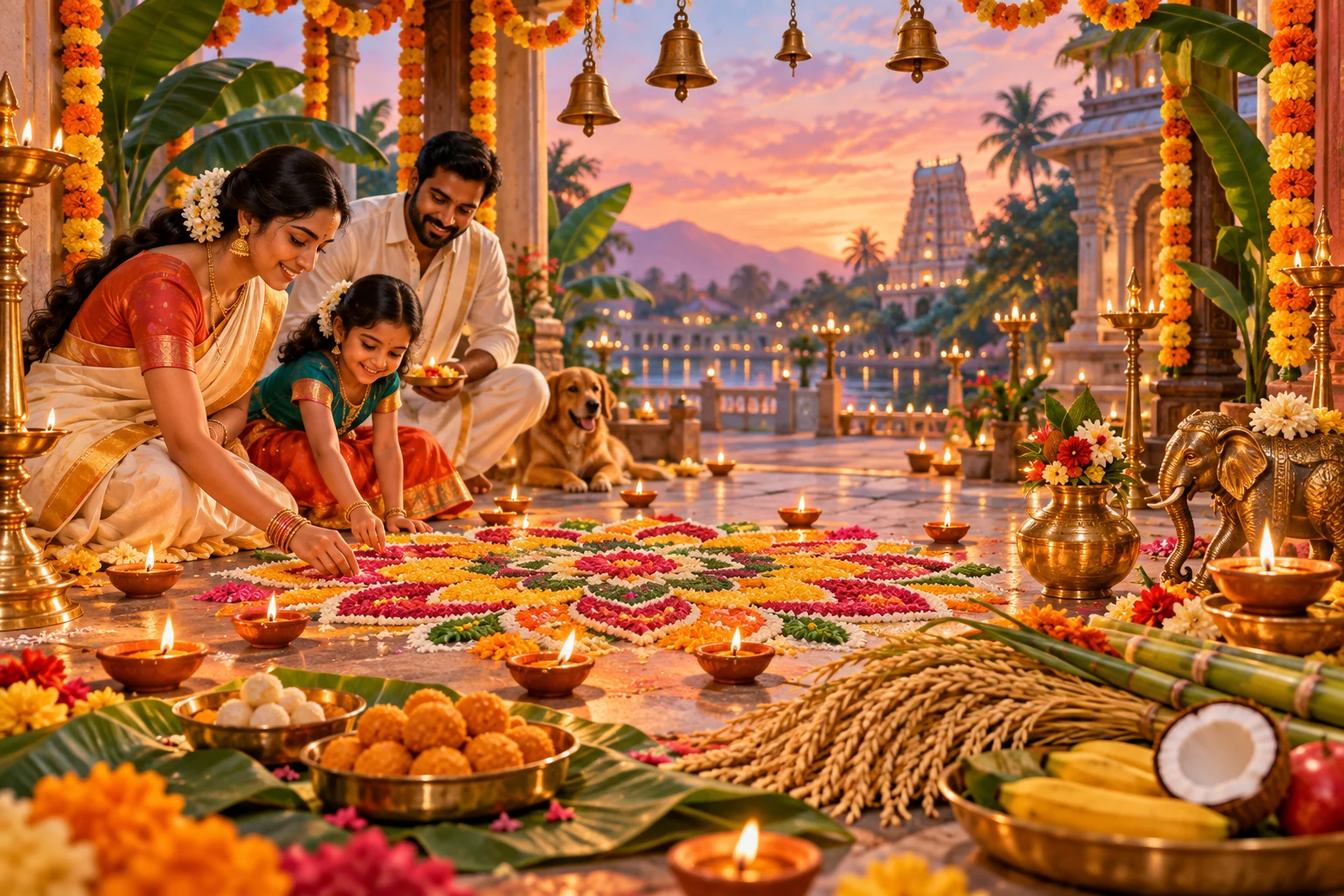
Durga Puja is a Hindu festival honouring Goddess Durga and her victory over the buffalo demon Mahishasura. It is the largest festival of Bengal and Bengali communities worldwide, celebrated over five main days — Shashthi to Bijoya Dashami — with artistic pandals, clay idols, worship, food and a final immersion. In 2026, Durga Puja runs from about 17 to 21 October.
Durga Puja falls during the same lunar period as Navratri but is celebrated with its own distinct rituals, art, and community character — elaborate pandals (temporary temple structures), artistically sculpted clay idols, and days of community gathering culminating in a public immersion procession.
When is Durga Puja 2026?
Durga Puja is timed to the bright (waxing) fortnight of the lunar month of Ashwin, typically landing in September or October. For 2026, Kolkata panjika listings give:
| Date | Day | Observance |
|---|---|---|
| Saturday, 10 October | Mahalaya | End of Pitri Paksha and start of Devi Paksha; invocation of the Goddess |
| Saturday, 17 October | Maha Shashthi | Bodhon — welcoming and unveiling the Goddess |
| Sunday, 18 October | Maha Saptami | Kola Bou (Navapatrika) bath and installation |
| Monday, 19 October | Maha Ashtami | Pushpanjali, Kumari Puja and Sandhi Puja |
| Tuesday, 20 October | Maha Navami | Concluding worship, bhog and homa |
| Wednesday, 21 October | Bijoya Dashami | Sindoor khela, immersion and Bijoya greetings |
Some calendars place Shashthi on 16 October, and all-India calendars mark Dussehra/Vijayadashami on 20 October, with Durga Ashtami observed on 19 October (see the Hindu festival calendar 2026). Tithi timings differ by place, so confirm Sandhi Puja and pushpanjali times with a local panjika or your puja committee.
The story behind Durga Puja
The festival recalls the battle between Durga and Mahishasura, a demon who had won a boon that no man or god could defeat him. When he overran the heavens, the combined energies of the gods took shape as Durga, armed with their weapons and riding a lion. After a long battle she slew Mahishasura on the tenth day, which is why she is worshipped as Mahishasura Mardini. Read more in the stories of Goddess Durga.
Bengal also tells a gentler story: Durga, as Uma, returns each autumn from Kailash to her parents’ home with her children Ganesha, Kartikeya, Lakshmi and Saraswati, and Bijoya Dashami is her tearful farewell. Another tradition holds that Rama performed an out-of-season worship of Durga (akal bodhon) before his battle with Ravana — the reason the autumn puja is held at this time.
The five main days
Shashthi — the sixth day, marking the ceremonial welcome (bodhon) of the Goddess into the pandal, when her presence is formally invoked into the clay idol.
Saptami, Ashtami, and Navami — the seventh, eighth, and ninth days, the heart of the festival, filled with elaborate daily rituals, offerings, and — in many traditions — Sandhi Puja, a precise 48-minute window bridging Ashtami and Navami considered especially significant, commemorating the moment Durga is said to have slain the demon Mahishasura.
Dashami (Bijoya Dashami) — the tenth day, marking the Goddess’s symbolic return to her celestial abode. The day is observed with sindoor khela (married women applying vermilion to the idol and each other) followed by a public procession to immerse the idol in a river or other water body, and closes with greetings and well-wishes exchanged among family and community — a note of both farewell and festivity.
A short note on Durga Puja
Durga Puja is the autumn worship of Goddess Durga, celebrated with great devotion in Bengal and across India. Families and neighbourhoods build pandals, install clay idols of Durga slaying Mahishasura, and worship her for five days from Shashthi to Dashami. People wear new clothes, visit pandals, offer pushpanjali, share bhog and enjoy music and cultural programmes. On Bijoya Dashami the idol is immersed and people exchange greetings. The festival teaches that courage and righteousness overcome arrogance and evil, and in 2021 UNESCO inscribed Durga Puja in Kolkata on its list of the intangible cultural heritage of humanity.
How it differs from Navratri elsewhere
While Navratri is observed across India with fasting and, in many regions, nightly garba and dandiya dance, Durga Puja in Bengal centers on community pandals, artistic idol craftsmanship (Durga Puja in Kolkata is UNESCO-recognized as intangible cultural heritage), and a strong public, festive character rather than a primarily domestic or fasting-focused observance. Both mark the same underlying story — Durga’s victory over Mahishasura — through very different regional expressions. The nine forms of Durga and the Navratri puja guide for beginners cover the nine-night observance.
Prayers for Durga Puja
At home or in the pandal, devotees may recite the Durga Beej Mantra, the Durga Chalisa, or passages from the Durga Saptashati. The powerful Durga mantras guide explains several more.
After Durga Puja
Bijoya Dashami coincides with Dussehra, and the festival season then moves toward Dhanteras on 6 November and Diwali on 8 November 2026. In Bengal, the Diwali new moon is also observed as Kali Puja.
Frequently Asked Questions
What is Durga Puja?
Durga Puja is a Hindu festival honouring Goddess Durga and her victory over the buffalo demon Mahishasura. Celebrated above all in West Bengal, Assam, Odisha, Tripura and Bangladesh, it lasts five main days, from Shashthi to Bijoya Dashami, with pandals, clay idols, community worship and a final immersion.
When is Durga Puja in 2026?
In 2026, Durga Puja runs from Maha Shashthi on Saturday 17 October to Bijoya Dashami on Wednesday 21 October in Kolkata panjika listings, with Maha Ashtami on Monday 19 October. Mahalaya is on 10 October. Some calendars place Shashthi on 16 October, and all-India calendars mark Dussehra on 20 October.
Why is Durga Puja celebrated?
It celebrates Durga's defeat of Mahishasura and the triumph of good over evil. In Bengal it is also understood as the Goddess's annual homecoming to her parents' house with her children Ganesha, Kartikeya, Lakshmi and Saraswati.
What is Sandhi Puja?
A 48-minute ritual window bridging Ashtami and Navami, commemorating the moment Durga is said to have slain Mahishasura in her fierce form as Chamunda. It is considered one of the most significant moments of the festival.
Is Durga Puja the same as Navratri?
They fall during the same lunar period and honour the same story, but are celebrated differently by region. Navratri across much of India focuses on nine nights of fasting and worship of the nine forms of Durga; Durga Puja focuses on the last five days with pandals and idols.
What happens on Bijoya Dashami?
Married women play sindoor khela, the idol is ceremonially immersed in a river or water body, marking the Goddess's return to Kailash, and families exchange Bijoya greetings and sweets.