
👁️ Practice Guides
Shambhavi Mudra: Meaning, How It's Practiced, and Precautions
Shambhavi Mudra is a more advanced technique than most hasta mudras, involving the eyes rather than the hands. Here's what it is and why it needs more caution.
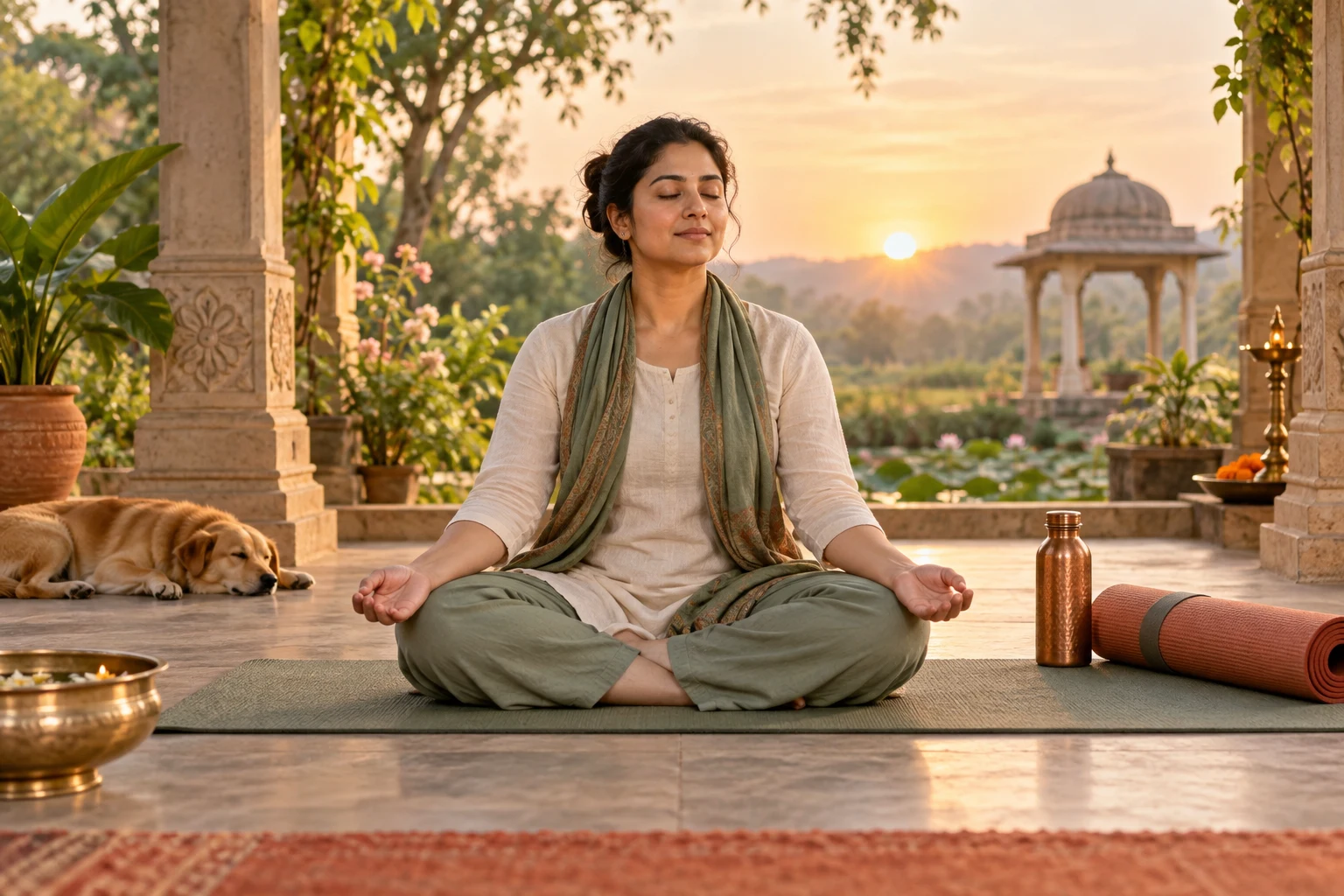
Shambhavi Mudra is a classical meditation technique described in traditional Hatha Yoga texts, distinct from the hasta (hand) mudras covered in What Are Mudras? — this one involves the eyes rather than the hands, and is generally considered a more advanced practice.
What it involves
Shambhavi Mudra centers on gently fixing the gaze at the point between the eyebrows (the space sometimes called the third eye or ajna chakra point) while keeping the eyes open, or nearly closed, without straining. It’s traditionally practiced seated, often alongside breath awareness or a mantra, and is described as a technique for drawing outward attention inward toward a single, steady point of focus.
Why it’s approached more cautiously than hand mudras
Unlike hasta mudras, which involve no strain and can be self-taught safely from a description, Shambhavi Mudra involves sustained, focused eye positioning that can cause eye strain, headache, or dizziness if practiced incorrectly or for too long, especially by beginners. It’s traditionally taught progressively, starting with very short durations, and is generally recommended to be learned directly from an experienced teacher rather than attempted purely from written instructions.
Traditional significance
The name comes from Shambhu, a name for Shiva, and the technique appears in classical Hatha Yoga literature as part of a broader set of advanced practices intended to deepen concentration and meditative absorption, positioned beyond introductory practice.
Common questions
What does “Shambhavi Mudra” mean?
Named after Shambhu, an epithet of Shiva; the practice involves a fixed, inward-focused gaze used as a meditation technique.
Is Shambhavi Mudra safe to learn on my own?
It’s generally recommended to learn this technique from an experienced teacher, given the risk of eye strain or discomfort if practiced incorrectly or for too long, especially for beginners.
How is Shambhavi Mudra different from hasta mudras like Gyan Mudra?
Hasta mudras like Gyan Mudra involve hand positions and carry no strain risk; Shambhavi Mudra involves sustained eye focus and is considered a more advanced technique requiring more caution.
Who traditionally practices Shambhavi Mudra?
It’s generally introduced to practitioners with some meditation experience already, as part of a progressive practice, rather than being a typical starting technique for complete beginners.