
Lakshmi · Chalisa · Written by Ramadasa
Lakshmi Chalisa
Edited by Anurag Goel
Lakshmi Chalisa full lyrics in Hindi with English transliteration and meaning — all forty verses, how to recite this hymn to Goddess Lakshmi, and when it is traditionally read.
Significance
The Lakshmi Chalisa is one of the most widely recited Hindi hymns to Lakshmi, used in daily household worship, on Fridays (traditionally associated with the goddess), and throughout Diwali and the Kartik season. Its language is direct and memorable, which is part of why families return to it alongside the Om Jai Lakshmi Mata aarti and a short Lakshmi mantra.
How to Perform
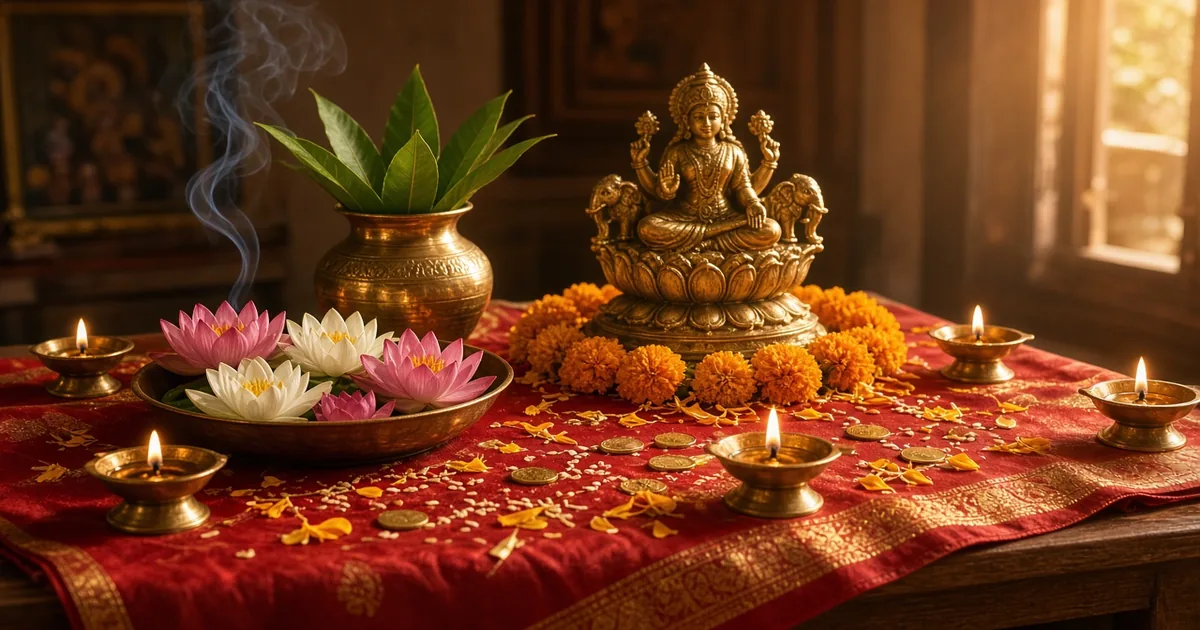
Recite after bathing, facing an image or murti of Lakshmi, with a lit diya. Fridays and the days of Lakshmi Puja at Diwali are the most common special occasions; many households also read the hymn through Kartik. The recitation is often closed with the Om Jai Lakshmi Mata aarti, and simple offerings of flowers, incense, a lamp and a little naivedya. Recitation is a spiritual practice, not a substitute for medical, legal or practical help.
The Lakshmi Chalisa (also searched as Laxmi Chalisa, and in some booklets as Maha Lakshmi Chalisa) is a forty-verse Hindi devotional hymn to Goddess Lakshmi. This page gives the widely recited text in Devanagari, a readable transliteration of the opening and closing couplets, and an original English meaning of each verse, written from the Hindi rather than copied from another translation. A shorter companion on themes and practice, without the full lyrics, is the Lakshmi Chalisa meaning guide.
Opening Doha
मातु लक्ष्मी करि कृपा करो हृदय में वास। मनो कामना सिद्ध कर पुरवहु मेरी आस॥
Transliteration: Matu Lakshmi Kari Kripa Karo Hriday Men Vas. Mano Kamana Siddh Kar Puravahu Meri Aas.
Meaning: Mother Lakshmi, be gracious and dwell in my heart. Fulfil the wish of my mind; grant what I hope for.
सिंधु सुता विष्णुप्रिये नत शिर बारंबार। ऋद्धि सिद्धि मंगलप्रदे नत शिर बारंबार॥
Transliteration: Sindhu Suta Vishnupriye Nat Shir Barambar. Riddhi Siddhi Mangalprade Nat Shir Barambar.
Meaning: Daughter of the ocean, beloved of Vishnu — I bow my head again and again. Giver of riddhi and siddhi (prosperity and spiritual accomplishment) and of what is auspicious — I bow my head again and again.
Some printed booklets add this sortha after the first doha, in place of (or, in a few collections, alongside) the second couplet:
यही मोर अरदास, हाथ जोड़ विनती करुँ। सब विधि करौ सुवास, जय जननि जगदंबिका॥
Transliteration: Yahi Mor Ardas, Hath Jod Vinati Karun. Sab Vidhi Karau Suvas, Jaya Janani Jagadambika.
Meaning: This is my petition; I fold my hands and make this request. In every way make this dwelling blessed. Victory to the Mother, Jagadambika.
Chaupai (Forty Verses)
सिन्धु सुता मैं सुमिरौं तोही। ज्ञान बुद्धि विद्या दो मोहि॥ तुम समान नहिं कोई उपकारी। सब विधि पुरबहु आस हमारी॥
जै जै जगत जननि जगदम्बा। सबके तुमही हो स्वलम्बा॥ तुम ही हो घट घट के वासी। विनती यही हमारी खासी॥
जग जननी जय सिन्धु कुमारी। दीनन की तुम हो हितकारी॥ विनवौं नित्य तुमहिं महारानी। कृपा करौ जग जननि भवानी॥
केहि विधि स्तुति करौं तिहारी। सुधि लीजै अपराध बिसारी॥ कृपा दृष्टि चितवो मम ओरी। जगत जननि विनती सुन मोरी॥
ज्ञान बुद्धि जय सुख की दाता। संकट हरो हमारी माता॥ क्षीर सिंधु जब विष्णु मथायो। चौदह रत्न सिंधु में पायो॥
चौदह रत्न में तुम सुखरासी। सेवा कियो प्रभुहिं बनि दासी॥ जब जब जन्म जहां प्रभु लीन्हा। रूप बदल तहं सेवा कीन्हा॥
स्वयं विष्णु जब नर तनु धारा। लीन्हेउ अवधपुरी अवतारा॥ तब तुम प्रकट जनकपुर माहीं। सेवा कियो हृदय पुलकाहीं॥
अपनायो तोहि अन्तर्यामी। विश्व विदित त्रिभुवन की स्वामी॥ तुम सम प्रबल शक्ति नहिं आनी। कहँ तक महिमा कहौं बखानी॥
मन क्रम वचन करै सेवकाई। मन इच्छित वांछित फल पाई॥ तजि छल कपट और चतुराई। पूजहिं विविध भाँति मन लाई॥
और हाल मैं कहौं बुझाई। जो यह पाठ करे मन लाई॥ ताको कोई कष्ट न होई। मन इच्छित पावै फल सोई॥
त्राहि त्राहि जय दुःख निवारिणी। त्रिविध ताप भव बंधन हारिणी॥ जो यह चालीसा पढ़े और पढ़ावे। इसे ध्यान लगाकर सुने सुनावै॥
ताको कोई न रोग सतावै। पुत्र आदि धन सम्पत्ति पावै॥ पुत्र हीन और सम्पत्ति हीना। अन्धा बधिर कोढ़ी अति दीना॥
विप्र बोलाय कै पाठ करावै। शंका दिल में कभी न लावै॥ पाठ करावै दिन चालीसा। ता पर कृपा करैं गौरीसा॥
सुख सम्पत्ति बहुत सी पावै। कमी नहीं काहू की आवै॥ बारह मास करै जो पूजा। तेहि सम धन्य और नहिं दूजा॥
प्रतिदिन पाठ करै मन माहीं। उन सम कोई जग में नाहिं॥ बहु विधि क्या मैं करौं बड़ाई। लेय परीक्षा ध्यान लगाई॥
करि विश्वास करैं व्रत नेमा। होय सिद्ध उपजै उर प्रेमा॥ जय जय जय लक्ष्मी महारानी। सब में व्यापित जो गुण खानी॥
तुम्हरो तेज प्रबल जग माहीं। तुम सम कोउ दयाल कहूँ नाहीं॥ मोहि अनाथ की सुधि अब लीजै। संकट काटि भक्ति मोहि दीजे॥
भूल चूक करी क्षमा हमारी। दर्शन दीजै दशा निहारी॥ बिन दरशन व्याकुल अधिकारी। तुमहिं अक्षत दुःख सहते भारी॥
नहिं मोहिं ज्ञान बुद्धि है तन में। सब जानत हो अपने मन में॥ रूप चतुर्भुज करके धारण। कष्ट मोर अब करहु निवारण॥
कहि प्रकार मैं करौं बड़ाई। ज्ञान बुद्धि मोहिं नहिं अधिकाई॥ रामदास अब कहै पुकारी। करो दूर तुम विपति हमारी॥
Closing doha
त्राहि त्राहि दुःख हारिणी हरो बेगि सब त्रास। जयति जयति जय लक्ष्मी करो शत्रुन का नाश॥
Transliteration: Trahi Trahi Dukh Harini Haro Begi Sab Tras. Jayati Jayati Jaya Lakshmi Karo Shatrun Ka Nash.
Meaning: Save us, save us, O remover of sorrow; quickly take away all our fear. Victory, victory, victory to Lakshmi; destroy those who stand against us.
रामदास धरि ध्यान नित विनय करत कर जोर। मातु लक्ष्मी दास पर करहु दया की कोर॥
Transliteration: Ramadas Dhari Dhyan Nit Vinay Karat Kar Jor. Matu Lakshmi Das Par Karahu Daya Ki Kor.
Meaning: Ramadasa, holding meditation daily, makes this request with folded hands. Mother Lakshmi, turn a corner of your compassion upon this servant.
English meaning, verse by verse
- Ocean’s daughter, I remember you; grant me knowledge, understanding and learning. There is no benefactor like you; in every way fulfil our hope.
- Victory, victory to the world’s mother, Jagadamba; you alone are the support of all. You dwell in every heart; this is our special prayer.
- Mother of the world, victory to the ocean’s daughter; you are the one who does good to the humble. Daily I petition you, O great queen; be gracious, Mother of the world, Bhavani.
- In what way shall I praise you? Take notice of me, forgetting my faults. Cast a gracious glance toward me; Mother of the world, hear my prayer.
- You are the giver of knowledge, understanding and joy; Mother, take our distress away. When Vishnu churned the ocean of milk, fourteen jewels were found in that ocean.
- Among those fourteen jewels you are the one who is a treasury of joy; you served the Lord, becoming his attendant. Whenever and wherever the Lord took birth, you changed your form and served him there.
- When Vishnu himself took a human body and descended as the avatara of Avadhupuri (Ayodhya), then you appeared in Janakpur and served him with a heart overflowing.
- The inner witness (antaryami) accepted you; he is known through the world as the lord of the three worlds. No power equal to yours has appeared; how far can I go in telling your glory?
- Those who serve you in thought, deed and word receive the fruit they wish for. Giving up deceit, fraud and cleverness, they worship you in many ways with a devoted mind.
- And now I will tell this plainly: whoever recites this hymn with a devoted mind — no distress comes to them; they receive the fruit their mind desires.
- “Save us, save us” — victory to the one who removes sorrow, who loosens the three kinds of affliction and the bond of worldly existence. Whoever reads this Chalisa and has it read, and with attention hears it or has it heard —
- no illness torments them, and they receive a child, wealth and prosperity, the hymn says. One who is without a child and without wealth, or who is blind, deaf, afflicted, or very wretched, if they have a learned priest called and the recitation performed, and do not let doubt enter the heart —
- and if they have the recitation performed for forty days, Gauri’s lord (Shiva) shows them kindness. They receive much joy and prosperity; lack of anything does not come to them, the hymn says.
- Whoever worships through the twelve months — no one else is as blessed as they. Whoever recites it daily in the mind — there is no one like them in the world, the hymn says.
- In how many ways shall I praise you? Put it to the test, with attention. Those who keep a vow and regular observance with faith become accomplished, and love arises in the heart.
- Victory, victory, victory to Queen Lakshmi, the mine of virtues present in all. Your splendour is mighty in the world; there is no one as compassionate as you.
- Now take notice of me, who am without a protector; cut away my distress and give me devotion. Forgive our mistakes and lapses; look upon my condition and grant your darshan.
- Without your darshan this petitioner is restless; even in your presence I bear heavy sorrow. I have neither knowledge nor understanding in this body; you know everything in your own mind.
- Taking on your four-armed form, now remove my trouble. In what way shall I praise you? I do not have great knowledge or understanding.
- Ramadasa now calls out aloud: take this misfortune of ours far away.
These last verses, from the plain statement of the hymn’s fruit onward, are its phalashruti — a traditional statement of spiritual fruit — not a medical, financial or worldly guarantee.
Text and sources
The Hindi here follows the widely recited recension of the Lakshmi Chalisa attributed to Ramadasa, as given in the Sanskrit Documents edition (shrii laxmi chaaliisaa, file laxmi40, last updated 14 March 2005). It was cross-checked against pages 183–186 of 51 Chalisa Sangrah evam Aartiyan, published by Randhir Prakashan, Haridwar (first edition, 2000), and against the text printed by Bharatkosh (Bharat Discovery). The opening prayer to dwell in the heart, the remembrance of the ocean-churning and of Sita in Janakpur, the forty chaupais, and the author’s name in the last chaupai and the closing couplets are shared across these witnesses.
A few common printed variants are worth knowing. The Sanskrit Documents file opens with two dohas, the second beginning सिंधु सुता विष्णुप्रिये. The Randhir print, and many popular booklets, give a sortha (यही मोर अरदास) after the first doha instead; Bharatkosh prints both. The printed book reads अवलम्बा where the digital edition has स्वलम्बा, लक्ष्मी भवानी in the refrain of praise where the digital edition has लक्ष्मी महारानी, and तुम सम प्रबल शक्ति where the digital file has तुम सब. The सम reading is kept here because it is in the 2000 print and matches the later line तुम सम कोउ दयाल. In the phalashruti, printed copies generally read मन इच्छित पावै फल सोई, without the extra फल that appears in the digital file. The last chaupai, रामदास अब कहै पुकारी, is in the Sanskrit Documents and Bharatkosh texts; it is easy to miss in some booklet layouts, though the closing doha still names Ramadasa. Some booklets print the Om Jai Lakshmi Mata aarti immediately after the Chalisa; that aarti is a separate composition and is kept on its own page. The same Randhir collection also prints a different hymn titled Maha Lakshmi Chalisa, beginning Namo Maha Lakshmi Jaya Mata; that text is not mixed into this page.
The English meanings on this page are original to VedicVani, written from the Hindi, and are not taken from any published translation of the hymn.
How to recite the Lakshmi Chalisa
Choose a quiet time when you can read without rushing. Sit facing a simple image or murti of Lakshmi if you have one, light a diya, and read the forty verses slowly enough that the sound can settle. Beginners often keep the Hindi, a transliteration and the English meaning side by side for a few weeks, then return to the Devanagari as pronunciation grows steadier. Many households recite the hymn on Friday, Lakshmi’s traditional day, and at greater length at Lakshmi Puja during Diwali. The recitation is often closed with the Om Jai Lakshmi Mata aarti. The Lakshmi Beej Mantra and the Kuber Mantra are natural companions. In 2026, Friday, 20 November is also Dev Uthani Ekadashi, when Vishnu is welcomed from his Chaturmas rest, and Tulsi Vivah follows on Saturday, 21 November — both fitting days in Kartik to read a hymn to Lakshmi. For how a chalisa sits beside an aarti or a mantra, see aarti, chalisa and mantra explained.
Meaning and traditional benefits
Devotees turn to the Lakshmi Chalisa for a complete, memorable praise of the goddess as the daughter of the ocean, the partner of Vishnu, and the one who dwells in the heart and the home. The hymn’s own language speaks of the removal of distress, the granting of devotion and darshan, and — in the phalashruti — household prosperity and a forty-day recitation. Those statements belong to the devotional tradition of the poem; they are not a substitute for care, medicine, livelihood or practical judgement.
Overall Meaning
The Lakshmi Chalisa is a forty-verse Hindi hymn in praise of Goddess Lakshmi. It opens by asking the Mother to dwell in the devotee's heart, then remembers her as the daughter of the ocean of milk, the beloved of Vishnu, and the companion who served him in each descent — including her appearance in Janakpur when Vishnu took birth in Avadhupuri (Ayodhya). The later verses are a devotee's prayer for grace, darshan and devotion, and a phalashruti describing the fruits of regular recitation, especially a forty-day path and Friday or Diwali worship. The hymn is traditionally attributed to Ramadasa, whose name appears in the last chaupai and the closing couplets.
Frequently Asked Questions
What is the meaning of Lakshmi Chalisa?
The Lakshmi Chalisa is a forty-verse Hindi hymn in praise of Goddess Lakshmi. It opens by asking the Mother to dwell in the devotee's heart, then remembers her as the daughter of the ocean of milk, the beloved of Vishnu, and the companion who served him in each descent — including her appearance in Janakpur when Vishnu took birth in Avadhupuri (Ayodhya). The later verses are a devotee's prayer for grace, darshan and devotion, and a phalashruti describing the fruits of regular recitation, especially a forty-day path and Friday or Diwali worship. The hymn is traditionally attributed to Ramadasa, whose name appears in the last chaupai and the closing couplets.
Why is Lakshmi Chalisa significant?
The Lakshmi Chalisa is one of the most widely recited Hindi hymns to Lakshmi, used in daily household worship, on Fridays (traditionally associated with the goddess), and throughout Diwali and the Kartik season. Its language is direct and memorable, which is part of why families return to it alongside the Om Jai Lakshmi Mata aarti and a short Lakshmi mantra.
Who wrote the Lakshmi Chalisa?
The Lakshmi Chalisa was composed by Ramadasa.
Is the Lakshmi Chalisa the same as Om Jai Lakshmi Mata?
No. The Lakshmi Chalisa is a forty-verse hymn. Om Jai Lakshmi Mata is a shorter aarti sung at the close of Lakshmi worship. Some printed booklets place the aarti after the Chalisa, but they are distinct compositions.
Is the Lakshmi Chalisa the same as the Maha Lakshmi Chalisa?
Some booklets use both names for this Ramadasa hymn. Others print a different hymn under the title Maha Lakshmi Chalisa, opening with Namo Maha Lakshmi Jaya Mata. This page is the widely recited forty-chaupai text that names Ramadasa in the last verse and the closing couplets.
When should the Lakshmi Chalisa be recited?
Daily by many devotees, especially on Fridays, and throughout Diwali. In 2026, Friday 20 November is also Dev Uthani Ekadashi, and Tulsi Vivah follows on Saturday 21 November — both natural times in Kartik for Vishnu-Lakshmi worship.