
Bhagavad Gita · Chapter 1
Arjuna Vishada Yoga — The Yoga of Arjuna's Dejection
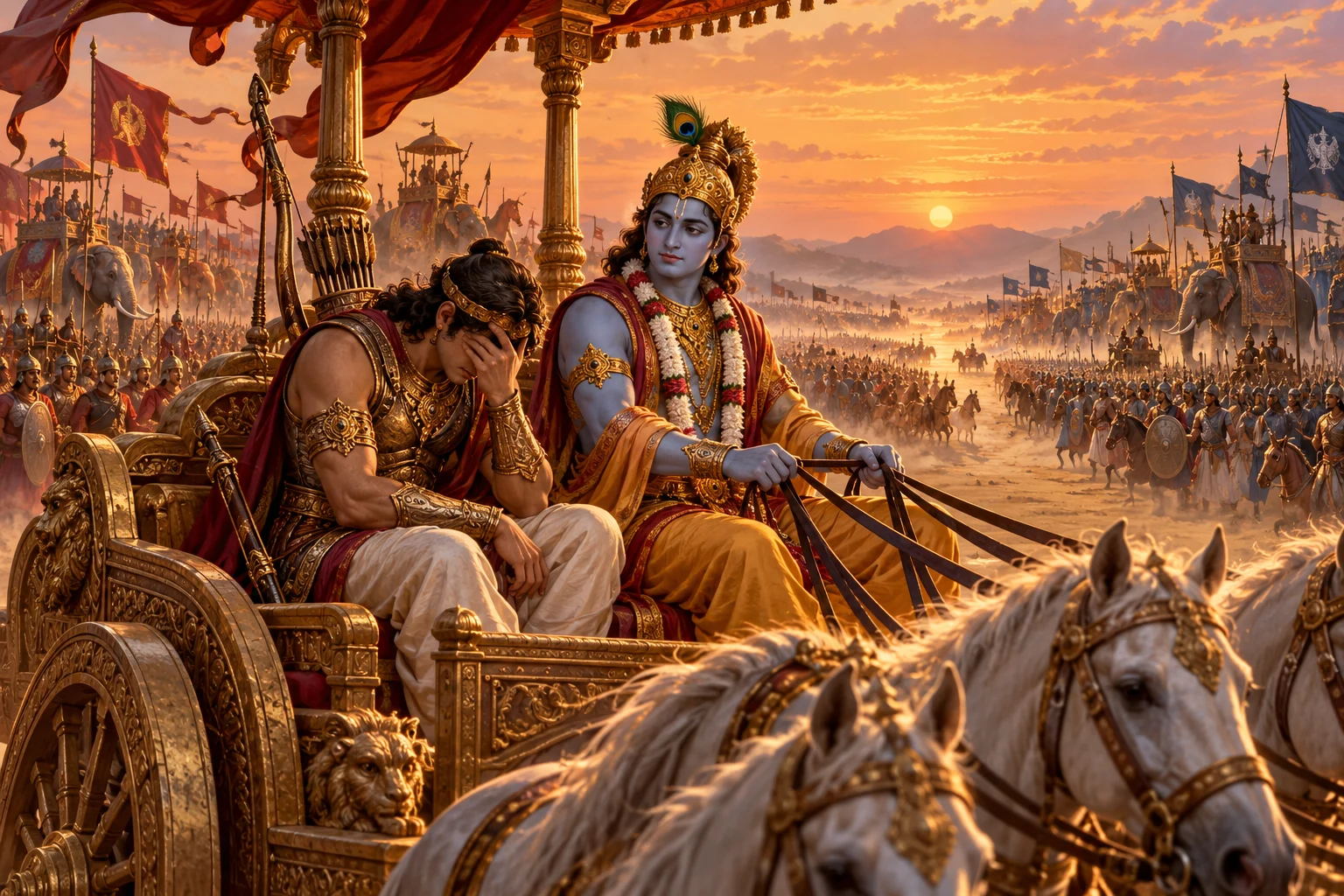
Chapter 1 of the Bhagavad Gita, Arjuna Vishada Yoga — The Yoga of Arjuna's Dejection, is part of Krishna's dialogue with Arjuna on the battlefield of Kurukshetra. Each shloka below includes the original Sanskrit verse, a transliteration, Hindi and English meaning, a clear explanation of the philosophy behind it, and the practical life lesson it offers — so you can read a single verse in depth or follow this chapter's complete argument verse by verse. See thefull chapter list to move between all 18 chapters.
How to study Chapter 1
Read the verses in sequence first, then return to the shlokas that speak most directly to your question. Notice the movement between Arjuna's concerns and Krishna's response: the Gita develops its teaching through dialogue, examples, discipline, and repeated clarification. Sanskrit preserves the sound of the original text, transliteration helps with pronunciation, and the meanings provide an accessible doorway for daily reflection.
A useful practice is to choose one verse for a week. Write its central idea in your own words, observe where attachment or fear appears in your day, and revisit the verse before making a difficult choice. This chapter is part of the larger 18-chapter Bhagavad Gita, so compare its theme with the chapters before and after it rather than reading any single line as an isolated slogan.
धृतराष्ट्र उवाच।
Dhritarashtra said: O Sanjaya, assembled on the field of dharma, the field of Kuru, eager to fight, what did my sons and the sons of Pandu do?
1.2सञ्जय उवाच | दृष्ट्वा तु पाण्डवानीकं व्यूढं दुर्योधनस्तदा | आचार्यमुपसंगम्य राजा वचनमब्रवीत्
1.2. Sanjaya said Having seen the army of the Pandavas drawn up in battle-array, King Duryodhana then approached his teacher (Drona) and spoke these words.
1.3पश्यैतां पाण्डुपुत्राणामाचार्य महतीं चमूम् | व्यूढां द्रुपदपुत्रेण तव शिष्येण धीमता
1.3. "Behold, O Teacher! this mighty army of the sons of Pandu, arrayed by the son of Drupada, thy wise disciple.
1.4अत्र शूरा महेष्वासा भीमार्जुनसमा युधि | युयुधानो विराटश्च द्रुपदश्च महारथः
1.4. Here are heroes, mighty archers, eal in battle to Bhima and Arjuna, Yoyudhana (Satyaki), Virata and Drupada, of the great car (mighty warriors).
1.5धृष्टकेतुश्चेकितानः काशिराजश्च वीर्यवान् | पुरुजित्कुन्तिभोजश्च शैब्यश्च नरपुंगवः
1.5. "Dhrishtaketu, chekitana and the valiant king of Kasi, Purujit and Kuntibhoja and Saibya, the best men.
1.6युधामन्युश्च विक्रान्त उत्तमौजाश्च वीर्यवान् | सौभद्रो द्रौपदेयाश्च सर्व एव महारथाः
1.6. "The strong Yodhamanyu and the brave Uttamaujas, the son of Subhadra (Abhimanyu, the son of Subhadra and Arjuna), and the sons of Draupadi, all of great chariots (great heroes).
1.7अस्माकं तु विशिष्टा ये तान्निबोध द्विजोत्तम | नायका मम सैन्यस्य संज्ञार्थं तान्ब्रवीमि ते
1.7. "Know also, O best among the twice-born! the names of those who are the most distinguished amongst ourselves, the leaders of my army; these I name to thee for thy information.
1.8भवान्भीष्मश्च कर्णश्च कृपश्च समितिञ्जयः | अश्वत्थामा विकर्णश्च सौमदत्तिस्तथैव च
1.8. "Thyself and Bhishma, and Karna and also Kripa, the victorious in war, Asvatthama, Vikarna, and also Bhurisrava, the son of Somadatta.
1.9अन्ये च बहवः शूरा मदर्थे त्यक्तजीविताः | नानाशस्त्रप्रहरणाः सर्वे युद्धविशारदाः
1.9. "And also many other heroes who are ready to give up their lives for my sake, armed with various weapons and missiles, all well-skilled in battle.
1.10अपर्याप्तं तदस्माकं बलं भीष्माभिरक्षितम् | पर्याप्तं त्विदमेतेषां बलं भीमाभिरक्षितम्
1.10. "This army of ours marshalled by Bhishma is insufficient, whereas that army of theirs marshelled by Bhima is sufficient.
1.11अयनेषु च सर्वेषु यथाभागमवस्थिताः | भीष्ममेवाभिरक्षन्तु भवन्तः सर्व एव हि
1.11. "Therefore do ye all, stationed in your respective positions, in the several divisions of the army, protect Bhishma alone."
1.12तस्य सञ्जनयन्हर्षं कुरुवृद्धः पितामहः | सिंहनादं विनद्योच्चैः शङ्खं दध्मौ प्रतापवान्
1.12. His glorious grandsire (Bhishma), the oldest of the Kauravas, in order to cheer Duryodhana, now roared like a lion, and blew his conch.
1.13ततः शङ्खाश्च भेर्यश्च पणवानकगोमुखाः | सहसैवाभ्यहन्यन्त स शब्दस्तुमुलोऽभवत्
1.13. Then (following Bhishma), conches and kettledrums, tabors, drums and cow horns blared forth ite suddenly (from the Kaurava side) and the sound was tremendous.
1.14ततः श्वेतैर्हयैर्युक्ते महति स्यन्दने स्थितौ | माधवः पाण्डवश्चैव दिव्यौ शङ्खौ प्रदध्मतुः
1.14. Then, also, Madhava (Krishna) and the son of Pandu (Arjuna), seated in the magnificent chariot, yoked with white horses, blew divine conches.
1.15पाञ्चजन्यं हृषीकेशो देवदत्तं धनञ्जयः | पौण्ड्रं दध्मौ महाशङ्खं भीमकर्मा वृकोदरः
1.15. Hrishikesha blew the Panchajanya and Arjuna blew the Devadatta and Bhima (the wolf-bellied), the doer of terrible deeds, blew the great conch Paundra.
1.16अनन्तविजयं राजा कुन्तीपुत्रो युधिष्ठिरः | नकुलः सहदेवश्च सुघोषमणिपुष्पकौ
1.16. The king Yodhishthira, the son of Kunti, blew the Anantavijaya; Nakula and Sahadeva blew the Sughosha and the Manipushpaka.
1.17काश्यश्च परमेष्वासः शिखण्डी च महारथः | धृष्टद्युम्नो विराटश्च सात्यकिश्चापराजितः
1.17. The king of Kasi, an exellent archer, Sikhandi, the mighty car-warrior, Dhrishtadyumna and Virata and Satyaki, the unconered.
1.18द्रुपदो द्रौपदेयाश्च सर्वशः पृथिवीपते | सौभद्रश्च महाबाहुः शङ्खान्दध्मुः पृथक्पृथक्
1.18. Drupada and the sons of Draupadi, O Lord of the earth, and the son of Subhadra, the mighty-armed, blew their conches separately.
1.19स घोषो धार्तराष्ट्राणां हृदयानि व्यदारयत् | नभश्च पृथिवीं चैव तुमुलोऽभ्यनुनादयन् (or लोव्यनु)
1.19. That tumultuous sound rent the hearts of (the members of) Dhritarashtra's party, making both the heaven and the earth resound.
1.20अथ व्यवस्थितान्दृष्ट्वा धार्तराष्ट्रान् कपिध्वजः | प्रवृत्ते शस्त्रसम्पाते धनुरुद्यम्य पाण्डवः | हृषीकेशं तदा वाक्यमिदमाह महीपते
1.20. Then, seeing the people of Dhritarashtra’s party standing arrayed and the discharge of weapons about to begin, Arjuna, the son of Pandu, whose ensign was a monkey, took up his bow and said the following to Krishna, O Lord of the earth.
1.21अर्जुन उवाच | सेनयोरुभयोर्मध्ये रथं स्थापय मेऽच्युत
1.21 Arjuna said In the middle between the two armies, place my chariot, O krishna, so that I may behold those who stand here desirous to fight, and know with whom I must fight, when the battle is about to commence.
1.22यावदेतान्निरीक्षेऽहं योद्धुकामानवस्थितान् | कैर्मया सह योद्धव्यमस्मिन् रणसमुद्यमे
1.22. Arjuna said In the middle between the two armies, place my chariot, O krishna, so that I may behold those who stand here desirous to fight, and know with whom I must fight, when the battle is about to commence.
1.23योत्स्यमानानवेक्षेऽहं य एतेऽत्र समागताः | धार्तराष्ट्रस्य दुर्बुद्धेर्युद्धे प्रियचिकीर्षवः
1.23. For I desire to observe those who are assembled here to fight, wishing to please in battle the evil-minded Duryodhana (the son of Dhritarashtra).
1.24सञ्जय उवाच | एवमुक्तो हृषीकेशो गुडाकेशेन भारत | सेनयोरुभयोर्मध्ये स्थापयित्वा रथोत्तमम्
1.24. Sanjaya said Thus addressed by Arjuna, Krishna, having stationed that best of chariots, O Dhritarashtra, in the midst of the two armies.
1.25भीष्मद्रोणप्रमुखतः सर्वेषां च महीक्षिताम् | उवाच पार्थ पश्यैतान्समवेतान्कुरूनिति
1.25. In front of Bhishma and Drona, and all the rulers of the earth, said: "O Arjuna (son of Pritha), behold these Kurus gathered together."
1.26तत्रापश्यत्स्थितान्पार्थः पितॄनथ पितामहान् | आचार्यान्मातुलान्भ्रातॄन्पुत्रान्पौत्रान्सखींस्तथा
1.26. Then, Arjuna (son of Pritha) saw there (in the armies) stationed, fathers and grandfathers, teachers, maternal uncles, brothers, sons, grandsons and friends too.
1.27श्वशुरान्सुहृदश्चैव सेनयोरुभयोरपि | तान्समीक्ष्य स कौन्तेयः सर्वान्बन्धूनवस्थितान्
1.27. (He saw) fathers-in-law and friends also in both the armies. The son of Kunti, Arjuna, seeing all those kinsmen thus standing arrayed, spoke this, sorrowfully filled with deep pity.
1.28कृपया परयाविष्टो विषीदन्निदमब्रवीत् | अर्जुन उवाच | दृष्ट्वेमं स्वजनं कृष्ण युयुत्सुं समुपस्थितम्
1.28. Arjuna said Seeing these, my kinsmen, O krishna, arrayed, eager to fight.
1.29सीदन्ति मम गात्राणि मुखं च परिशुष्यति | वेपथुश्च शरीरे मे रोमहर्षश्च जायते
1.29. My limbs fail and my mouth is parched, my body ivers and my hair stands on end.
1.30गाण्डीवं स्रंसते हस्तात्त्वक्चैव परिदह्यते | न च शक्नोम्यवस्थातुं भ्रमतीव च मे मनः
1.30. The (bow) Gandiva slips from my hand, and also my skins burns all over; I am unable even to stand and my mind is reeling, as it were.
1.31निमित्तानि च पश्यामि विपरीतानि केशव | न च श्रेयोऽनुपश्यामि हत्वा स्वजनमाहवे
1.31. And I see adverse omens, O Kesava. I do not see any good in killing my kinsmen in battle.
1.32न काङ्क्षे विजयं कृष्ण न च राज्यं सुखानि च | किं नो राज्येन गोविन्द किं भोगैर्जीवितेन वा
1.32. I desire not victory, O Krishna, nor kingdom, nor pleasures. Of what avail is dominion to us, O Krishna, or pleasures or even life?
1.33येषामर्थे काङ्क्षितं नो राज्यं भोगाः सुखानि च | त इमेऽवस्थिता युद्धे प्राणांस्त्यक्त्वा धनानि च
1.33. Those for whose sake we desire kingdom, enjoyments and pleasures, stand here in battle, having renounced life and wealth.
1.34आचार्याः पितरः पुत्रास्तथैव च पितामहाः | मातुलाः श्वशुराः पौत्राः श्यालाः सम्बन्धिनस्तथा
1.34. Teachers, fathers, sons and also grandfathers, maternal uncles, fathers-in-law, grandsons, brothers-in-law and other relatives,-
1.35एतान्न हन्तुमिच्छामि घ्नतोऽपि मधुसूदन | अपि त्रैलोक्यराज्यस्य हेतोः किं नु महीकृते
1.35. These I do not wish to kill, though they kill me, O Krishna, even for the sake of dominion over the three worlds; leave alone killing them for the sake of the earth.
1.36निहत्य धार्तराष्ट्रान्नः का प्रीतिः स्याज्जनार्दन | पापमेवाश्रयेदस्मान्हत्वैतानाततायिनः
1.36. By killing these sons of Dhritarashtra, what pleasure can be ours, O Janardana? Only sin will accrue to us from killing these felons.
1.37तस्मान्नार्हा वयं हन्तुं धार्तराष्ट्रान्स्वबान्धवान् | स्वजनं हि कथं हत्वा सुखिनः स्याम माधव
1.37. Therefore, we should not kill the sons of Dhritarashtra, our relatives; for how can we be happy by killing our own people, O Madhava (Krishna)?
1.38यद्यप्येते न पश्यन्ति लोभोपहतचेतसः | कुलक्षयकृतं दोषं मित्रद्रोहे च पातकम्
1.38. Though they, with intelligence overpowered by greed, see no evil in the destruction of families, and no sin in hostility to friends,
1.39कथं न ज्ञेयमस्माभिः पापादस्मान्निवर्तितुम् | कुलक्षयकृतं दोषं प्रपश्यद्भिर्जनार्दन
1.39. Why should not we who clearly see evil in the destruction of families, learn to turn away from this sin, O Janardana (Krishna)?
1.40कुलक्षये प्रणश्यन्ति कुलधर्माः सनातनाः | धर्मे नष्टे कुलं कृत्स्नमधर्मोऽभिभवत्युत
1.40. In the destruction of a family, the immemorial religious rites of that family perish; on the destruction of spirituality, impiety, indeed, overcomes the whole family.
1.41अधर्माभिभवात्कृष्ण प्रदुष्यन्ति कुलस्त्रियः | स्त्रीषु दुष्टासु वार्ष्णेय जायते वर्णसङ्करः
1.41. By the prevalence of impiety, O Krishna, the women of the family become corrupt; and , women being corrupted, O Varshenya (descendant of Vrishni), there arises intermingling of castes.
1.42सङ्करो नरकायैव कुलघ्नानां कुलस्य च | पतन्ति पितरो ह्येषां लुप्तपिण्डोदकक्रियाः
1.42. Confusion of castes leads to hell the slayers of the family, for their forefathers fall, deprived of the offerings of rice-ball and water (libations).
1.43दोषैरेतैः कुलघ्नानां वर्णसङ्करकारकैः | उत्साद्यन्ते जातिधर्माः कुलधर्माश्च शाश्वताः
1.43. By these evil deeds of the destroyers of the family, which cause confusion of castes, the eternal religious rites of the caste and the family are destroyed.
1.44उत्सन्नकुलधर्माणां मनुष्याणां जनार्दन | नरके नियतं वासो भवतीत्यनुशुश्रुम (or नरकेऽनियतं)
1.44. We have heard, O Janardana, that inevitable is the dwelling for an unknown period in hell for those men in whose families the religious practices have been destroyed.
1.45अहो बत महत्पापं कर्तुं व्यवसिता वयम् | यद्राज्यसुखलोभेन हन्तुं स्वजनमुद्यताः
1.45. Alas! We are involved in a great sin, in that we are prepared to kill our kinsmen, through greed for the pleasures of a kingdom.
1.46यदि मामप्रतीकारमशस्त्रं शस्त्रपाणयः | धार्तराष्ट्रा रणे हन्युस्तन्मे क्षेमतरं भवेत्
1.46. If the sons of Dhritarashtra with weapons in hand should slay me in battle, unresisting and unarmed, that would be better for me.
1.47सञ्जय उवाच।
Sanjaya said: Having spoken thus on the battlefield, Arjuna cast aside his bow and arrows and sank down onto the seat of his chariot, his mind overwhelmed with grief.
47 verses of Chapter 1 are covered so far, with more being added as each one is written, translated, and checked for accuracy rather than published all at once. If there's a specific shloka from this chapter you'd like to see next, let us know via the contact page.