
🐘 Hindu Festivals
Ganesh Chaturthi Puja Guide: Meaning, Steps, and Eco-Friendly Practice
Last updated: September 26, 2026
Ganesh Chaturthi honours Ganesha as the remover of obstacles and lord of beginnings. Simple worship can include prayer, learning, and responsible celebration.
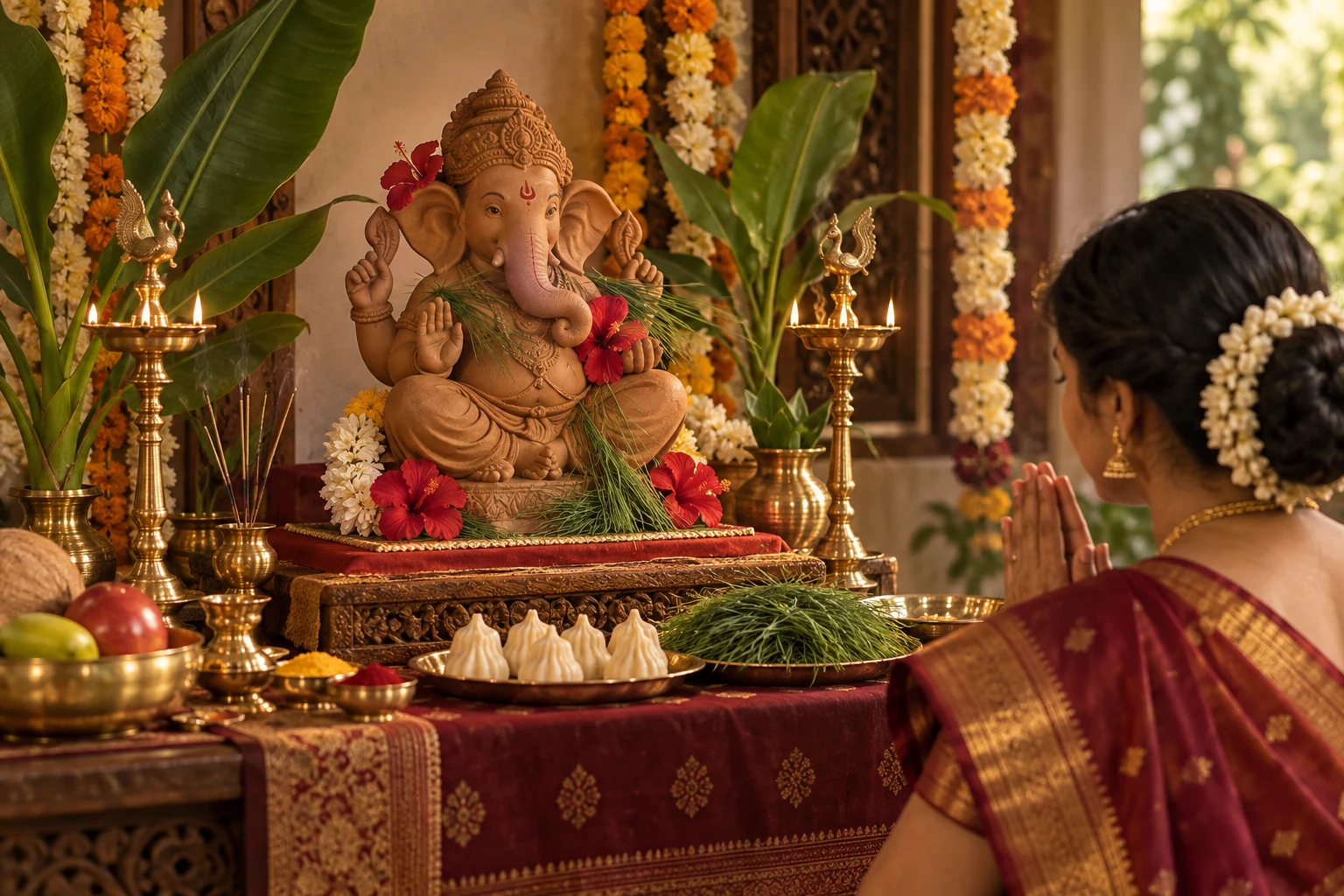
Ganesh Chaturthi honours Ganesha as the lord of beginnings, remover of obstacles and patron of learning and clear understanding. Households and community groups welcome a festival murti for different lengths of time, offer daily worship, and conclude with visarjan, a respectful farewell. Customs vary substantially across regions, so a family priest, elder or established community tradition should guide formal rites.
The festival’s deeper movement is from welcome to release. Devotees invite Ganesha with affection, learn and celebrate in his presence, then let the temporary form go. This makes the occasion especially suited to beginning good work while loosening attachment to display and excess.
Choose the murti and space carefully
Decide first whether the image is permanent or temporary. A permanent household murti is not ordinarily immersed. For a festival installation, choose a modest, unpainted natural-clay murti where possible. Avoid plaster of Paris, glitter, plastic ornament and paints that may pollute water.
Prepare a stable altar with a clean cloth, water, flowers, fruit, a diya or electric lamp, and a simple sweet such as modak if appropriate. Durva grass is offered in many traditions, but it is not worth damaging public land or buying wasteful packaging. Never place a heavy murti on an unstable table.
Simple Ganesh Chaturthi puja steps
- Clean and pause. Wash, tidy the worship area and settle the mind.
- Place the murti respectfully. If your observance includes formal prana pratishtha, receive guidance from someone qualified; do not pretend that a short online checklist replaces it.
- State a sankalpa. Name the study, work, relationship or habit that needs patient attention.
- Offer with care. Light the lamp safely and offer water, flowers or durva, fruit and a sweet one at a time.
- Chant or read. Use a familiar Ganesha name, the Ganesh Beej Mantra with appropriate guidance, or read the Ganesh Atharvashirsha meaning before reciting a text you do not yet understand.
- Sing aarti. The Jai Ganesh Deva guide provides words and meaning. Move a flame only if the setting is safe.
- Share prasad. Conclude with gratitude and distribute the food hygienically without waste.
When children participate, let them place a flower, make a reusable paper decoration, sing the aarti refrain or describe one obstacle they can address through practice rather than magic.
What “remover of obstacles” means in practice
Prayer does not remove the need for planning. Ganesha’s symbolism joins large understanding, attentive listening and grounded action. After puja, turn one obstacle into a workable next step:
- organise the first twenty minutes of a delayed task;
- ask for help instead of hiding confusion;
- apologise for a mistake and repair what can be repaired;
- remove one distraction from a study space;
- begin a savings, exercise or reading habit at a realistic scale.
The stories of Ganesha show how intelligence is often expressed through perspective rather than force. Discussing a story can be more valuable than making unsupported promises about guaranteed success.
Responsible visarjan
Confirm local municipal and community arrangements because approved immersion locations and environmental rules can change. Prefer a managed artificial tank or other officially permitted facility. Where home immersion of a small natural-clay murti is allowed, use a dedicated container, let the clay dissolve fully, and reuse the water and soil responsibly if the materials are known to be non-toxic.
Remove plastic, batteries, synthetic cloth and jewellery before immersion. Do not abandon flowers, food packets or frames at a riverbank, beach or lake. Never enter deep, crowded or fast-moving water for a ritual; follow barriers and safety staff.
A thoughtful farewell
Before visarjan, offer thanks and acknowledge that the sacred is not confined to one temporary form. Clean the altar, compost suitable natural offerings, store reusable decoration, and carry the chosen good habit forward.
An environmentally responsible celebration is not a lesser devotion. Restraint, safety and care for shared water express the wisdom that Ganesha worship seeks to awaken.
Frequently Asked Questions
How do I perform Ganesh Chaturthi puja at home?
Prepare a clean altar, respectfully place a Ganesha image or murti, light a lamp safely, offer water, flowers, fruit or modak, chant a Ganesha mantra, read or sing, and conclude with aarti and prasad. Follow family guidance for formal installation and farewell rites.
What offerings are appropriate for Ganesha?
Flowers, durva grass, fruit and modak are widely associated with Ganesha, but availability and customs vary. A simple clean offering made without waste is sufficient; check family tradition before using unfamiliar items.
Is visarjan required for every Ganesha image?
No. A permanent household murti is normally retained and worshipped rather than immersed. Visarjan applies to a temporarily installed festival murti according to the observance being followed.
How can Ganesh visarjan be eco-friendly?
Choose an unpainted natural-clay festival murti, avoid plastic and toxic decoration, and use an approved community immersion facility or a small home container where local guidance permits. Never leave ritual waste in a natural water body.